
Minimum wage state by state 2024
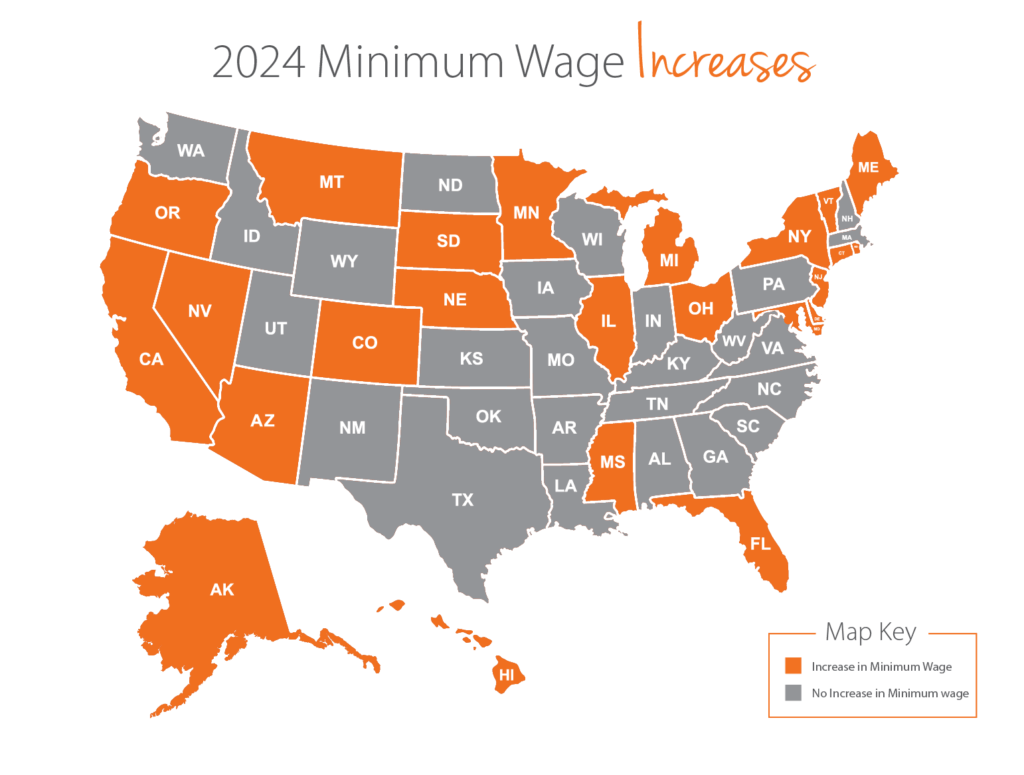
As we move through 2024, the minimum wage continues to vary significantly across the United States, reflecting diverse economic conditions and state-level policies.
While the federal minimum wage remains unchanged at $7.25 per hour since 2009, most states have implemented higher rates to better align with rising living costs. From Washington’s $16.28 per hour to states still adhering to the federal baseline, the disparities reveal economic and political differences nationwide.
This article examines the current minimum wage in each state, highlighting increases enacted this year, upcoming adjustments, and the ongoing debate over wage equity. Understanding these regional differences is crucial for workers, employers, and policymakers navigating today’s evolving labor landscape.
 Minimum wage usa by state
Minimum Wage by State in 2024: A Comprehensive Overview
In 2024, the minimum wage in the United States continues to vary significantly from state to state, reflecting a complex landscape shaped by local economic conditions, cost of living, and legislative decisions.
While the federal minimum wage remains at $7.25 per hour—a rate unchanged since 2009—many states have enacted their own higher minimum wages to better support workers.
Several states, including California, Washington, and Massachusetts, have set minimum wages above $15 per hour, with some cities implementing even higher local minimum wages. Meanwhile, a handful of states still adhere to the federal baseline or have no state-level minimum wage law, defaulting to federal standards.
Additionally, certain states tie their minimum wage to inflation through automatic cost-of-living adjustments, ensuring wages evolve with economic conditions. This decentralized approach underscores the growing divergence in labor standards across the U.S. and highlights ongoing debates about wage equity, small business impacts, and regional affordability.
 Minimum wage in the usa by state
States with the Highest Minimum Wages in 2024
Several states lead the nation in establishing high minimum wage standards in 2024, driven by strong labor advocacy and high costs of living. Washington tops the list with a minimum wage of $16.28 per hour, boosted by inflation indexing and a robust economy.
California follows closely at $16.00 per hour statewide, with many cities like San Francisco and Los Angeles implementing higher local rates—some exceeding $18.00. Massachusetts and Connecticut have also reached the $15.00 threshold, with incremental increases phased in over recent years.
In addition, New York maintains a tiered minimum wage system that varies by region, with New York City at $16.00 and lower rates in rural areas. These leading states exemplify policies designed to ensure livable wages and reduce income inequality, although businesses in these regions often face challenges related to labor costs.
States That Follow the Federal Minimum Wage
Despite growing momentum for higher wages nationwide, several states continue to adhere to the federal minimum wage of $7.25 per hour in 2024 due to the absence of a state-mandated minimum wage or the presence of a lower state rate. These states include Georgia, Wyoming, Idaho, and Mississippi, among others.
 minimum wage by each state
However, under the Fair Labor Standards Act (FLSA), when state and federal rates differ, employees are entitled to the higher wage if their work is subject to federal jurisdiction. In practice, many workers in these states still earn more than $7.25 due to employer discretion, market competition, or local ordinances in certain municipalities.
Nevertheless, the lack of a higher statewide minimum wage can disproportionately affect low-income workers, particularly in rural areas with limited job alternatives, and often intensifies calls for legislative reform.
States with Automatic Inflation Adjustments
A growing number of states have adopted automatic cost-of-living adjustments (COLAs) to their minimum wage laws, ensuring that wage floors rise with inflation and maintaining purchasing power over time.
In 2024, states such as Washington, Oregon, Florida, Colorado, and Michigan index their minimum wages to the Consumer Price Index (CPI), resulting in annual increases without requiring new legislation. For example, Florida, which passed a constitutional amendment in 2020 to raise its minimum wage to $15 by 2026, continues to see yearly increases through indexing.
 Minimum wage by state in usa
This mechanism promotes wage stability and reduces political contention over frequent legislative battles. However, during periods of high inflation, these automatic increases can strain small businesses, leading to debates about the pace and design of indexing formulas.
| State | 2024 Minimum Wage ($) | Inflation-Indexed? |
|---|---|---|
| California | 16.00 | Yes |
| Washington | 16.28 | Yes |
| New York | 15.00–16.00 (by region) | Yes |
| Texas | 7.25 | No |
| Florida | 12.00 | Yes |
| Georgia | 7.25 | No |
| Colorado | 14.42 | Yes |
| Mississippi | 7.25 | No |
| Connecticut | 15.69 | Yes (until $15, then indexed) |
| Wyoming | 7.25 | No |
Frequently Asked Questions
What is the federal minimum wage in 2024?
The federal minimum wage in 2024 remains $7.25 per hour, unchanged since 2009. However, many states have set higher minimum wages, and employers must pay the higher state or local rate when applicable. Workers are entitled to the highest minimum wage that applies to them, whether federal, state, or local. Some states tie future increases to inflation or cost of living adjustments.
Which states have the highest minimum wage in 2024?
In 2024, California and Washington, D.C. have the highest minimum wages, at $16.00 and $17.00 per hour, respectively. Washington state and Massachusetts also rank among the highest, with rates around $16.28 and $15.00. These wages are adjusted annually based on inflation or cost of living. Employers in these states must follow the state minimum unless a local ordinance sets a higher rate.
Do all states follow the federal minimum wage?
No, not all states follow the federal minimum wage of $7.25 per hour. As of 2024, over 30 states and numerous localities have established minimum wages above the federal rate. Employers must comply with whichever wage is higher—federal, state, or local. States like Alabama and Louisiana still adhere to the federal minimum, but cities within them may impose higher local minimums.
How often do state minimum wages change?
State minimum wages can change annually, especially in states with laws that automatically adjust the rate for inflation or cost of living. Others update the wage through legislative action, which may occur irregularly. Changes typically take effect on January 1st each year. Employers and employees should monitor state labor department announcements to stay informed about upcoming adjustments and compliance requirements.
Leave a Reply