
Us department of labor minimum wage by state

The minimum wage landscape in the United States varies significantly from state to state, reflecting a complex interplay between federal standards and local economic conditions.
While the U.S. Department of Labor establishes a federal minimum wage, many states and municipalities enact higher rates to address cost of living and inflation. This disparity creates a patchwork of wage laws that employers and workers must navigate.
Understanding these differences is crucial for ensuring fair compensation and compliance with labor regulations. This article explores the current minimum wage rates across all states, highlights key variations, and examines the role of the Department of Labor in overseeing wage standards.
 Department of labor minimum wage by state
Understanding the U.S. Department of Labor Minimum Wage by State
The U.S. Department of Labor (DOL) plays a central role in enforcing federal labor laws, including the administration of the Fair Labor Standards Act (FLSA), which establishes the federal minimum wage. As of 2024, the federal minimum wage remains at $7.25 per hour, a rate that has not changed since 2009.
However, individual states have the authority to set their own minimum wage rates, and many have enacted laws establishing wages higher than the federal floor. When there is a discrepancy between federal and state minimum wages, employers are required to pay the higher of the two rates.
This creates a complex landscape where minimum wage rates vary significantly across the country, influenced by factors such as cost of living, political climate, and economic conditions. The Department of Labor does not set state-specific rates but ensures compliance with federal standards and provides guidance to employers and workers on wage rights and obligations.
Federal vs. State Minimum Wage Laws
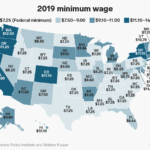
The federal minimum wage set by the U.S. Department of Labor serves as a baseline, but state laws can and often do exceed this standard.
 Minimum wage usa by state
For example, states like California and Washington have minimum wages well above $15 per hour in many jurisdictions, while others, such as Georgia and Wyoming, technically allow wages below the federal rate—though the federal minimum still applies due to FLSA preemption.
Employers operating in multiple states or with remote employees must carefully monitor these differences to ensure compliance. The principle of preemption means that when both federal and state laws apply, the employee is entitled to the higher wage.
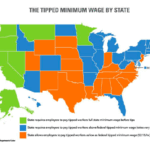
This dual system allows states to respond to local economic conditions while ensuring that no worker earns less than the federally mandated minimum unless they fall under specific exemptions, such as certain agricultural or tipped workers.
State-by-State Minimum Wage Variations in 2024
As of 2024, there is considerable variation in minimum wage rates across the United States. States like New York, Massachusetts, and Illinois have enacted gradual increases aimed at reaching or exceeding $15 per hour, often with different rates based on business size or geographic location within the state.
 Minimum wage in the usa by state
In localities such as Seattle, San Francisco, and Washington, D.C., minimum wages are even higher—some surpassing $18 per hour—due to municipal ordinances. On the other hand, five states (Alabama, Louisiana, Mississippi, South Carolina, and Tennessee) have no state-level minimum wage law, defaulting entirely to the federal rate.
Additionally, ten states, including Texas and Florida, have minimum wage laws that match or slightly exceed the federal rate but remain below $10 per hour. These disparities reflect differing regional priorities and economic structures, making it essential for employers and employees to consult their state’s labor department for accurate, up-to-date information.
Impact of Minimum Wage Differences on Workers and Employers
The variation in minimum wage by state has significant implications for both workers and businesses. For employees, higher state-mandated wages can lead to improved living standards, reduced poverty rates, and greater job satisfaction, particularly in high-cost urban areas.
However, some critics argue that aggressive wage increases may lead to reduced hiring, automation, or increased prices for consumers. Employers, especially small businesses, face challenges in managing payroll costs across state lines, particularly in industries like retail, hospitality, and food service, where labor represents a large portion of expenses.
Multi-state employers must implement compliant pay structures and stay updated on legislative changes. Furthermore, the U.S. Department of Labor provides enforcement and educational tools through its Wage and Hour Division to ensure employers meet their legal obligations, regardless of state-specific variations.
| State | State Minimum Wage (2024) | Tipped Minimum Wage | Notes |
|---|---|---|---|
| California | $16.00 | $5.60 (with tip credit) | Some cities have higher local rates. |
| New York | $15.00–$16.00 | $10.00 | Varies by region and business size. |
| Texas | $7.25 | $2.13 | Follows federal minimum wage. |
| Washington | $16.28 | $12.78 | Highest state minimum in the U.S. |
| Georgia | $5.15 | $2.13 | Federal rate of $7.25 applies. |
| Florida | $12.00 | $8.98 | Phasing in $15 by 2027. |
| New Hampshire | $7.25 | $3.27 | No state minimum; follows federal. |
| Alaska | $11.73 | $11.73 | Tipped workers receive full minimum. |
Frequently Asked Questions
What is the federal minimum wage set by the U.S. Department of Labor?
The federal minimum wage, established by the U.S. Department of Labor, is $7.25 per hour. This rate has been in effect since July 24, 2009, under the Fair Labor Standards Act (FLSA). While this is the baseline, states and localities can set higher minimum wages. Employers must follow whichever standard—federal, state, or local—is most beneficial to the employee.
Can states set their own minimum wage higher than the federal rate?
Yes, states are allowed to establish a minimum wage higher than the federal rate of $7.25 per hour. When state or local laws set a higher minimum wage, employers must pay the higher amount. The U.S. Department of Labor requires compliance with the standard that provides the greatest pay. Most states with higher wages do so to better align with local cost of living.
Where can I find the current minimum wage for my state?
You can find the current minimum wage for your state on the U.S. Department of Labor’s website, specifically through the Wage and Hour Division’s state minimum wage laws page. The site offers a comprehensive map and list detailing each state’s rate, including exceptions and special provisions. Local government websites may also provide updated information about city or county-specific wages.
Does the U.S. Department of Labor enforce state minimum wage laws?
The U.S. Department of Labor helps enforce federal wage laws but primarily defers to state agencies for enforcement of state-specific minimum wage laws. The federal government steps in when employers fall below the federal minimum or when state laws are not enforced properly. Workers can file complaints with either federal or state labor departments if they believe their wage rights have been violated.
Leave a Reply