
Us minimum wage by state map
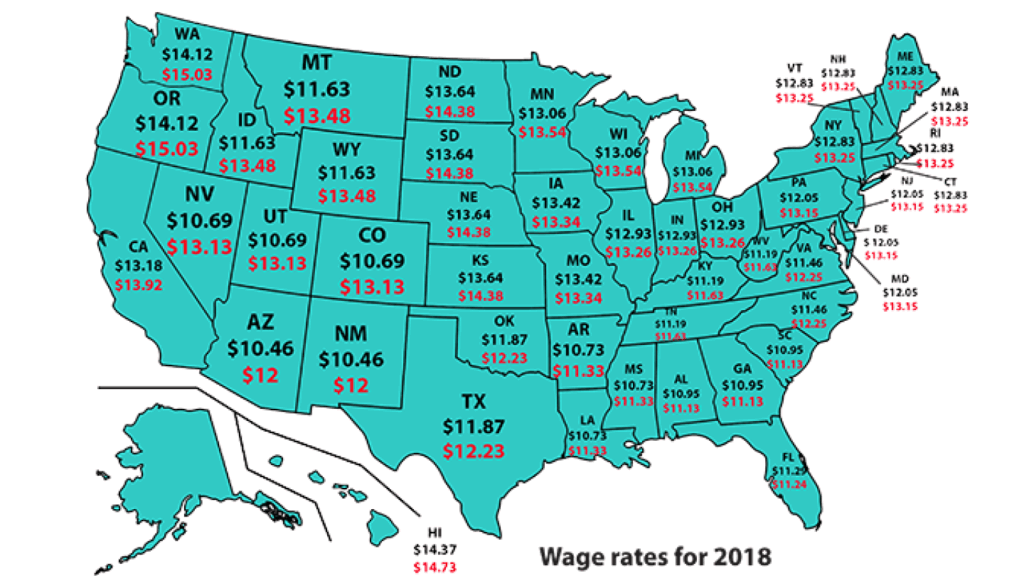
The minimum wage varies significantly across the United States, with each state setting its own standards within federal guidelines. A U.S. minimum wage by state map provides a clear, visual representation of these disparities, highlighting states that adhere to the federal rate of $7.25 per hour and those that have enacted higher wages to reflect local cost of living.
As of the latest data, over half of the states plus Washington, D.C., maintain minimum wages above the federal floor. These differences impact workers' earnings, business operations, and regional economies. Exploring this map reveals ongoing efforts to address income inequality and ensure basic wage protections nationwide.
Understanding the US Minimum Wage by State Map: A Comprehensive Overview
The US minimum wage by state map illustrates the significant variation in minimum wage rates across the country, reflecting the decentralized approach to wage policy in the United States.
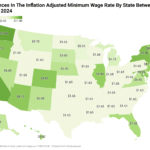 Us minimum wage by state 2024
While the federal government sets a baseline minimum wage, individual states—and sometimes cities—have the authority to establish higher rates based on local economic conditions, cost of living, and political priorities. This map serves as a vital tool for workers, employers, policymakers, and researchers to understand wage disparities and labor market dynamics nationwide.
States like California and Washington consistently rank among the highest, with minimum wages well above the federal level of $7.25 per hour, while others, particularly in the South and Midwest, adhere strictly to the federal minimum.
The map also highlights states that have enacted scheduled increases or automatic cost-of-living adjustments, showcasing a growing trend toward ensuring wage growth keeps pace with inflation.
Differences Between Federal and State Minimum Wages
The federal minimum wage, set at $7.25 per hour since 2009, acts as a floor rather than a standard in most of the country. When a state's minimum wage is higher than the federal rate, the higher state rate prevails under the Fair Labor Standards Act (FLSA). As a result, millions of workers are protected by state-level standards that reflect regional economic realities.
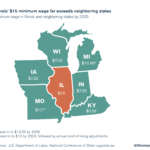 Us minimum wage by state 2025
For example, states like Massachusetts and New York have minimum wages exceeding $15 per hour, particularly in large urban areas, while states such as Alabama, Louisiana, and Mississippi have no state-specific minimum wage and default to the federal level. This patchwork system leads to significant wage disparities, especially at state borders, and has sparked ongoing debate about national wage equity and economic competitiveness.
How Cost of Living Influences State Minimum Wage Policies
One of the primary drivers behind varying state minimum wage rates is the cost of living. States with high housing costs, transportation expenses, and overall living expenses tend to implement higher minimum wages to ensure workers can meet basic needs.
For instance, in California and New Jersey, where housing markets are particularly expensive, lawmakers have pushed for minimum wages above $15 per hour. In contrast, rural states with lower living costs, such as Missouri or Indiana, may adopt more modest increases or follow the federal rate.
Many states now tie their minimum wage adjustments to inflation using a CPI (Consumer Price Index) indexation mechanism, ensuring wages maintain purchasing power over time. This link between wage policy and economic conditions underscores the importance of localized decision-making in wage legislation.
 Minimum wage by state map 2025
City and County-Level Minimum Wage Variations
Beyond state-level laws, numerous cities and counties have enacted their own local minimum wage ordinances that exceed both federal and state requirements. This is especially common in major metropolitan areas where the cost of living far surpasses national averages.
For example, Seattle, San Francisco, and Washington, D.C. have established minimum wages significantly higher than their respective state averages—some exceeding $18 per hour for large employers.
These local laws reflect municipal efforts to address income inequality and labor market pressures unique to urban environments. However, such discrepancies can create challenges for businesses operating across multiple jurisdictions and have prompted legal battles in states like Arizona and Texas, where preemption laws limit or prohibit local wage increases.
| State | Minimum Wage (2024) | Federal Minimum Wage | Notes |
|---|---|---|---|
| California | $16.00 | $7.25 | Varies by city; San Francisco at $18.07 |
| New York | $15.00–$16.00 | $7.25 | Rate depends on region and business size |
| Washington | $16.28 | $7.25 | Highest state minimum wage in the U.S. |
| Texas | $7.25 | $7.25 | No state minimum wage; follows federal |
| Florida | $12.00 | $7.25 | Gradually increasing to $15 by 2026 |
| Mississippi | $7.25 | $7.25 | No state minimum wage law |
| Illinois | $14.00 | $7.25 | Will reach $15 in 2025 |
Frequently Asked Questions
What is a U.S. minimum wage by state map?
A U.S. minimum wage by state map is a visual representation showing the current minimum hourly wage in each state. It helps users quickly compare rates across states and identify which have higher or lower wages than the federal minimum. These maps often use color coding for clarity and are updated regularly to reflect recent changes in state labor laws.
Why do minimum wages vary by state?
Minimum wages vary by state due to differences in cost of living, local economic conditions, and state legislation. While the federal government sets a baseline minimum wage, individual states can establish higher rates to better meet local financial needs. States with higher living costs often have higher minimum wages to help workers afford basic expenses like housing and healthcare.
Where can I find an up-to-date minimum wage map by state?
You can find an up-to-date minimum wage map by state on government websites like the U.S. Department of Labor, or through reliable sources such as the Economic Policy Institute or Ballotpedia. These sites provide interactive maps, downloadable data, and updates whenever a state adjusts its minimum wage, ensuring accurate and current information for workers, employers, and researchers.
Does the federal minimum wage apply in every state?
The federal minimum wage applies in every state, but if a state’s minimum wage is higher, employers must pay the higher state rate. For example, if the federal wage is $7.25 but a state sets it at $12.00, workers must be paid $12.00. Employers follow whichever law provides greater benefit to the employee.
Leave a Reply