
What is the minimum wage by state
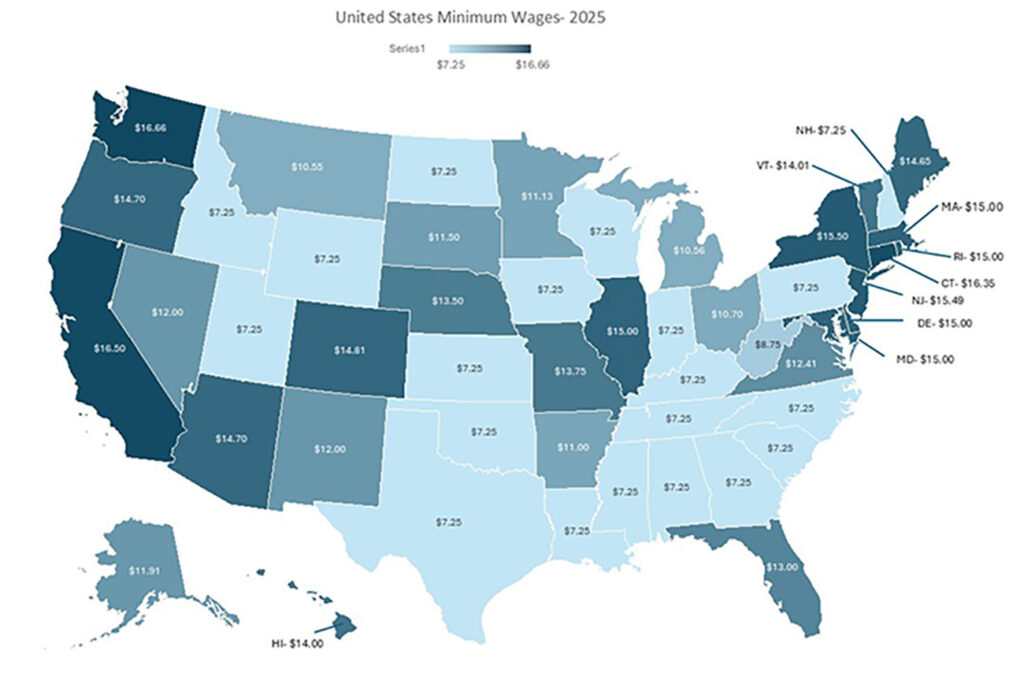
The minimum wage varies significantly across the United States, as each state sets its own rate, often influenced by local cost of living and economic conditions.
While the federal minimum wage remains at $7.25 per hour, many states have established higher rates to better support workers. Some states adjust their minimum wage annually based on inflation, while others have fixed rates that change only through legislative action.
A growing number of states and cities are moving toward a $15 per hour minimum, reflecting ongoing debates about fair wages and economic sustainability. Understanding these differences is essential for workers, employers, and policymakers navigating the complex landscape of labor laws nationwide.
 Chart of minimum wage by state
What Is the Minimum Wage by State in the United States?
The minimum wage in the United States varies significantly from state to state, reflecting differing costs of living, regional economic conditions, and legislative priorities.
While the federal government sets a baseline minimum wage of $7.25 per hour—a rate that has not increased since 2009—many states and even local jurisdictions have enacted higher minimum wages to better support workers. As of 2024, over half of the U.S. states have minimum wages above the federal floor. These rates are often adjusted annually based on inflation or predefined legislative schedules.
Workers' pay is governed by the higher of the federal, state, or local minimum wage, meaning individuals in cities like Seattle or San Francisco may earn considerably more than the national baseline. Understanding the minimum wage by state is crucial for both employees asserting their rights and employers ensuring compliance with labor laws.
State vs. Federal Minimum Wage: Key Differences
The primary distinction between state and federal minimum wage laws lies in which standard takes precedence. Under the Fair Labor Standards Act (FLSA), employers must pay the higher of the federal, state, or local minimum wage.
 Dol minimum wage by state
For example, while the federal minimum wage remains $7.25 per hour, states like California and Washington have set their rates well above this—exceeding $15 per hour in many cases. Some states, such as Georgia and Wyoming, technically have lower state-set rates than the federal standard, but employers are still required to pay at least $7.25 due to federal law supremacy.
This interplay creates a complex patchwork, requiring both workers and businesses to stay informed about overlapping regulations. In certain states without a minimum wage law or with a rate below the federal floor, the federal standard automatically applies.
States With the Highest and Lowest Minimum Wages in 2024
As of 2024, Washington, D.C. leads the nation with a minimum wage of $17.00 per hour, followed closely by states like California, Massachusetts, and Washington, where rates range from $15.50 to $16.00. These high-wage states typically have elevated costs of living and strong labor advocacy.
On the other end of the spectrum, states like Mississippi and Tennessee do not have a state-imposed minimum wage, meaning the federal rate of $7.25 applies by default. Other states such as Georgia and Wyoming set minimum wages below the federal level ($5.15 and $5.17, respectively), but again, workers are entitled to the higher federal rate.
 How much is minimum wage by state
This disparity highlights the uneven economic landscape across the U.S. and underscores the importance of location in determining low-income workers' earnings.
Future Trends and Scheduled Minimum Wage Increases
Many states have enacted predetermined minimum wage increases or index their rates to inflation to ensure wages keep pace with the cost of living. For instance, several states—including New York, Illinois, and Maryland—are gradually phasing in $15 per hour minimum wages over multi-year periods.
Others, like Colorado and Oregon, adjust their rates annually based on inflation metrics. These scheduled increases reflect ongoing efforts to address income inequality and inflationary pressures.
Additionally, cities like Los Angeles, Chicago, and Denver often adopt even higher local minimums than their state mandates. With growing public and political support for living wage policies, the trend toward higher minimum wages is expected to continue, particularly in urban and high-cost areas.
| State | Minimum Wage (2024) | Notes |
|---|---|---|
| California | $16.00 | Some cities have higher local rates. |
| Washington | $16.28 | Adjusted annually for inflation. |
| New York | $15.00–$16.00 | Varies by county and city size. |
| Texas | $7.25 | Follows federal minimum wage. |
| Florida | $12.00 | Set to increase annually until reaching $15.00 in 2026. |
| Mississippi | $7.25 | No state minimum wage law. |
| Washington, D.C. | $17.00 | Highest minimum wage in the U.S. |
Frequently Asked Questions
What is the federal minimum wage in the United States?
The federal minimum wage in the United States is $7.25 per hour, as established by the Fair Labor Standards Act. This rate has remained unchanged since 2009. Employers must pay the higher of the federal, state, or local minimum wage. If a state’s minimum wage is lower than the federal rate, the federal standard applies. Most states, however, have set higher minimum wages.
How do state minimum wages differ across the U.S.?
State minimum wages vary significantly across the U.S., ranging from the federal minimum of $7.25 to over $16 per hour. States like California and Washington have among the highest rates, adjusting annually for inflation. Others follow the federal rate. Differences reflect varying costs of living, local economic conditions, and state legislation. Employers must comply with the highest applicable wage standard in their location.
Which states have the highest minimum wage rates?
As of 2024, the states with the highest minimum wages include Washington, California, and Massachusetts, with rates exceeding $15 per hour. Washington State leads at around $16.19. These rates are often adjusted annually for inflation. High minimum wages are typically found in areas with a higher cost of living. Employers in these states must adhere to state-specific requirements.
Can cities set their own minimum wage above state levels?
Yes, many cities and counties can establish minimum wages higher than both state and federal levels. Examples include Seattle, San Francisco, and New York City, where local ordinances mandate wages above $15 per hour. Local laws apply to employers within those jurisdictions. Workers are entitled to the highest applicable rate, whether federal, state, or local, ensuring stronger wage protections in high-cost urban areas.
Leave a Reply