
Us minimum wage by state 2024

The minimum wage in the United States varies significantly from state to state, reflecting differing regional costs of living and economic policies.
As of 2024, while the federal minimum wage remains at $7.25 per hour, many states have enacted higher rates to better support low-income workers. Several states, including California and Washington, set their minimum wages well above the federal level, with some exceeding $15 per hour.
Others adhere to or only slightly exceed the federal standard. A growing number of cities and counties have also implemented local minimum wages. This patchwork of regulations creates complex compliance requirements for employers and varying wage outcomes for employees across state lines.
 Us minimum wage by state 2025
US Minimum Wage by State in 2024: A Comprehensive Overview
In 2024, the minimum wage in the United States continues to vary significantly from state to state, reflecting differing economic conditions, cost of living, and legislative priorities.
While the federal minimum wage remains fixed at $7.25 per hour—a rate unchanged since 2009—many states have implemented higher minimum wages to better align with local economic realities. As of 2024, 30 states and the District of Columbia have minimum wages above the federal baseline, with some jurisdictions adjusting rates annually based on inflation or predetermined escalation schedules.
States like California and Washington lead the nation with minimum wages exceeding $15 per hour, while others, such as Georgia and Wyoming, technically allow wages as low as $5.15 under state law if not covered by federal minimum wage regulations—though most workers are still entitled to at least the federal rate due to the Fair Labor Standards Act (FLSA).
Local ordinances in major cities such as Seattle, San Francisco, and New York City further push wage floors above state levels, creating a complex tapestry of wage standards across the country. This patchwork system underscores ongoing debates about income inequality, worker welfare, and small business sustainability nationwide.
 Minimum wage by state 2020
States with the Highest Minimum Wages in 2024
As of 2024, several states have established minimum wages well above the federal rate, with Washington state taking the lead at $16.28 per hour, driven by robust cost-of-living adjustments and strong labor advocacy. California follows closely, with a statewide minimum wage of $16.00 per hour for all employers, regardless of size, marking a significant milestone in the fight for living wages.
Massachusetts sets its rate at $15.00 per hour, while Oregon adjusts its minimum based on region—$15.45 in the Portland metro area, $14.20 in standard counties, and $13.20 in non-urban counties—to reflect regional economic disparities.
These high-wage states often index future increases to inflation, ensuring that wage growth keeps pace with rising prices. In addition, cities like Emeryville, California, and Sunnyvale, California, have local minimum wages surpassing $18 per hour, illustrating how local policy can exceed even progressive state standards.
States That Follow the Federal Minimum Wage
Despite growing momentum toward higher wages, 14 states continue to adhere to the federal minimum wage of $7.25 per hour, either by law or because they have not set a higher state-specific rate. These states include Alabama, Idaho, Indiana, Iowa, Kansas, Kentucky, Mississippi, Nebraska, North Carolina, North Dakota, Pennsylvania, Tennessee, Texas, and Wisconsin.
 Minimum wage by state 2021
In most of these states, employers covered by the Fair Labor Standards Act (FLSA) are required to pay at least $7.25, but workers not covered under federal regulations—such as certain agricultural or small business employees—may earn less depending on state exemptions.
Notably, Georgia and Wyoming have nominal minimum wages below the federal rate ($5.15 and $5.17, respectively), but again, the federal floor typically applies due to overlapping jurisdiction. This reliance on federal standards often results in lower purchasing power for low-wage workers in these states, especially amid nationwide inflation and rising living costs.
Planned Minimum Wage Increases Beyond 2024
Several states have already legislated future minimum wage increases beyond 2024, signaling a continued shift toward higher compensation for low-income workers.
For instance, Maryland is scheduled to raise its minimum wage to $16.00 by 2025, with incremental increases occurring annually. Similarly, New Jersey will reach $15.13 in 2024 and continue adjusting the rate based on the Consumer Price Index (CPI).
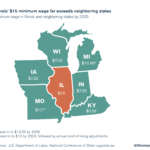
States like Illinois, which reached $15.00 in 2025, are implementing regional variations—$15.00 in Chicago, $14.00 in suburban Cook County, and $13.00 elsewhere in the state—highlighting efforts to balance urban economic demands with rural affordability.
Additionally, states such as Florida—which reached $13.00 in 2024—plan annual increases of $1.00 until hitting $15.00 in 2026. These legislative trajectories reflect a broader national trend where economic equity and workforce retention concerns are driving policymakers to prioritize wage growth.
Frequently Asked Questions
What is the current federal minimum wage in 2024?
The federal minimum wage remains $7.25 per hour in 2024.
This rate has not changed since 2009.
However, many states have adopted higher minimum wages, and employers must comply with the higher of the federal, state, or local rate.
Workers in states that do not have a higher minimum wage are entitled to the federal $7.25 rate, though some cities and counties may set their own higher local minimum wages.
Which state has the highest minimum wage in 2024?
As of 2024, California has the highest statewide minimum wage at $16.00 per hour for all employers.
Washington, D.C., while not a state, has an even higher rate of $17.00 per hour.
California also requires several cities to pay higher local minimum wages, and the state adjusts its minimum wage annually based on inflation to reflect changes in the cost of living.
Do all U.S. states follow the federal minimum wage?
No. Not all U.S. states follow the federal minimum wage of $7.25 per hour.
As of 2024, more than half of U.S. states have established minimum wages above the federal rate.
When state and federal minimum wages differ, employers must always pay the higher state rate.
Some states also allow cities and counties to set their own local minimum wages, which may exceed both state and federal levels.
How often do state minimum wages change?
State minimum wages may change annually, biennially, or at other intervals depending on state laws.
States like California and Washington update their minimum wages each year based on inflation.
Other states increase their minimum wages through legislation or voter-approved initiatives.
Both employers and employees should regularly check updates from state labor departments to stay informed about current and upcoming wage changes.
| State | 2024 Minimum Wage (per hour) | Federal vs. State Rate | Notes |
|---|---|---|---|
| California | $16.00 | State higher | All employers; varies in some cities |
| Washington | $16.28 | State higher | Highest statewide rate; inflation-adjusted |
| Massachusetts | $15.00 | State higher | Set to increase with inflation |
| New York | $15.00–$16.00 | State higher | Varies by county and city |
| Texas | $7.25 | Matches federal | No state minimum above federal |
| Florida | $13.00 | State higher | Increases $1/year until $15.00 in 2026 |
| Illinois | $14.00–$15.00 | State higher | Regional rates in Chicago and Cook County |
| Georgia | $5.15 | State lower |
Leave a Reply