
Minimum wage in the usa by state
The minimum wage in the United States varies significantly from state to state, reflecting differing economic conditions, cost of living, and political priorities.
While the federal minimum wage remains at $7.25 per hour, many states have established higher rates to better support workers. Some states adjust wages annually for inflation, while others have not adopted a state-specific minimum at all. This disparity creates a complex patchwork of pay standards across the country.
Understanding these variations is essential for workers, employers, and policymakers navigating labor markets. This article explores the current minimum wage landscape across all 50 states.
 What is the minimum wage by state
Minimum Wage in the USA by State: A Comprehensive Overview
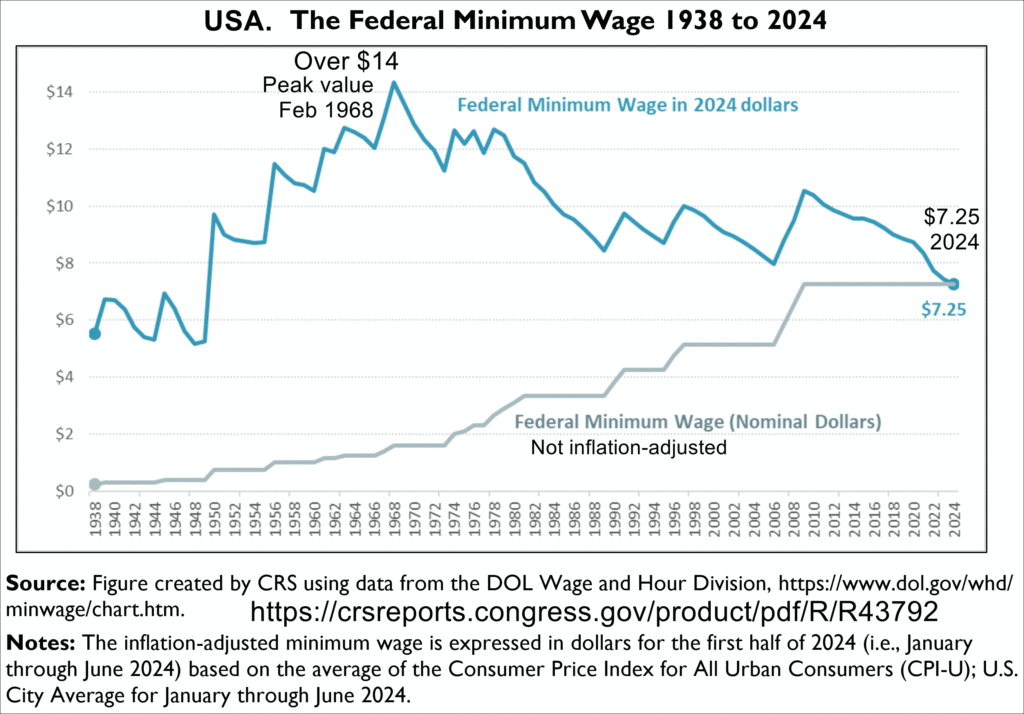
The minimum wage in the USA by state varies significantly due to federal, state, and local laws, creating a complex patchwork of wage standards across the country. While the federal minimum wage is currently set at $7.25 per hour—a rate unchanged since 2009—many states have enacted higher minimum wages to better reflect the cost of living in their regions.
Several states, such as California and Washington, have set their minimum wages well above the federal baseline, with some cities implementing even higher local minimum wages through ordinances. Additionally, some states tie their minimum wage rates to an inflation index, allowing automatic annual increases.
Understanding these variations is essential for workers, employers, and policymakers, as disparities in wage levels impact economic equity, labor mobility, and regional competitiveness. This guide explores key aspects of state-level minimum wage laws, including differences, driving factors, and current rates.
Factors Influencing State Minimum Wage Levels
State minimum wage levels are shaped by a combination of economic, political, and social factors. The cost of living is one of the most influential drivers; states with high housing and healthcare costs, such as New York or Hawaii, typically adopt higher minimum wages to maintain basic living standards.
 Minimum wage by state 2020
Legislative priorities also play a major role—states with more progressive labor policies are more likely to increase wages above the federal floor. Public opinion, union advocacy, and grassroots movements, like the Fight for $15 campaign, have significantly pushed many states toward wage hikes.
Moreover, states with strong service-sector economies, where many workers earn tip-based or hourly wages, often feel greater pressure to raise minimum compensation to ensure economic stability for low-income employees. These interrelated forces result in a dynamic and ever-evolving landscape of minimum wage legislation across the U.S.
Differences Between Federal, State, and Local Minimum Wages
The federal minimum wage serves as a national baseline, but both state and local governments are allowed to set higher rates under the Fair Labor Standards Act (FLSA). When there is a discrepancy between federal, state, and local wage laws, workers are entitled to the highest applicable rate.
For example, while the federal minimum remains $7.25, Washington, D.C., has a minimum wage of $17.00 as of 2024, and Seattle, WA, has implemented a tiered system based on employer size, with rates reaching $19.97.
 Minimum wage by state 2021
This tiered approach reflects how cities with high economic output can sustain higher wages. However, in states like Georgia and Wyoming, which maintain a minimum wage below the federal rate, the federal standard applies. This multilayered system ensures protection for low-wage workers but also creates complexity for businesses operating across multiple jurisdictions.
Current Minimum Wage Rates Across Selected States (2024)
As of 2024, minimum wage rates differ widely across the United States, reflecting regional economic conditions and legislative actions. The following table highlights key states and their respective minimum wage levels, offering a snapshot of the current landscape.
| State | Minimum Wage (2024) | Tied to Inflation? | Notes |
|---|---|---|---|
| California | $16.00 (statewide), higher in some cities | Yes | Some cities like San Francisco have local minimum wages over $18 |
| Washington | $16.28 | Yes | One of the highest state rates; adjusts annually for inflation |
| Florida | $12.00 | Yes | Will increase annually until reaching $15 by 2026 |
| Texas | $7.25 | No | Follows federal minimum wage; no state-level increases |
| Maine | $14.15 | Yes | Includes gradual phase-in and annual cost-of-living adjustments |
| Mississippi | $7.25 | No | No state minimum wage law; federal rate applies |
Frequently Asked Questions
What is the federal minimum wage in the United States?
The federal minimum wage in the United States is $7.25 per hour, last updated in July 2009. This rate applies to workers covered by the Fair Labor Standards Act (FLSA). However, states and local governments can set higher minimum wages. When state or local rates are higher than the federal rate, the higher wage prevails. Not all workers are subject to federal minimum wage laws, including some tipped employees and specific industries.
Do all U.S. states follow the federal minimum wage?
No, not all U.S. states follow the federal minimum wage of $7.25 per hour. As of 2024, over half of the states have set minimum wages above the federal level. Employers must comply with the higher standard—either federal, state, or local—whichever offers greater pay. Some states, like California and Washington, have significantly higher rates, while a few states still adhere to the federal minimum or have no state-specific minimum wage law.
Which U.S. states have the highest minimum wage?
As of 2024, Washington, D.C. has the highest minimum wage at $17.00 per hour, followed closely by states like Washington ($16.28) and California ($16.00 in most cases). Several other states, including Massachusetts and New York, also have rates above $15.00 per hour. These rates are often adjusted annually based on inflation or cost of living. Local jurisdictions within states may set even higher minimum wages than their statewide requirements.
How often do state minimum wage rates change?
State minimum wage rates can change annually or at longer intervals, depending on state laws and economic conditions. Many states with higher minimum wages have automatic cost-of-living adjustments tied to inflation. Increases typically take effect on January 1st each year. Other states require legislative approval to raise the rate, which may happen infrequently. Workers and employers should regularly check their state labor department’s website for updates on current and upcoming changes.
Leave a Reply