
Minimum wage in us by state 2024
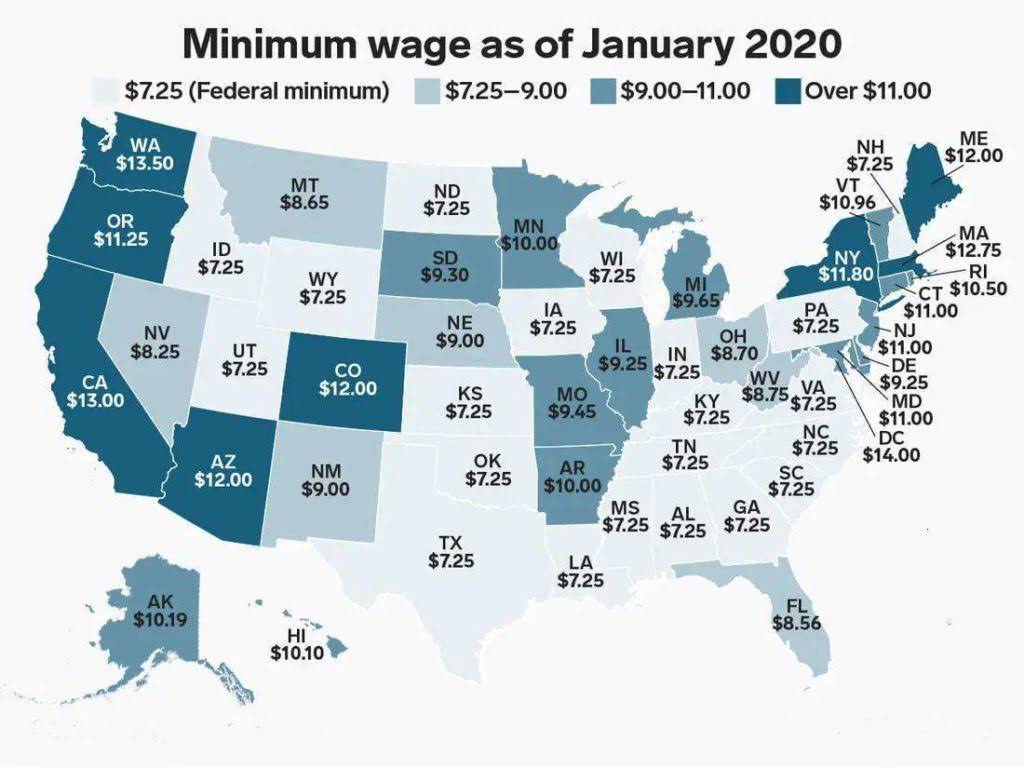
The minimum wage in the United States varies significantly by state, reflecting differing regional costs of living and economic policies as of 2024. While the federal minimum wage remains at $7.25 per hour, many states have enacted higher rates to better support low-income workers.
California and Washington lead with rates exceeding $16 per hour, while others like Georgia and Wyoming adhere to the federal floor. Several states adjust their minimum wages annually based on inflation, promoting wage stability.
This patchwork of regulations creates diverse earning potentials for workers across state lines, influencing employment trends, business operations, and economic equity. Understanding these variations is essential for policymakers, employers, and employees navigating the contemporary labor landscape.
 Minimum wage by us state 2024
State-by-State Minimum Wage Rates in the United States for 2024
In 2024, the minimum wage in the U.S. varies significantly from state to state, reflecting regional economic conditions, cost of living differences, and political priorities. While the federal minimum wage remains at $7.25 per hour, many states have enacted higher rates to better support low-wage workers.
As of January 2024, 30 states and Washington, D.C. have minimum wages above the federal level. Some states adjust their rates annually based on inflation indexing, ensuring that purchasing power is maintained over time.
Cities and counties in certain states, such as California and Washington, even set their own higher minimums, creating a complex patchwork of wage floors across the country. This variation impacts businesses, workers, and local economies differently depending on geographic location and industry.
States with the Highest Minimum Wages in 2024
Several states lead the nation in setting high minimum wage standards for 2024, prioritizing worker livelihoods and economic equity.
 Lowest minimum wage in us by state
Washington State has the highest state-mandated minimum wage at $16.28 per hour, driven by its strong labor advocacy and high cost of living. California follows closely with a minimum wage of $16.00 per hour, with certain cities like San Francisco and Los Angeles implementing even higher local rates.
Massachusetts joined the top tier in 2024, increasing its rate to $15.00 per hour, while Connecticut and New Jersey have also reached or exceeded this benchmark. These higher wages aim to address rising housing and living expenses, particularly in urban areas, and reflect broader policy efforts to reduce income inequality and boost consumer spending.
States That Follow the Federal Minimum Wage
Despite widespread increases elsewhere, 13 states continue to adhere to the federal minimum wage of $7.25 per hour without establishing a higher state-level standard. These states include Alabama, Idaho, Indiana, Iowa, Kansas, Kentucky, Louisiana, Mississippi, North Carolina, New Hampshire, Oklahoma, Pennsylvania, South Carolina, Tennessee, Utah, Virginia, and Wyoming.
In these regions, employers subject only to the Fair Labor Standards Act (FLSA) can legally pay the $7.25 rate, although some local jurisdictions within these states (like certain cities in Virginia) may adopt higher minimums.
 Highest minimum wage in us by state
The lack of a state-level increase often reflects conservative fiscal policies and concerns about potential effects on small businesses and employment. However, workers in these areas may benefit from recent federal proposals to increase the baseline wage, though none have been enacted as of 2024.
Planned Minimum Wage Increases Beyond 2024
Many states have already passed legislation ensuring future increases to their minimum wage beyond 2024, demonstrating long-term commitments to wage growth and economic adaptation. For example, Illinois plans to raise its rate to $15.00 per hour by 2025, including adjustments for youth workers and tipped employees.
Maryland and Delaware are also on track to reach $15.00 in the coming years. States like Florida, which approved a $15.00 minimum wage through a voter referendum, will continue annual cost-of-living adjustments after reaching the milestone in 2026.
These scheduled increases are often tied to inflation or consumer price indices, ensuring that wage gains are not eroded by rising prices. Such forward-looking policies signal increasing public support for fair compensation, even as debates continue over their impact on small businesses and inflationary pressures.
 General liability vs workers compensation
| State | 2024 Minimum Wage | Federal Minimum Wage | Tipped Minimum Wage | Indexing to Inflation |
|---|---|---|---|---|
| California | $16.00 | $7.25 | $16.00 | Yes |
| Washington | $16.28 | $7.25 | $16.28 | Yes |
| New York | $15.00–$16.00 (by region) | $7.25 | $10.00 | Yes |
| Texas | $7.25 | $7.25 | $2.13 | No |
| Florida | $12.00 | $7.25 | $8.98 | Yes |
| Maine | $14.15 | $7.25 | $6.38 | Yes |
| Alabama | $7.25 | $7.25 | $2.13 | No |
Frequently Asked Questions
What is the federal minimum wage in the United States in 2024?
The federal minimum wage in the United States remains $7.25 per hour in 2024. This rate has not changed since 2009, despite ongoing discussions about increasing it.
While it serves as a baseline, many states have established higher minimum wages. Employers must comply with whichever rate is higher—federal, state, or local—ensuring workers receive the most favorable wage.
Which states have the highest minimum wage in 2024?
In 2024, Washington, D.C. has the highest minimum wage at $17.00 per hour, followed closely by states like California and Washington, with minimum wages of $16.00 and $16.28 per hour, respectively.
Other high-wage states include Massachusetts and New York, where rates reach $15.00 and above. These figures reflect efforts to adjust for higher costs of living in urban and coastal regions.
 General workers compensation dallas
Are there states that follow the federal minimum wage in 2024?
Yes, as of 2024, several states, including Georgia, Wyoming, and Mississippi, maintain a minimum wage at or below the federal rate of $7.25 per hour. In these states, employees covered by the Fair Labor Standards Act (FLSA) receive at least $7.25, as it becomes the default. Some small or exempt businesses may pay less, but most workers are entitled to the federal floor.
How often do state minimum wages change?
State minimum wages can change annually or biennially, depending on legislation or cost-of-living adjustments. Some states, like California and Washington, have scheduled annual increases tied to inflation. Others require legislative approval for changes, leading to less frequent updates. Workers should regularly check their state labor department website or employer notifications to stay informed about current and upcoming minimum wage rates.
Leave a Reply