
Minimum wage usa by state
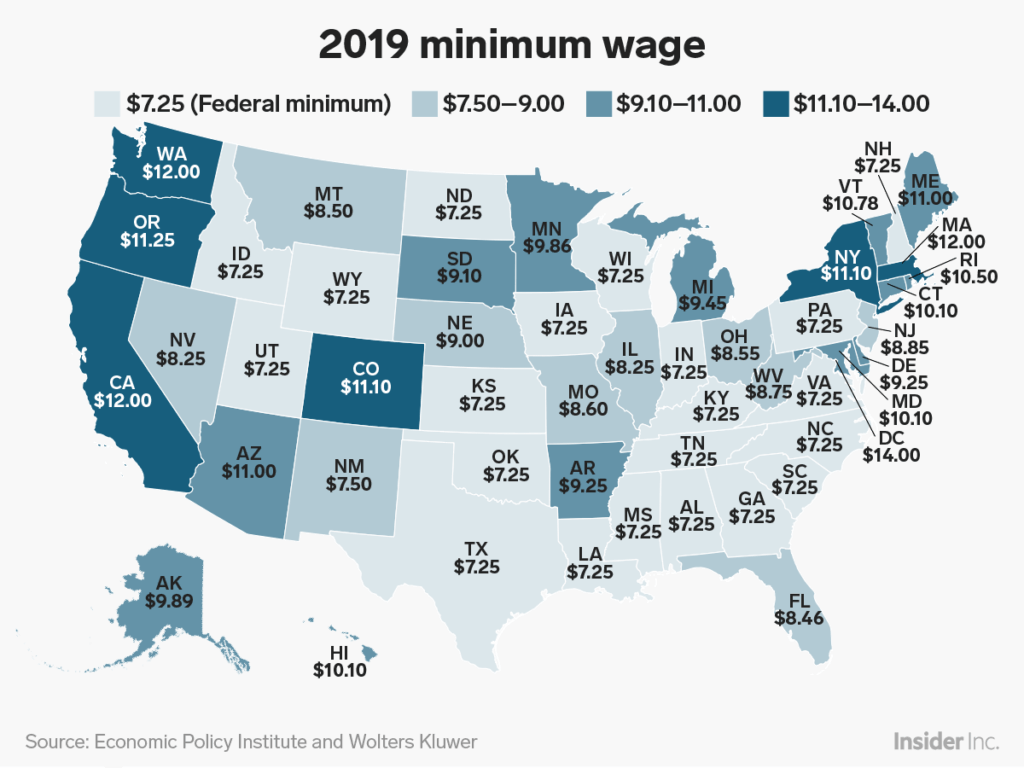
The minimum wage in the United States varies significantly from state to state, reflecting differing economic conditions, cost of living, and legislative priorities. While the federal minimum wage remains at $7.25 per hour, many states have established higher rates to better support low-income workers.
Some states adjust their minimum wage annually based on inflation, while others have set future targets to reach $15 per hour. This variation creates a complex landscape for businesses and employees alike. Understanding these differences is essential for policymakers, employers, and workers navigating wage laws across state lines.
Minimum Wage Rates Across U.S. States: A Comprehensive Overview
The federal minimum wage in the United States has remained at $7.25 per hour since 2009, but many states and localities have implemented their own higher minimum wage laws to adapt to rising living costs.
 Minimum wage in the usa by state
As a result, there is significant variation in minimum wage rates across the country. Some states follow the federal standard, while others have set rates well above it, with certain cities enacting even higher local minimum wages.
These differences reflect regional economic conditions, cost of living disparities, and legislative priorities. Understanding state-by-state minimum wage policies is essential for workers, employers, and policymakers navigating labor laws in a decentralized system.
Differences Between Federal and State Minimum Wages
The Fair Labor Standards Act (FLSA) establishes the federal minimum wage, which applies to most workers nationwide.
However, when a state's minimum wage is higher than the federal rate, employees are entitled to the higher state rate under the FLSA's higher-of-the-two rule. For example, while the federal minimum remains at $7.25, states like California and Washington have set their minimum wages above $15 per hour.
 minimum wage by each state
Conversely, states without a state-established minimum wage default to the federal rate. This creates a complex patchwork of wage requirements across the country, and employers must comply with whichever standard—federal, state, or local—is most beneficial to the employee.
States With the Highest and Lowest Minimum Wages
As of 2024, Washington, D.C. has the highest minimum wage in the United States at $17.00 per hour, followed by states like California, Washington, and Massachusetts, where rates exceed $15 per hour. These states often index their minimum wages to inflation, allowing automatic annual adjustments. On the other end of the spectrum, states such as Georgia and Wyoming maintain a state minimum wage below the federal floor; however, because the federal rate is higher, most workers in these states still earn $7.25 per hour. Notably, five states — Alabama, Louisiana, Mississippi, South Carolina, and Tennessee — do not have any state-mandated minimum wage law, defaulting entirely to federal standards. This creates disparities in worker protections depending on geographic location.
States With Minimum Wage Tied to Inflation or Scheduled Increases
Many states have adopted mechanisms to make minimum wage increases more predictable and responsive to economic conditions. At least 20 states and several large cities have laws that index their minimum wage to the Consumer Price Index (CPI) or another inflation measure, ensuring automatic yearly adjustments.
For instance, Oregon and Colorado revise their rates annually based on cost-of-living changes. Other states, such as Illinois and Florida, have legislated phased increases that will gradually raise the wage to $15 per hour by a specific date.
 Minimum wage by state in usa
These scheduled increases aim to improve income stability for low-wage workers and reduce legislative gridlock on future adjustments. This trend reflects a growing recognition of the need for wages to keep pace with living expenses.
| State | Minimum Wage (2024) | Notes |
|---|---|---|
| California | $16.00/hour | Higher local rates in cities like San Francisco and Los Angeles. |
| Washington | $16.28/hour | Adjusted annually for inflation. |
| New York | $15.00/hour (varies by region) | Higher rates in NYC and Long Island. |
| Texas | $7.25/hour | Follows federal minimum; no state-specific increase. |
| Florida | $12.00/hour | Gradually increasing to $15 by 2026. |
| Mississippi | $7.25/hour | No state minimum wage law. |
| Alaska | $10.85/hour | Indexed to inflation with annual adjustments. |
| Wyoming | $7.25/hour (federal) | State rate is $5.15 but federal prevails. |
Frequently Asked Questions
What is the current federal minimum wage in the United States?
The current federal minimum wage in the United States is $7.25 per hour, set in 2009. This rate applies to all states unless a state or local law establishes a higher minimum wage. Employers must comply with the higher standard when state or local rates exceed the federal level. Some states have significantly raised their minimum wages above the federal rate to better reflect local living costs.
Which states have the highest minimum wage in 2024?
As of 2024, Washington D.C. has the highest minimum wage at $17.00 per hour, followed by California and Washington state, both at $16.00 per hour. Other high-wage states include Massachusetts and New York, with rates near $15.00 to $16.00. These figures vary slightly depending on city or county regulations, with some local jurisdictions setting even higher rates to match rising living expenses.
Are there states where the minimum wage is lower than $7.25 per hour?
No state currently has a minimum wage legally set below the federal rate of $7.25 per hour. However, employers in states without a state-specific minimum wage must still pay at least $7.25. In some cases, certain workers—such as tipped employees or youth trainees—may be paid less than $7.25 under federal exemptions, but this does not mean the official state minimum is below that level.
 What is the minimum wage by state
How often do state minimum wages change in the U.S.?
State minimum wages can change annually, every few years, or remain unchanged for long periods, depending on state laws. Some states automatically adjust their rates yearly based on inflation or cost-of-living indexes. Others require legislative approval for changes, making updates less predictable. Workers should check their state’s labor department website regularly to stay informed about current and upcoming wage adjustments.
Leave a Reply