
Minimum wage by state in usa

The minimum wage in the United States varies significantly from state to state, reflecting differing costs of living, economic conditions, and political priorities.
While the federal minimum wage remains set at $7.25 per hour since 2009, many states have enacted their own higher minimums to better support low-income workers. Some states, like California and Washington, have some of the highest hourly minimums in the nation, while others adhere to the federal rate or have no state-level minimum wage at all.
Local ordinances in cities and counties can also influence wage standards. This article explores the current landscape of minimum wage laws across the U.S., highlighting key variations and ongoing legislative trends.
 2018 minimum wage by state
Understanding Minimum Wage by State in the USA
The minimum wage by state in the USA reflects a complex and dynamic system of labor regulations that vary significantly across the country.
While the federal government sets a baseline minimum wage, individual states—and in some cases, cities—have the authority to establish higher rates to better align with local cost of living and economic conditions. As of 2024, 30 states and the District of Columbia have minimum wages exceeding the federal rate of $7.25 per hour, a rate that has remained unchanged since 2009.
Some states, such as California and Washington, boast the highest state-mandated minimum wages, surpassing $15 per hour, while others adhere to the federal floor or even allow certain exemptions. This divergence underscores the role of state autonomy in labor policy and highlights disparities in worker protections and income equity nationwide.
State vs. Federal Minimum Wage Laws
In the United States, the Fair Labor Standards Act (FLSA) sets the federal minimum wage at $7.25 per hour, but it does not prohibit states from setting their own, higher minimum wages.
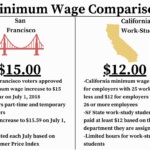 2019 minimum wage by state
When there is a discrepancy between state and federal rates, workers are entitled to receive the higher of the two, ensuring greater pay in states with more favorable laws. For example, while Georgia technically allows employers to pay as low as $5.15 per hour if they are not covered by the FLSA, most workers still receive at least the federal minimum due to interstate commerce regulations.
In contrast, states like New York and Massachusetts have proactively increased their minimum wages through legislation, indexing them to inflation in some cases to maintain purchasing power over time. This tiered approach emphasizes how labor standards are shaped by both national frameworks and regional economic realities.
Impact of Cost of Living on State Minimum Wages
The cost of living plays a pivotal role in determining why certain states adopt higher minimum wages than others. In high-cost areas such as San Francisco, New York City, or Seattle, local governments often implement city-specific wage laws that exceed even state requirements to help workers afford housing, healthcare, and transportation.
States with a lower cost of living, such as Mississippi or Alabama, frequently maintain the federal minimum wage, citing concerns about small business competitiveness and job market flexibility.
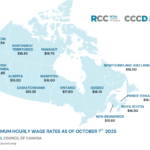 2021 minimum wage by state
However, critics argue that such low wages trap workers in poverty cycles, especially as inflation drives up essential expenses. This geographic disparity underscores the ongoing debate over whether a uniform national minimum wage or continued localized wage setting better serves American workers.
Projected Minimum Wage Increases by State (2024–2025)
Several states have enacted legislation to incrementally raise their minimum wages over the next few years, often through automatic cost-of-living adjustments (COLAs) or scheduled increases.
For instance, Illinois will reach a $15 minimum wage in 2025 for most workers, while Maryland and Delaware are on track to hit $16 and $15 per hour, respectively, in the coming years. Some states, like Florida, have constitutional amendments driving increases toward $15 by 2026. These forward-looking policies reflect growing recognition of the need to ensure livable incomes amid rising inflation and housing costs.
Employers, particularly in the retail, hospitality, and food service sectors, are adapting to these changes by adjusting pricing, reducing hours, or investing in automation, which further fuels discussions around wage policy sustainability.
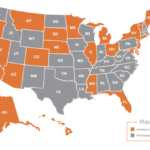 2023 minimum wage by state
| State | Current Minimum Wage (2024) | Federal Minimum Wage | Planned Increase (Next 2 Years) |
|---|---|---|---|
| California | $16.00 | No | $16.50 (projected, varies by city) |
| New York | $15.00–$16.00 (varies by region) | No | Index to inflation |
| Texas | $7.25 | Yes | No state-level increase planned |
| Washington | $16.28 | No | Annual COLA adjustment |
| Florida | $12.00 | No | $13.00 in 2024, rising to $15 by 2026 |
| Maine | $14.15 | No | $15.00 by 2025 |
| Georgia | $5.15 (state rate), $7.25 (federal applies) | Yes | No increase scheduled |
Frequently Asked Questions
What is the minimum wage by state in the USA?
The minimum wage by state in the USA varies significantly, as each state sets its own rate, which can be higher than the federal minimum wage of $7.25 per hour. Some states, like California and Washington, have rates over $15 per hour, while others follow the federal rate. Employers must pay the higher of the state or federal minimum wage, depending on applicable laws.
Which states have the highest minimum wage?
As of 2024, Washington, D.C. has the highest minimum wage at $17.00 per hour, followed by Washington state and California, both above $15.50 per hour. These states regularly adjust wages for inflation. High-cost states often implement higher minimum wages to help workers meet living expenses, especially in urban areas where the cost of living exceeds the national average.
Do all states have a minimum wage higher than the federal rate?
No, not all states have a minimum wage higher than the federal rate of $7.25 per hour. Some states, like Georgia and Wyoming, maintain a lower state minimum wage, but employers engaged in interstate commerce must still pay the federal rate. In cases where the federal minimum is higher, it supersedes the lower state rate, ensuring workers receive at least $7.25 per hour.
How often do state minimum wages change?
State minimum wages change at different intervals depending on the state. Some states adjust annually based on inflation or the cost of living, while others change rates only when new legislation is passed. Updates typically take effect at the beginning of the calendar year. Workers and employers should monitor official state labor department announcements to stay informed about current and upcoming wage changes.
 Minimum wage by state and year
Leave a Reply