
2023 minimum wage by state

The minimum wage in the United States varies significantly from state to state, reflecting regional economic conditions, cost of living, and local legislative priorities.
As of 2023, while the federal minimum wage remains at $7.25 per hour, many states have enacted higher rates to better support low-income workers. Some states adjusted their wages automatically based on inflation, while others implemented scheduled increases through legislation.
This disparity creates a complex landscape for workers and employers alike, particularly in border regions and multi-state businesses. Understanding these differences is crucial for policymakers, employees, and advocates striving for fair labor standards across the country.
 America minimum wage by state
2023 Minimum Wage by State: A Comprehensive Overview
In 2023, the minimum wage across the United States varied significantly from state to state, reflecting regional economic conditions, cost of living, and legislative priorities.
While the federal minimum wage remained unchanged at $7.25 per hour, a rate that has been in place since 2009, numerous states opted to implement higher state-mandated minimum wages to better support low-income workers.
Some states adjusted their rates based on inflation indexing, automatic annual increases tied to the consumer price index, ensuring that wages keep pace with the rising cost of living.
Additionally, certain cities and counties established even higher local minimum wages, creating a complex patchwork of regulations. This variation underscores the broader national debate over fair worker compensation, income inequality, and the economic sustainability of low-wage employment in different regions of the country.
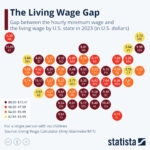 American minimum wage by state
States with the Highest Minimum Wages in 2023
In 2023, several states led the nation in setting high minimum wage rates to reflect their elevated cost of living and progressive labor policies. Washington had the highest state minimum wage at $15.74 per hour, largely due to annual adjustments based on inflation.
California followed closely with a minimum wage of $15.50 per hour for all employers, regardless of size, and certain cities like San Francisco and Los Angeles implemented local ordinances pushing wages even higher—up to $18.07 in some areas.
Massachusetts and Connecticut also joined the top tier with rates at $15.00 and $15.69 per hour, respectively. These states demonstrate a strong legislative commitment to economic equity and ensuring that full-time workers can meet basic living expenses without relying on public assistance.
States That Follow the Federal Minimum Wage
Despite growing momentum for higher wages, five states—Georgia, Wyoming, Arkansas, Minnesota, and Indiana—maintained a state minimum wage at or below the federal rate of $7.25 per hour.
 Minimum wage by state 2024 map
In these states, employers covered by the Fair Labor Standards Act (FLSA) are required to pay at least $7.25, but those not covered may legally pay less.
For example, Georgia’s state minimum wage is set at $5.15, though most workers still receive the federal floor due to FLSA protections. This discrepancy often affects small businesses, agricultural workers, and tipped employees, who may face financial challenges due to stagnant pay.
The adherence to the federal baseline reflects political and economic attitudes that prioritize low labor costs over mandated wage increases, though critics argue this perpetuates poverty-level income.
States with Planned Minimum Wage Increases Beyond 2023
Many states that already exceeded the federal minimum wage in 2023 had pre-established schedules to continue raising wages in subsequent years.
 Current minimum wage by state 2025
For instance, New York implemented region-specific rates—$15.00 in New York City, $14.20 in Nassau, Suffolk, and Westchester, and $13.20 in the rest of the state—with plans for future annual cost-of-living adjustments.
Similarly, Illinois reached $13.00 in 2023 and was on track to reach $15.00 by 2025. Florida voters approved a gradual increase via a 2020 ballot initiative, moving from $10.00 in 2021 to $11.00 in 2023 and continuing upward.
These gradual phase-in plans help businesses adapt while steadily improving minimum worker compensation, reflecting a balanced approach between worker advocacy and economic feasibility.
| State | 2023 Minimum Wage ($/hour) | Tipped Minimum Wage ($/hour) | Notes |
|---|---|---|---|
| California | 15.50 | Variable (often same as regular) | Rate is uniform for all employer sizes; some cities have higher local rates. |
| Washington | 15.74 | 15.74 | Highest state rate; adjusted annually for inflation. |
| New York | 13.20–15.00 | Variable by region | Different rates based on region size and cost of living. |
| Texas | 7.25 | 2.13 | Follows federal minimum; no state-mandated increase. |
| Florida | 11.00 | 8.98 | Voter-approved increases; set to reach $15.00 by 2026. |
| Georgia | 5.15 | 2.13 | State law is below federal; federal $7.25 applies for covered employers. |
| Maine | 13.80 | 6.38 | Indexed to inflation; annual adjustments in effect. |
| Illinois | 13.00 | 7.80 | On path to $15.00 by 2025 under state law. |
| Hawaii | 12.00 | 10.00 | Planned increases scheduled for future years. |
Frequently Asked Questions
What was the federal minimum wage in 2023?
The federal minimum wage in 2023 remained $7.25 per hour, unchanged since 2009. While this is the baseline, many states and cities have higher minimum wages.
 Us minimum wage by state map
Employers must comply with the higher of the federal, state, or local minimum wage. Most workers are entitled to the federal minimum, but those in states with higher rates typically earn more based on their location's specific laws.
Which states had the highest minimum wage in 2023?
In 2023, Washington, D.C. had the highest minimum wage at $16.10 per hour, followed closely by Washington state at $15.74 and California at $15.50 for all employers.
Massachusetts and Connecticut also had rates above $15. These rates reflect efforts to adjust for higher costs of living and inflation. Many of these states have scheduled annual increases tied to inflation or set future targets for wage hikes.
Did any states have a lower minimum wage than the federal rate in 2023?
No state had a mandated minimum wage lower than the federal rate of $7.25 per hour in 2023. However, states without their own minimum wage laws default to the federal rate.
In practice, if a state minimum is below the federal rate, the higher federal wage applies. Most workers in such states still earn at least $7.25 per hour due to federal law protections.
Were there different minimum wages for tipped employees in 2023?
Yes, in 2023, many states had a lower minimum wage for tipped employees, such as servers and bartenders. The federal tipped minimum wage remained $2.13 per hour, provided tips bring total earnings to at least $7.25.
However, several states set higher tipped minimums or required employers to pay full minimum wage before tips. These rules vary significantly by state, affecting worker protections and earnings.
Leave a Reply