
American minimum wage by state
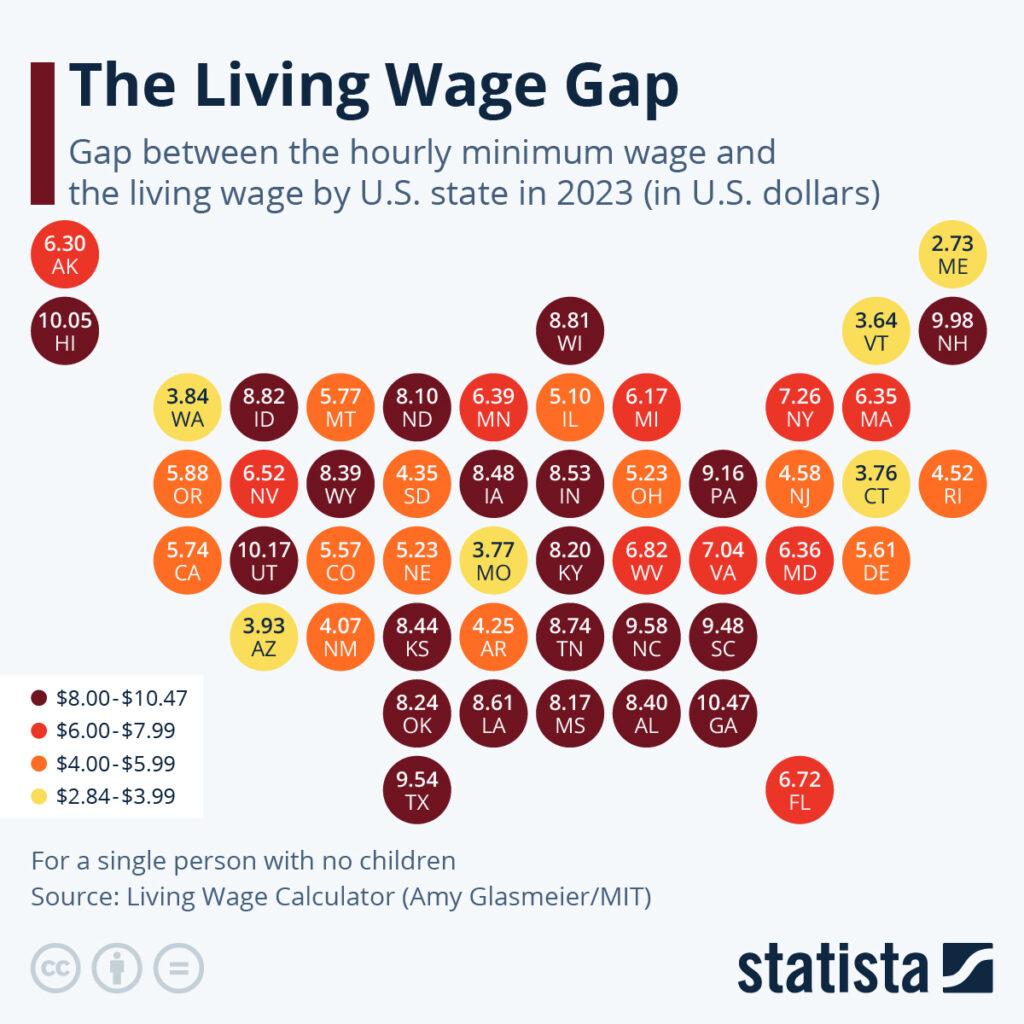
The minimum wage in the United States varies significantly from state to state, reflecting differing economic conditions, cost of living, and legislative priorities.
While the federal minimum wage remains at $7.25 per hour, many states have established higher rates to better support low-income workers. Some states, like California and Washington, boast the highest minimum wages in the nation, surpassing $15 per hour, while others adhere to the federal baseline or have no state-mandated minimum at all.
This patchwork system creates disparities in worker earnings and purchasing power across state lines, prompting ongoing debate about fairness, inflation, and economic sustainability in the evolving American labor market.
 Us minimum wage by state map
American Minimum Wage by State: A Comprehensive Overview
The minimum wage in the United States varies significantly from state to state, reflecting differing economic conditions, cost of living, and legislative priorities across the country.
While the federal government sets a baseline minimum wage of $7.25 per hour, many states have enacted their own higher rates to better support workers in local economies. As of 2024, 30 states plus the District of Columbia have minimum wages above the federal level, with some cities implementing even higher local rates through ordinances.
This patchwork system means that employees doing the same job in neighboring states may earn vastly different hourly wages, which has profound implications for labor mobility, business operations, and economic equity.
Understanding these variations is crucial for policymakers, employers, and workers alike, especially in evaluating how wage laws affect poverty levels, consumer spending, and competitive job markets.
 Department of labor minimum wage by state
Current Minimum Wage Rates Across States in 2024
In 2024, the range of state minimum wages spans from the federal floor of $7.25 to significantly higher rates in states like Washington ($16.28) and California ($16.00 for all employers, with some cities like San Francisco exceeding $18).
Several states, including Florida, Illinois, and Maryland, are on a phased approach to reach $15 per hour in the coming years, reflecting long-term policy goals to improve living standards.
Other states, such as Georgia and Wyoming, maintain lower state-set rates—$5.15 and $5.17, respectively—although most workers in those states are still entitled to the higher federal rate due to the Fair Labor Standards Act (FLSA).
The variability arises from differing political climates, cost-of-living pressures, and economic structures, such as tourism-dependent economies in states like Hawaii and Florida needing higher wages to sustain residents amid high housing costs.
 Minimum wage by state map 2025
States Without a State Minimum Wage or with Rates Below Federal Levels
Some states do not establish their own minimum wage laws or set rates below the federal standard, which triggers the application of the higher federal rate under the FLSA.
States like Tennessee, Alabama, Mississippi, and South Carolina fall into this category, meaning employers must pay at least $7.25 per hour since there is no competing state law. In other instances, states such as Louisiana and Mississippi lack a formal state minimum wage altogether, leaving workers fully dependent on federal regulations.
While this may appeal to businesses seeking to minimize labor costs, critics argue it fails to protect workers in regions where living expenses have outpaced the stagnant federal minimum since 2009. Additionally, workers in these states often face greater challenges in accessing benefits and advocating for wage increases due to limited labor protections.
Impact of Minimum Wage Differences on Workers and the Economy
The disparity in minimum wage rates across states has measurable effects on income inequality, employment levels, and regional economic health. Higher minimum wages are generally associated with reduced poverty and lower reliance on public assistance programs, as workers can afford basic necessities with full-time earnings.
However, opponents argue that steep wage increases can lead to reduced hiring, automation, or business closures, particularly in small enterprises with thin profit margins. Empirical studies show mixed results: while some regions experience modest job losses, others see neutral or even positive economic growth due to increased consumer spending from low-wage workers.
Moreover, geographic differences in the cost of living highlight limitations in a one-size-fits-all federal rate, making state-level adjustments essential for aligning wages with local economic realities.
| State | Minimum Wage (2024) | Federal Minimum Applies? | Notes |
|---|---|---|---|
| California | $16.00 | No | Some cities have higher local rates; e.g., Los Angeles, San Francisco |
| Washington | $16.28 | No | Highest state rate in the nation; adjusted annually for inflation |
| New York | $15.00–$16.00 | No | Varies by region and size of employer |
| Texas | $7.25 | Yes | State rate matches federal; no state-specific minimum |
| Florida | $12.00 | No | Increases annually; targets $15 by 2026 |
| Georgia | $5.15 | Yes | Federal rate of $7.25 applies to most workers |
| Maryland | $13.50 | No | Phasing in $15 by 2025 |
| Mississippi | N/A | Yes | No state minimum wage law |
| Illinois | $14.00 | No | Reaches $15 in 2025; $16 for tipped workers by 2028 |
| Maine | $14.15 | No | Increases with inflation; higher for tipped employees |
Frequently Asked Questions
What is the federal minimum wage in the United States?
The federal minimum wage in the United States is $7.25 per hour, last updated in 2009. This rate applies to workers covered by the Fair Labor Standards Act (FLSA).
If a state’s minimum wage is lower than the federal rate, employees are entitled to the higher rate. Most states, however, have established minimum wages above the federal level to better reflect local living costs.
Which U.S. states have the highest minimum wage?
As of 2024, states with the highest minimum wages include Washington, California, and Massachusetts, where rates exceed $15 per hour.
Washington State leads with a minimum wage of $16.28 per hour. These rates adjust annually based on inflation. Employers in these states must follow state laws, which often provide greater protections and higher earnings than the federal minimum wage.
Can states set a lower minimum wage than the federal rate?
States can set a minimum wage lower than the federal rate of $7.25, but employers must still pay the higher federal wage if their workers are covered by the FLSA.
In practice, when state rates fall below federal levels, the federal minimum becomes the standard. Most states opt for rates at or above $7.25 to support better living standards.
How often do state minimum wages change?
State minimum wages change at different times depending on state laws. Some adjust annually based on cost-of-living increases or inflation, while others require legislative action.
Increases typically take effect each January 1. Employers and employees should monitor updates from state labor departments to ensure compliance with current wage requirements in their respective states.
Leave a Reply