
America minimum wage by state

The minimum wage in the United States varies significantly from state to state, reflecting differing economic conditions, cost of living, and legislative priorities. While the federal minimum wage remains at $7.25 per hour, many states have established higher rates to better support low-income workers.
Some states adjust their minimum wages annually for inflation, while others have set future schedules to gradually increase pay. This patchwork of regulations creates a complex landscape for employers and employees alike. Understanding these variations is crucial for workers’ rights, business planning, and economic policy development across the country.
Understanding Minimum Wage Variations Across U.S. States
The minimum wage in the United States is not uniform across all states; instead, it varies significantly depending on state and, in some cases, even local laws.
 Current minimum wage by state 2025
While the federal minimum wage remains set at $7.25 per hour since 2009, many states have established higher minimum wages to better reflect the cost of living in their regions. Some states, like California and Washington, consistently rank among the highest, with rates exceeding $15 per hour in certain areas.
Others, such as Georgia and Wyoming, officially maintain lower minimums, though most employers in those states still pay at least the federal rate due to the Fair Labor Standards Act (FLSA) coverage. Additionally, several cities and counties have enacted local minimum wages that surpass both state and federal levels, creating a complex patchwork of wage requirements within single states.
These disparities reflect ongoing debates about economic equity, inflation, and job market dynamics, making understanding state-by-state minimum wage policies essential for workers, employers, and policymakers alike.
State Minimum Wage vs. Federal Floor
The federal minimum wage of $7.25 per hour serves as a baseline, but individual states can set higher (but not lower) rates under the FLSA. Currently, over 30 states plus Washington, D.C., have minimum wages above the federal level, ensuring that workers in those areas earn more than the national floor.
 Us minimum wage by state map
In states where the state minimum is lower than the federal rate, the higher federal wage typically applies due to FLSA preemption. For example, in Georgia, the state minimum wage is $5.15 per hour, but most workers are entitled to $7.25 because they are engaged in interstate commerce or other FLSA-covered activities.
Conversely, states like Massachusetts and Illinois continuously adjust their minimums through legislation or indexed inflation measures, demonstrating a commitment to maintaining wage adequacy in the face of rising living costs. This bifurcated system allows states to respond to local economic conditions but also introduces complexity for businesses operating across multiple jurisdictions.
Local Ordinances and Municipal Wage Laws
Beyond state-level policies, municipal minimum wage laws add another layer to the U.S. wage landscape.
Cities such as Seattle, San Francisco, and New York City have implemented local ordinances that set minimum wages significantly higher than both state and federal standards—sometimes exceeding $17 or $18 per hour. These local laws often phase in increases over time and may include differential rates for large and small businesses or those that provide health benefits.
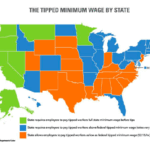 Department of labor minimum wage by state
For instance, in Seattle, employers with more than 500 employees must pay a higher rate than smaller operations. Such local autonomy empowers cities with high costs of living to address economic disparities, although it can create administrative challenges for multi-location businesses and franchise operations.
These localized efforts highlight the growing trend toward place-based economic policy designed to ensure workers can afford basic necessities in expensive urban environments.
Projected Changes and 2024–2025 Adjustments
Many states have enacted laws that include automatic annual adjustments based on inflation or scheduled increases toward a target wage, such as $15 per hour. As of 2024, states like Minnesota and New Jersey saw increases due to cost-of-living adjustments (COLAs), while others, including Ohio and Alaska, routinely update their rates based on inflation metrics.
Several states, including Maryland and Delaware, are on multi-year paths to reach a $15 minimum wage, reflecting bipartisan momentum for wage reform. Additionally, ballot initiatives in states such as Arizona and Colorado have historically driven changes through direct voter action.
These ongoing adjustments mean that employers must stay informed about not only current rates but also future changes, especially in states with indexed wage laws. Monitoring these trends is crucial for payroll compliance and for understanding regional labor market competitiveness in the coming years.
| State | State Minimum Wage (2024) | Tipped Minimum Wage | Notes |
|---|---|---|---|
| California | $16.00 | $16.00 | Rate is uniform; some cities have higher local wages. |
| Washington | $16.28 | $16.28 | Highest state minimum; adjusts annually for inflation. |
| New York | $15.00–$16.00 | $10.00–$10.85 | Varies by region and county; NYC has highest rate. |
| Texas | $7.25 | $2.13 | Follows federal minimum; no state increase enacted. |
| Florida | $12.00 | $8.98 | On path to $15 by 2026 via ballot initiative. |
| Georgia | $5.15 | $2.13 | Most workers entitled to $7.25 under federal law. |
| Maine | $14.15 | $6.38 | Increases annually based on CPI; auto-indexed. |
Frequently Asked Questions
What is the federal minimum wage in the United States?
The federal minimum wage in the United States is $7.25 per hour, last updated in 2009. This rate applies to employees covered by the Fair Labor Standards Act (FLSA).
However, if a state’s minimum wage is higher, workers are entitled to the higher rate. Employers must follow whichever wage is greater, ensuring employees receive the most beneficial pay standard under federal or state law.
Do all states follow the federal minimum wage?
No, not all states follow the federal minimum wage. While the federal rate is $7.25 per hour, many states have set higher minimum wages.
Employers must pay the higher state rate when it exceeds the federal minimum. Some states also have different rates for small businesses or certain industries. Workers are protected by the higher applicable wage, whether federal or state, under the Fair Labor Standards Act.
Which states have the highest minimum wage in 2024?
In 2024, Washington, D.C. has the highest minimum wage at $17.00 per hour, followed by states like California and Washington, both at $16.00 per hour.
Massachusetts, Colorado, and others are also near the top, with rates above $15.00. These rates are adjusted annually for inflation in many states, ensuring workers keep pace with the cost of living in their respective regions.
Can cities set their own minimum wage above the state rate?
Yes, many cities can set their own minimum wage higher than the state rate due to local ordinances. Examples include Seattle, San Francisco, and New York City, where local minimum wages exceed both state and federal levels.
However, state laws sometimes restrict this authority, known as “preemption.” Where allowed, workers are entitled to the highest applicable wage—federal, state, or local—ensuring the best available pay protection.
Leave a Reply