
Minimum wage to afford rent by state
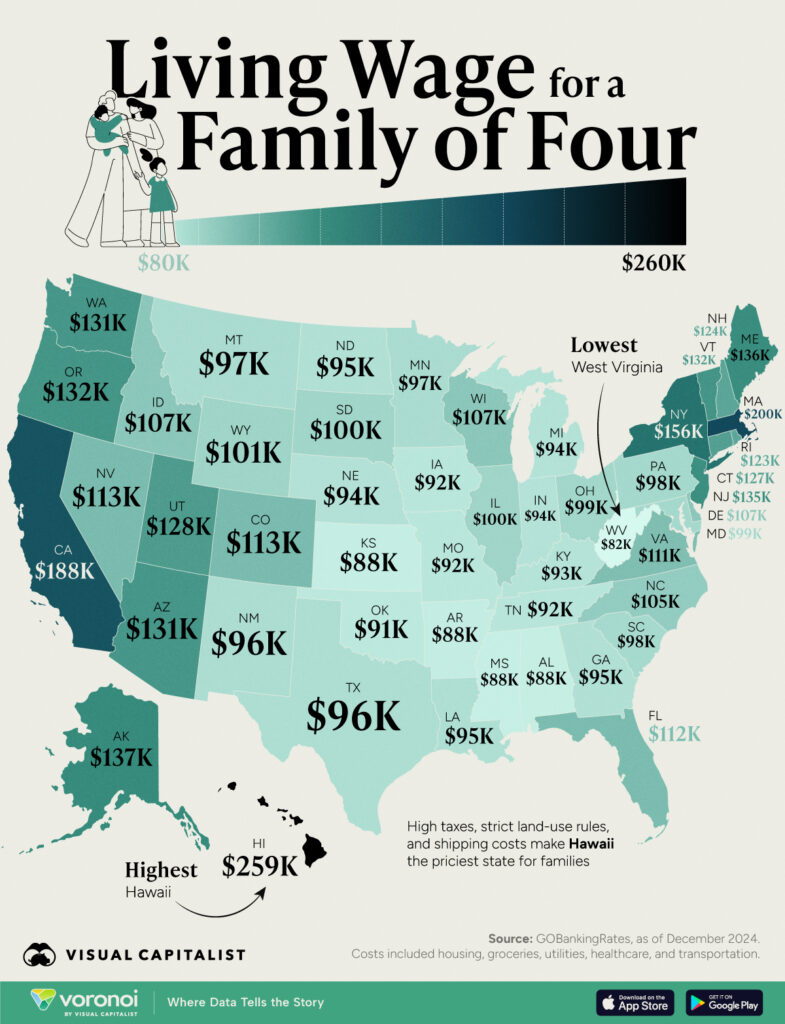
In the United States, the gap between minimum wage and affordable housing continues to widen, making it increasingly difficult for low-income workers to secure stable housing.
With rent prices surging across most states, earning the federal minimum wage of $7.25 per hour is no longer sufficient to afford a modest two-bedroom apartment anywhere in the country. Even in states with higher minimum wages, workers often need to put in excessive hours to meet basic housing costs.
This article explores how much workers would need to earn per hour to afford rent in each state, highlighting the growing economic disparity and the urgent need for policy solutions that address both wage stagnation and housing affordability.
 Tampa workers compensation laywer
Minimum Wage Workers Can't Affordable Rent in Any U.S. State
In the United States, the growing gap between wages and housing costs has made it increasingly difficult for low-income workers to afford basic rent.
Even when working full-time at the federal minimum wage of $7.25 per hour, individuals fall drastically short of being able to rent a modest two-bedroom apartment without spending more than 30% of their income—the threshold defined by the U.S. Department of Housing and Urban Development as “cost-burdened.”
In fact, according to the National Low Income Housing Coalition (NLIHC), a worker needs to earn a median wage of $28.52 per hour to afford a two-bedroom rental unit at fair market rent. This equates to working 97 hours per week at minimum wage, far exceeding the standard 40-hour workweek.
The disparity is even more pronounced for single earners and families relying on minimum wage jobs in states with high cost of living, such as California, New York, and Massachusetts, where rent prices have outpaced wage growth for over a decade.
 Texas workers' compensation not required private employers
The National Housing Wage vs. Minimum Wage
The concept of the “housing wage” refers to the hourly wage a full-time worker must earn to afford a two-bedroom rental unit without spending more than 30% of their income on rent and utilities. According to the 2023 Out of Reach report by the NLIHC, this national housing wage sits at $28.52 per hour, nearly four times the federal minimum wage of $7.25.
Even in states with lower rental prices, such as Mississippi or Arkansas, the required housing wage exceeds the state minimum wage, creating impossible trade-offs for low-wage workers who must sacrifice necessities like healthcare, food, or transportation to pay rent.
This alarming gap underscores how the federal minimum wage has not been adjusted since 2009 and fails to reflect current economic realities, particularly in housing markets where supply constraints and demand surges continue to drive up prices.
State-by-State Disparities in Wage and Rent Affordability
Affordability challenges vary significantly across states due to differences in minimum wage laws, rental prices, and cost of living.
 Top-rated law firms for workers' compensation claims in chicago
For example, in Hawaii, workers need to earn $49.05 per hour to afford a two-bedroom apartment—the highest in the nation—due to high demand and limited land availability. In contrast, in West Virginia, the required housing wage is $19.95, the lowest in the country, but still over two and a half times the state's minimum wage of $8.75.
States that have set minimum wages above the federal standard, such as Washington ($15.74 in 2023) or California ($15.50 for large employers), fare slightly better, but even these elevated wages fall short of housing affordability benchmarks. The disconnect illustrates that localized wage policies, while helpful, are still insufficient without complementary affordable housing initiatives.
Impact on Renters and the Need for Policy Solutions
The inability of minimum wage earners to afford rent has far-reaching social and economic implications, including increased homelessness, overcrowded housing, and geographic displacement.
Many low-income renters are forced into substandard housing or live in remote areas with longer commutes, reducing quality of life and increasing transportation costs. This affordability crisis disproportionately affects communities of color, women, and individuals with limited education or job training.
To address this systemic issue, policymakers are urged to consider raising the federal minimum wage, expanding rental assistance programs like Section 8, investing in public and affordable housing, and implementing rent stabilization measures. Without structural changes, the dream of safe, stable housing remains out of reach for millions of working Americans.
| State | Min. Wage (2023) | 2-Bedroom Fair Market Rent | Housing Wage Required | Hours Needed at Min. Wage |
|---|---|---|---|---|
| California | $15.50 | $2,707 | $29.53 | 97 |
| New York | $14.20–$15.00 | $2,484 | $27.00 | 102 |
| Texas | $7.25 (federal) | $1,548 | $16.83 | 87 |
| Florida | $11.00 | $1,945 | $21.14 | 92 |
| Mississippi | $7.25 | $1,048 | $11.40 | 48 |
Frequently Asked Questions
What is the minimum wage needed to afford rent in different U.S. states?
The minimum wage needed to afford rent varies significantly by state due to differences in housing costs. On average, a worker needs to earn more than $20 per hour to afford a modest two-bedroom rental.
In high-cost states like California or New York, the required wage can exceed $30 per hour, while in more affordable states like Mississippi or Arkansas, it may be closer to $15. These figures assume spending no more than 30% of income on rent.
How is the wage needed to afford rent calculated?
The wage required to afford rent is calculated based on the Fair Market Rent (FMR) for a two-bedroom home in each state, as reported by the U.S. Department of Housing and Urban Development.
Assuming a household spends no more than 30% of its income on housing, researchers divide the monthly rent by 0.3 to find the necessary monthly income, then convert this into an hourly wage based on full-time work (2,080 hours per year).
Which U.S. state has the highest wage needed to afford rent?
Hawaii consistently has the highest wage needed to afford rent, often exceeding $50 per hour for a two-bedroom unit.
This is due to extremely high housing costs driven by limited land availability and high demand. Even full-time minimum wage workers in Hawaii struggle to cover rent, highlighting a severe affordability crisis. Similar challenges exist in California and parts of the Northeast.
Why can’t minimum wage workers afford rent in most states?
Most state minimum wages fall far below the level needed to afford rent because housing costs have risen faster than wages. Even at the federal minimum wage of $7.25 per hour, workers earn only about $15,000 annually, which is insufficient for rent in nearly every state.
Additionally, many workers earn less than 40 hours per week, further reducing their housing affordability. This gap highlights systemic economic challenges.
Leave a Reply