
Minimum wage requirements by state
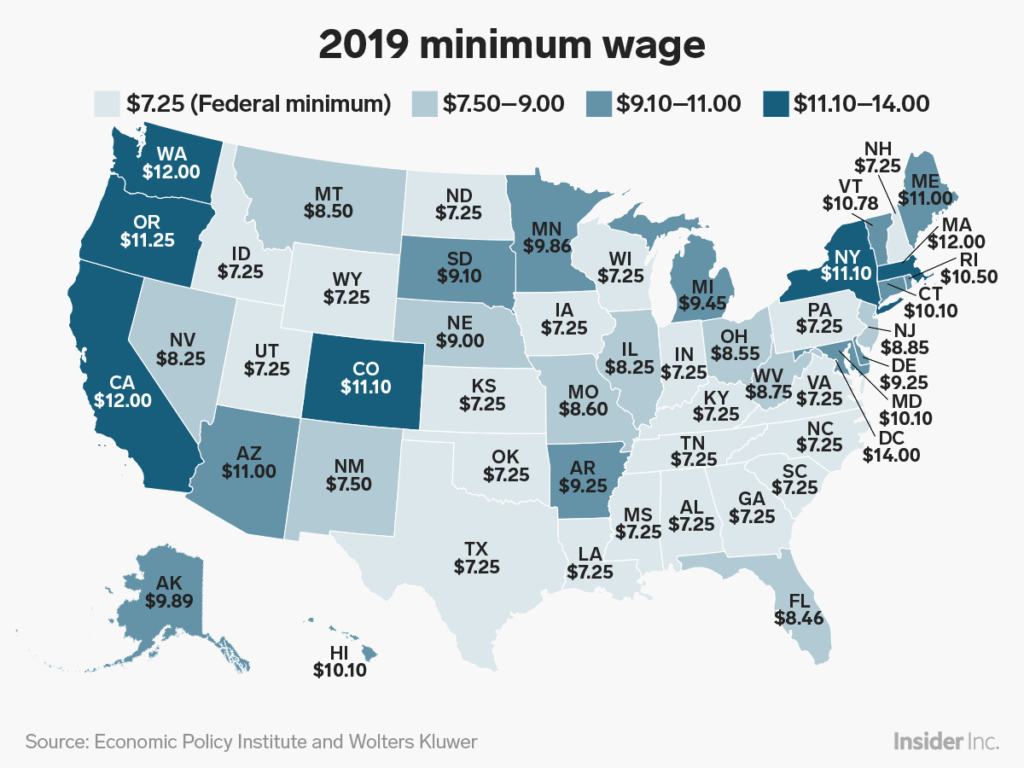
The minimum wage varies significantly across the United States, with each state setting its own requirements that can exceed the federal standard.
While the federal minimum wage remains at $7.25 per hour, many states have enacted higher rates to reflect rising living costs and local economic conditions. Some states adjust their minimum wage annually based on inflation, while others have set scheduled increases to reach specific targets.
Additionally, certain cities implement even higher local minimum wages. These variations create a complex landscape for employers and workers alike. Understanding state-specific minimum wage laws is crucial for ensuring fair pay and compliance with labor regulations.
 Hospitals workers compensation
Minimum Wage Requirements by State: A Comprehensive Overview
The minimum wage requirements by state in the United States vary significantly, creating a complex patchwork of labor laws that employers and workers must navigate.
While the federal government sets a baseline federal minimum wage of $7.25 per hour, many states—and even some cities and counties—have established higher rates to reflect differences in the cost of living, local economic conditions, and political priorities.
As of 2024, over 30 states plus Washington, D.C., have minimum wages above the federal floor. For example, Washington state and California lead the nation with rates exceeding $16 per hour, whereas states like Georgia and Wyoming officially maintain the $7.25 rate, though most employers in those states follow higher federal or state-specific rules when applicable.
This disparity means that workers performing the same job in neighboring states can earn notably different hourly wages, impacting labor mobility, business operations, and regional economic equity.
 How to file workers compensation claim psychological trauma accident
State vs. Federal Minimum Wage Laws
In the U.S., the Fair Labor Standards Act (FLSA) establishes the federal minimum wage, but it also permits states to set their own, often higher, minimum wage rates. When there is a discrepancy between state and federal law, employees are entitled to the higher wage under the principle of most beneficial standard.
This means that even in states with a lower or no minimum wage above the federal baseline, workers typically receive the federal rate unless local jurisdictions have enacted ordinances that exceed it. For instance, while Texas adheres to the $7.25 federal minimum, cities like Austin have previously sought to implement higher rates before being pre-empted by state law.
Conversely, in states like New York or Massachusetts, state-mandated wages are significantly higher and automatically apply to most workers, illustrating how state autonomy plays a critical role in wage policy.
Cost of Living and Regional Adjustments
One of the primary drivers behind state-specific minimum wage laws is the variation in cost of living across the country. States with high housing, healthcare, and transportation costs—such as California, New Jersey, and Colorado—have adopted higher minimum wages to help workers meet basic needs.
 How to prove employer negligence workers compensation
Some states also incorporate automatic cost-of-living adjustments (COLAs), which index the minimum wage to inflation, ensuring that wage gains do not erode over time. For example, Oregon has a tiered minimum wage system that varies not only by region (with higher rates in the Portland metro area) but also adjusts yearly based on consumer price indices.
Similarly, Arizona and Maine use annual inflation adjustments to maintain the purchasing power of their minimum wage, reflecting a growing recognition that a one-size-fits-all federal rate does not adequately address regional economic disparities.
Exemptions and Special Provisions by State
While most full-time employees are covered by minimum wage laws, there are important exemptions and special provisions that vary by state. Common exemptions include tipped employees, youth workers, student learners, and disabled workers, who may be paid below the standard minimum wage under certain conditions.
For example, many states allow employers to take a tip credit, meaning that tips can count toward meeting the minimum wage requirement, resulting in a lower cash wage (e.g., $5.15 in Florida for tipped workers as of 2024). Some states, known as tip credit or 80/20 rule states, have recently restricted this practice if employees spend more than 20% of their time on non-tipped duties.
 Houston workers compensation attorney
Additionally, agricultural workers, seasonal employees, and certain family-owned businesses may be subject to different rules depending on the state, underscoring the importance of understanding state-specific labor codes to ensure compliance and worker protection.
| State | Minimum Wage (2024) | Tipped Wage | Cost-of-Living Adjustment (COLA) |
|---|---|---|---|
| California | $16.00 | $16.00 | Yes |
| Washington | $16.28 | $16.28 | Yes |
| New York | $15.00–$16.00 (by region) | $10.00 | Yes |
| Texas | $7.25 | $2.13 | No |
| Florida | $12.00 | $7.98 | Yes |
| Maine | $14.15 | $6.98 | Yes |
| Wyoming | $7.25 | $2.13 | No |
| Oregon | $13.20–$15.45 (by region) | $13.20 | Yes |
Frequently Asked Questions
What are minimum wage requirements by state?
Minimum wage requirements by state refer to the lowest hourly wage employers must legally pay workers in each U.S. state. These rates vary significantly across states and sometimes within cities or counties. While the federal minimum wage is $7.25 per hour, many states have set higher rates. Employers must follow whichever law—federal, state, or local—provides the highest wage for employees.
Which state has the highest minimum wage?
As of 2024, California has the highest state minimum wage at $16.00 per hour for all employers. Some cities, like Seattle and San Francisco, have even higher local minimum wages. Washington state also ranks among the highest, with a minimum wage of $16.28 per hour. These rates are adjusted annually for inflation, ensuring workers’ wages keep pace with the cost of living in high-expense areas.
Can a state's minimum wage be lower than the federal rate?
States are allowed to set minimum wages below the federal rate, but the federal minimum wage of $7.25 per hour still applies in those cases. Employers in states with lower rates must follow the higher federal standard. However, most states either match or exceed the federal minimum wage to better support workers. The Fair Labor Standards Act ensures employees receive the highest applicable wage between federal, state, and local laws.
How often do state minimum wages change?
State minimum wages change at different times depending on each state’s laws. Some states adjust annually based on inflation or cost-of-living increases, while others require legislative action. Changes typically take effect on January 1st each year. Employers and employees should monitor updates from state labor departments to ensure compliance. Staying informed helps avoid violations and ensures fair compensation across industries.
Leave a Reply