
When should an unsafe condition be reported to osha

An unsafe working condition can pose serious risks to employee health and safety, making timely reporting crucial. OSHA, the Occupational Safety and Health Administration, requires employers to maintain a safe workplace, but workers also play a vital role in identifying and reporting hazards.
An unsafe condition should be reported to OSHA when it presents an imminent danger, violates safety regulations, or when the employer fails to address the issue after being notified.
Reporting is especially important when there is a risk of injury, illness, or death. Workers have the right to file a complaint without fear of retaliation. Knowing when and how to report ensures a safer work environment for everyone.
 18c of the racial discrimination act
When Should an Unsafe Condition Be Reported to OSHA?
An unsafe condition should be reported to the Occupational Safety and Health Administration (OSHA) when it presents a recognized hazard that could cause serious harm or death to workers and the employer has failed to address it adequately.
Employees or their representatives may file a complaint with OSHA if they believe that working conditions are unsafe or unhealthful, especially when internal reporting to management has not resulted in corrective action.
Immediate reporting is strongly encouraged when the hazard involves imminent danger—such as exposure to toxic chemicals, unguarded machinery, fall risks from heights, or electrical hazards—where an accident could occur at any moment.
OSHA protects whistleblowers under federal law, ensuring that employees can report without fear of retaliation. In cases of severe hazards or workplace fatalities, OSHA urges prompt reporting to prevent injuries and ensure compliance with safety standards.
 18c racial discrimination act
Imminent Danger Situations Requiring Immediate OSHA Reporting
Workers must report unsafe conditions to OSHA immediately when facing imminent danger, defined as a situation where there is a reasonable expectation of death or serious physical harm that cannot be corrected quickly enough through normal enforcement procedures.
Examples include structural instability in a worksite, ongoing exposure to high levels of hazardous substances, or malfunctioning safety controls in heavy equipment.
In such cases, employees have the right to refuse to work if they believe they are in immediate danger, and they must inform both the employer and OSHA as soon as possible. OSHA is required to respond quickly to imminent danger complaints, often conducting inspections within 24 to 48 hours to assess and mitigate the threat.
Reporting Persistent Hazards After Employer Inaction
An unsafe condition should be reported to OSHA when it has been brought to the employer’s attention but remains uncorrected. Many workplaces encourage internal reporting through safety officers or supervisors, but when corrective actions are ignored or delayed, employees are justified in escalating the issue to OSHA.
 1965 racial discrimination
This includes recurring mechanical failures, blocked emergency exits, inadequate personal protective equipment (PPE), or ongoing ergonomic issues leading to injuries. Filing a complaint ensures that OSHA can investigate and enforce standards that protect all workers.
It's important to document prior attempts to resolve the issue, as OSHA typically requires evidence that the employer was aware of the hazard but failed to act responsibly.
Severe Injuries, Fatalities, or Catastrophic Events
OSHA mandates employers to report workplace incidents involving hospitalizations, amputations, loss of an eye, or fatalities within specific timeframes—such as fatalities within 8 hours and inpatient hospitalizations within 24 hours.
However, workers or witnesses should also report such events directly to OSHA if they believe the incident resulted from unsafe conditions or if the employer fails to comply with reporting requirements.
 A man sued his employer for racial discrimination
These reports help OSHA identify systemic safety failures and prevent future tragedies. Reporting is especially crucial in cases where the root cause was preventable, such as lack of training, defective equipment, or violation of safety protocols, ensuring accountability and regulatory oversight.
| Situation | Action Required | OSHA Reporting Timeframe |
|---|---|---|
| Imminent danger (e.g., gas leak, unstable trench) | Report immediately via phone or online complaint | ASAP – OSHA responds within 24–48 hours |
| Fatalities | Notify OSHA within 8 hours | 8 hours from the incident |
| Inpatient hospitalization, amputation, eye loss | Notify OSHA within 24 hours | 24 hours from the incident |
| Employer ignores hazard after internal reporting | File a formal complaint with OSHA | No strict deadline, but timely reporting advised |
| Retaliation for raising safety concerns | Report within 30 days of adverse action | 30 days to file a whistleblower complaint |
When to Report an Unsafe Workplace Condition to OSHA: A Comprehensive Guide
When must employers report unsafe working conditions to OSHA?
Employers are required to report certain unsafe working conditions to the Occupational Safety and Health Administration (OSHA) under specific circumstances defined by federal regulations. Immediate reporting is mandatory for severe workplace incidents, such as fatalities, inpatient hospitalizations, amputations, or losses of an eye.
In addition to these acute events, employers must maintain a safe work environment and report recurring hazards that pose serious risks to employee health and safety. Failure to report these conditions can result in penalties, fines, and legal consequences.
OSHA emphasizes a proactive approach to identifying and mitigating unsafe conditions, and employers play a critical role in ensuring compliance with safety standards through timely reporting and corrective actions.
 Abercrombie racial discrimination lawsuit
When Are Employers Required to Report Fatalities to OSHA?
- Employers must report any work-related fatality to OSHA within 8 hours of the incident occurring. This includes deaths that happen during work or as a direct result of a work-related incident, regardless of when the fatality happens after the initial event.
- If a worker dies within 30 days of a workplace incident, such as an injury or exposure to hazardous substances, the employer is obligated to notify OSHA even if the death occurs off-site, like in a hospital or at home.
- Reporting must be done through official channels, such as OSHA’s toll-free number, online form, or in person at a local OSHA office. Providing accurate details about the incident, including time, location, and circumstances, ensures that OSHA can initiate any necessary investigation or follow-up procedures.
What Constitutes a Reportable Hospitalization, Amputation, or Loss of an Eye?
- Work-related incidents that result in the inpatient hospitalization of one or more employees must be reported to OSHA within 24 hours. This includes admission to a hospital for medical treatment, not just overnight observation or outpatient care.
- Any work-related amputation, including partial or complete severance of a limb or appendage such as fingers, hands, or arms, must be reported regardless of when it occurs after the incident, as long as it’s work-related and happens within 24 hours of the event.
- Loss of an eye due to a workplace injury must also be reported within 24 hours. This applies whether the incident occurs suddenly, such as from flying debris, or results from chemical exposure or other occupational hazards.
Are Ongoing Unsafe Working Conditions Also Reportable?
- While OSHA mandates reporting only for specific severe incidents, employers have a general duty under the Occupational Safety and Health Act to maintain a workplace free from recognized hazards likely to cause death or serious harm. This includes chronic unsafe conditions, such as repeated exposure to toxic materials or unsafe machinery operation.
- Although ongoing hazards may not require immediate incident reporting like fatalities or amputations, employers must take corrective actions and may need to report these hazards if they escalate to reportable events. Proactively addressing these conditions helps prevent future violations and workplace tragedies.
- Employees or safety representatives can also file complaints with OSHA about persistent unsafe working conditions, which may prompt an inspection. Employers who fail to address such hazards risk citations, fines, and enforcement actions even in the absence of a severe incident.
When is it necessary to report an unsafe workplace condition to OSHA?
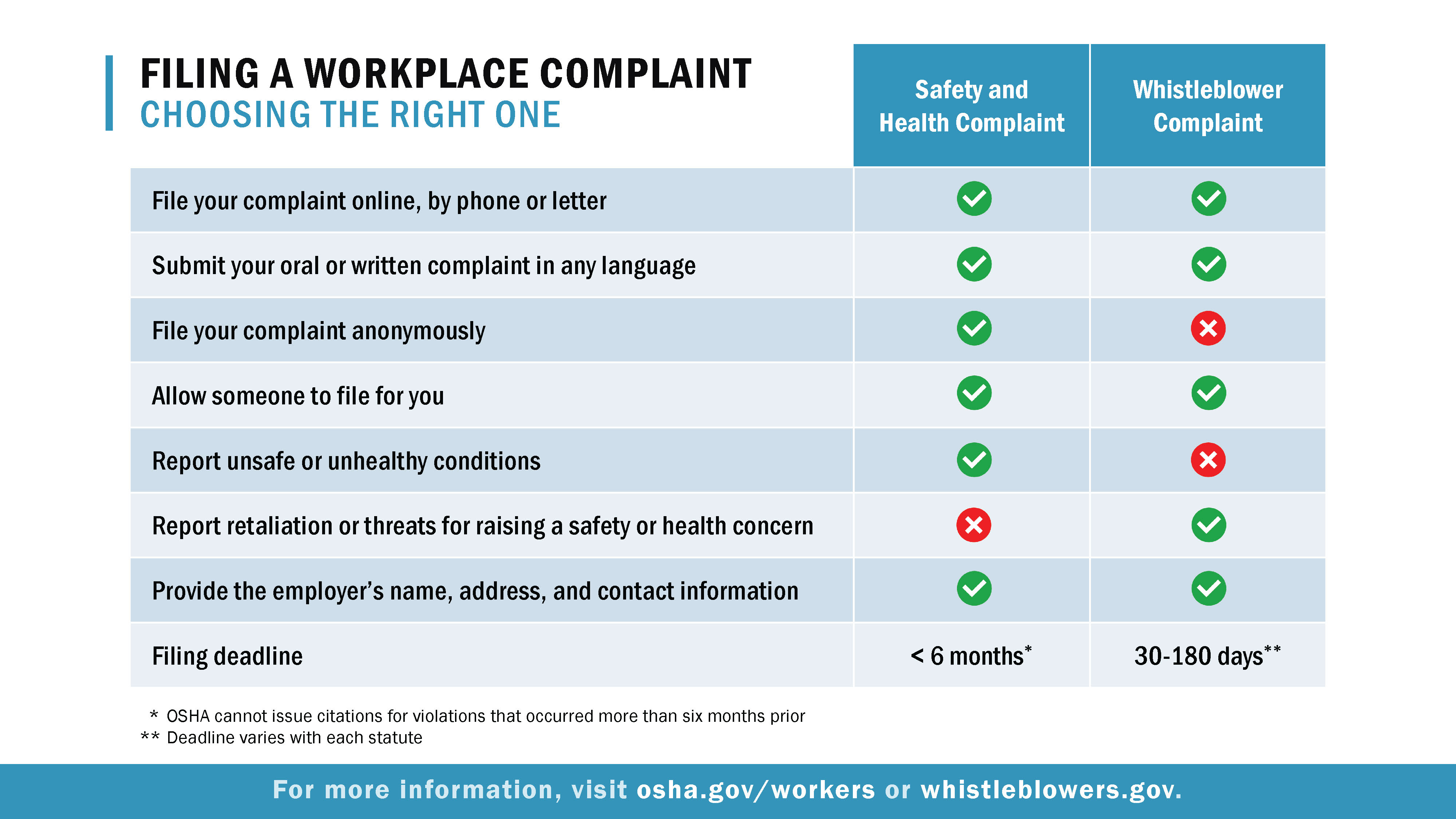
When Immediate Danger is Present
- If employees face an imminent risk of death or serious physical harm, reporting to OSHA is necessary right away. This includes situations such as exposed high-voltage wiring, unguarded machinery that has caused injuries, or the presence of toxic fumes in poorly ventilated areas.
- Workers do not need to wait for an accident to occur if the hazard is obvious and could reasonably result in severe injury or fatality. For example, a worker noticing a cracked crane cable lifting heavy materials should report it immediately.
- OSHA prioritizes such complaints and may conduct an unannounced inspection to eliminate the threat swiftly, especially when lives are at stake.
When Employers Fail to Address Reported Hazards
- Employees are encouraged to first bring safety concerns to their supervisor or safety officer, but when the condition is ignored or inadequately resolved, filing a formal complaint with OSHA becomes necessary.
- If an employee reports damaged scaffolding or slippery floors and no corrective action is taken despite repeated requests, this inaction warrants external intervention through an OSHA report.
- OSHA protects whistleblowers, meaning employees cannot be retaliated against for reporting valid concerns, even after following internal procedures that led to no change.
When There is a Pattern of Safety Violations
- Recurring issues such as frequent equipment malfunctions, ongoing exposure to loud noise without hearing protection, or repeated improper handling of hazardous materials indicate a systemic failure in safety management.
- In such cases, documenting each incident and consolidating them into one comprehensive report to OSHA can prompt a broader investigation into workplace practices.
- OSHA can then assess whether the employer is consistently neglecting standards, leading to potential citations, fines, or mandated training and inspections.
When must an unsafe workplace condition be reported to OSHA?
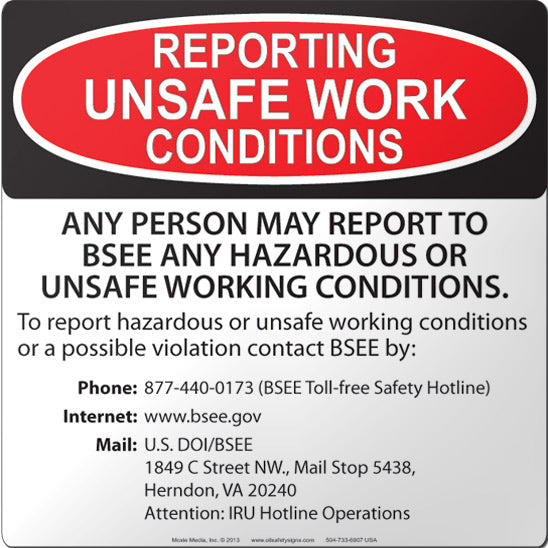
An unsafe workplace condition should be reported to the Occupational Safety and Health Administration (OSHA) whenever there is a serious hazard that could cause death or significant physical harm to workers, especially if the employer has failed to address the issue.
Employees or their representatives have the right to request an inspection if they believe a hazard violates OSHA standards or poses an imminent danger. While not all workplace concerns require immediate reporting, situations involving imminent danger, fatalities, or severe injuries must be reported promptly, sometimes within specific timeframes.
OSHA encourages reporting when engineering controls, administrative measures, or personal protective equipment are insufficient to protect workers. Reports can be made confidentially or anonymously, and retaliation for reporting is prohibited.
Imminent Danger Situations
- Workers should immediately report unsafe conditions when they face imminent danger—meaning there is a reasonable expectation of death or serious physical harm that cannot be avoided without exposing the employee to the hazard.
- Examples include unguarded machinery that could cause amputations, exposure to toxic chemicals without proper ventilation, or structural instability in construction zones.
- OSHA typically responds quickly to such complaints, often conducting an on-site inspection within 24 to 48 hours to assess and mitigate the hazard.
Fatalities and Severe Injuries
- Employers are legally required to report any work-related fatality to OSHA within 8 hours of the incident.
- Work-related hospitalizations, amputations, or loss of an eye must be reported within 24 hours, regardless of whether the injury was due to an unsafe condition or unsafe behavior.
- These reporting requirements apply even if the incident occurred in the context of pre-existing medical conditions, provided the workplace environment aggravated or triggered the event.
Failure of Employer to Correct Hazards
- When employees identify a hazard and bring it to their employer's attention but see no corrective action taken, they should consider filing a complaint with OSHA.
- This includes situations where safety equipment is broken, emergency exits are blocked, or hazardous materials are improperly stored and remain unresolved after repeated requests.
- Workers can file a formal complaint online, by phone, or in person, and may request that their identity be kept confidential to prevent potential retaliation.
Frequently Asked Questions
When should an unsafe condition be reported to OSHA?
An unsafe condition should be reported to OSHA when it presents a serious hazard that could result in injury, illness, or death, especially if the employer has failed to address it. Employees should report such conditions as soon as they identify a danger that the employer has ignored or not corrected promptly, particularly if it violates OSHA standards or poses an imminent risk.
Can I report an unsafe condition to OSHA anonymously?
Yes, you can report an unsafe condition to OSHA anonymously. OSHA protects your identity under Section 11(c) of the OSH Act, which prohibits employer retaliation. When filing a complaint online, by phone, or in writing, you can request that your name not be shared with your employer. Anonymous reports are taken seriously, especially when they include detailed information about the hazard.
What qualifies as an imminent danger that requires immediate OSHA reporting?
An imminent danger is a condition where workers face a realistic threat of death or serious physical harm immediately or before the hazard can be addressed through normal enforcement procedures. Examples include unguarded machinery, exposure to toxic chemicals, or structural collapses. In such cases, you should report to OSHA right away as waiting could result in severe injury or fatalities.
Do I need to report unsafe conditions to my employer before contacting OSHA?
While it’s often recommended to report unsafe conditions to your employer first, it is not required before contacting OSHA. Workers have the right to file a complaint directly with OSHA if they believe a hazard exists, regardless of whether the employer has been notified. OSHA will investigate the concern and can take action to ensure the workplace becomes safe.
Leave a Reply