
18c of the racial discrimination act

Section 18C of the Racial Discrimination Act 1975 is a pivotal piece of Australian legislation designed to prohibit speech and actions that are racially offensive, threatening, or demeaning. Enacted to uphold the principles of equality and mutual respect, it makes it unlawful to offend, insult, humiliate, or intimidate someone based on their race, colour, descent, or national or ethnic origin in public contexts.
While widely supported for promoting social cohesion, 18C has sparked ongoing debate about the balance between protecting individuals from racial vilification and preserving freedom of speech. Its interpretation and application continue to shape legal and societal discussions on tolerance, identity, and expression in multicultural Australia.
Understanding Section 18C of the Racial Discrimination Act in Australia
Section 18C of the Racial Discrimination Act 1975 is one of the most significant legal provisions in Australia aimed at protecting individuals from racial discrimination and promoting racial harmony.
 18c racial discrimination act
Enacted as part of federal anti-discrimination law, this section makes it unlawful for a person to engage in offensive behavior based on race, color, descent, or national or ethnic origin that is likely to offend, insult, humiliate, or intimidate another person or group.
The provision applies in public contexts such as media, public speeches, online content, and other forms of communication. It is important to note that Section 18C does not make such behavior automatically criminal; rather, affected individuals may file complaints with the Australian Human Rights Commission (AHRC), which investigates and attempts to resolve matters through conciliation.
Legal proceedings may continue in the Federal Court or Federal Circuit and Family Court if conciliation fails. The scope and impact of this section have been the subject of considerable public and political debate, particularly regarding its interaction with freedom of speech under Australian law.
What Does Section 18C Specifically Prohibit?
Section 18C prohibits any act that is reasonably likely to offend, insult, humiliate, or intimidate a person or group because of their race, ethnicity, national origin, color, or descent, provided that the act occurs in a public context.
 Anti racial discrimination act
The law specifically applies to actions that are not private conversations but are expressed in public forums—such as social media, newspapers, rallies, or broadcasts—where they can have a broader societal impact.
The threshold for a breach is not merely discomfort or disagreement but conduct that goes beyond robust debate and crosses into offensive or demeaning communication.
This includes racially abusive language, hate symbols, or material that reinforces negative stereotypes about a particular racial group. Importantly, the perception of the affected group is considered, alongside the context and intent, when assessing whether the behavior meets the legal threshold.
Exemptions and Defenses Under Section 18D
Section 18D of the Racial Discrimination Act provides crucial defenses that balance the prohibition in Section 18C with the right to freedom of expression.
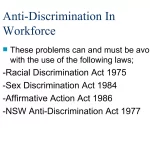 Australia racial discrimination act
Conduct that might otherwise breach Section 18C is not unlawful if it falls under exceptions related to artistic works, fair reporting, or fair comment in the public interest, as long as the act is done in good faith.
For example, writing a controversial political opinion, producing satire, or creating artwork that critiques racial issues may be protected under these exemptions. The act must be reasonably believed to be in the public interest, and the expression must be based on genuine information or honest belief.
These defenses are fundamental to ensuring that Section 18C does not suppress legitimate debate on important social issues, thus maintaining a balance between protecting racial minorities and preserving robust democratic discourse.
Enforcement and Legal Process for Breaching Section 18C
When someone alleges a breach of Section 18C, the first step is typically to lodge a complaint with the Australian Human Rights Commission (AHRC), which has the authority to investigate and attempt conciliation between the parties. Conciliation is a voluntary and confidential process where the AHRC seeks to resolve the dispute without going to court.
 Australian racial discrimination act
If conciliation fails or is not pursued, the complainant can take the matter to the Federal Court or Federal Circuit and Family Court of Australia. If the court finds that Section 18C has been breached, it may issue remedies such as apologies, injunctions to stop further acts, or monetary compensation for emotional or psychological harm.
However, there are no criminal penalties. This civil framework emphasizes redress and reconciliation rather than punishment, reflecting the section’s purpose of promoting social cohesion.
| Aspect | Description |
|---|---|
| Legal Provision | Section 18C of the Racial Discrimination Act 1975 (Cth) |
| Prohibited Conduct | Acts reasonably likely to offend, insult, humiliate, or intimidate based on race in public |
| Key Defenses | Protected under Section 18D if done in good faith: art, fair comment, public interest reporting |
| Enforcement Body | Australian Human Rights Commission (AHRC) – handles complaints and conciliation |
| Legal Forum | Federal Court or Federal Circuit and Family Court of Australia |
| Possible Outcomes | Apologies, injunctions, compensation (no criminal penalties) |
Frequently Asked Questions
What is Section 18C of the Racial Discrimination Act?
Section 18C of the Racial Discrimination Act 1975 makes it unlawful to offend, insult, humiliate, or intimidate someone because of their race, color, descent, or national or ethnic origin. It applies in public contexts and aims to balance freedom of speech with protection from racial vilification. The law allows for reasonable exceptions, such as artistic works or academic discussion, provided they are done in good faith.
Does Section 18C limit freedom of speech?
Section 18C does place limits on speech, but only in cases involving racial hatred or serious offense. It is designed to protect people from racial abuse while allowing for free expression. Exceptions in the law cover genuine artistic, academic, or public interest discussions. Courts assess whether speech was reasonably likely to offend, ensuring free speech is balanced with racial tolerance and community harmony.
 Australia racial discrimination act 1975
Who can make a complaint under Section 18C?
Any individual who believes they have been racially targeted in a public setting can make a complaint under Section 18C. Complaints are typically lodged with the Australian Human Rights Commission, which investigates and attempts conciliation. The person does not need to be of a particular race or background—anyone affected by racially offensive behavior can seek protection under this law.
What are the defences available under Section 18C?
The main defences under Section 18C include public interest, fair comment, and good faith. Section 18D protects expressions made in good faith for artistic purposes, academic or scientific discussion, fair reporting, or fair comment on matters of public interest. These defences ensure that legitimate speech is not unduly restricted, while still preventing serious racial harassment or vilification in public settings.
Leave a Reply