
State by state minimum wage 2018
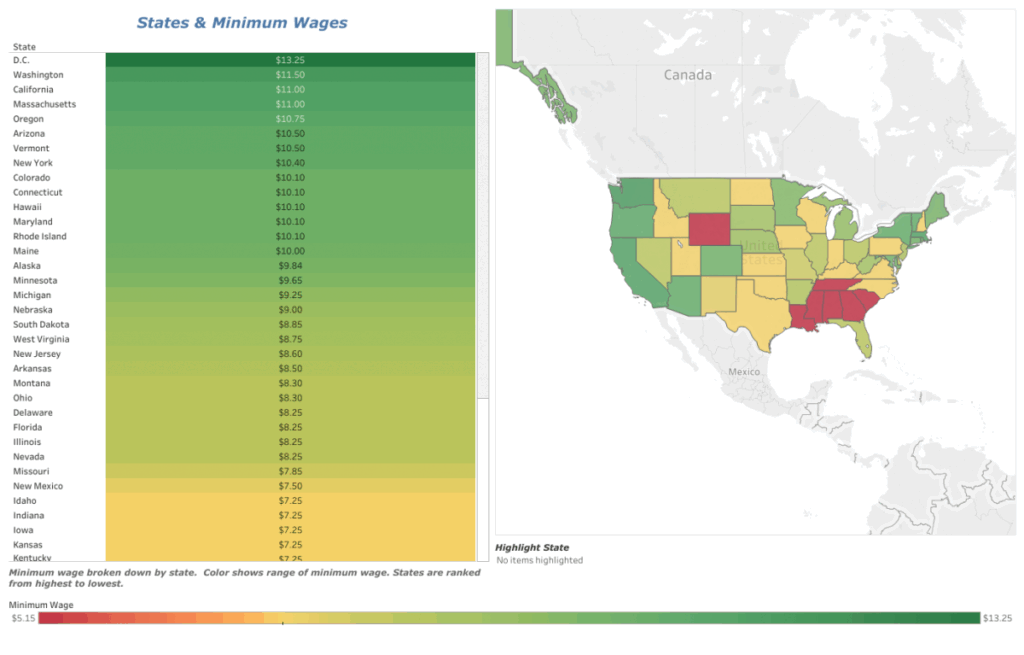
In 2018, the landscape of minimum wage laws in the United States varied significantly from state to state, reflecting diverse economic conditions and policy priorities. While the federal minimum wage remained unchanged at $7.25 per hour, many states and cities implemented their own higher rates to address rising living costs.
Some states, like Washington and Massachusetts, led the nation with wages well above the federal level, while others adhered strictly to the federal standard. Additionally, numerous localities established even higher minimums through city or county ordinances.
This state-by-state variation created a complex patchwork of wage regulations, impacting employers and workers differently across regions and highlighting the ongoing debate over fair pay and economic sustainability.
 State by state minimum wage 2025
State by State Minimum Wage Overview in 2018
In 2018, the landscape of minimum wage laws across the United States illustrated a growing divergence between federal standards and state-level policies.
While the federal minimum wage remained at $7.25 per hour, unchanged since 2009, numerous states and cities took initiative to raise their own minimum wages in response to rising cost of living and economic pressures. A total of 29 states and the District of Columbia had minimum wages above the federal level at the start of 2018.
Washington state led with one of the highest rates at $11.50 per hour, followed closely by Massachusetts and California. Some states, such as Alaska, Maine, and Vermont, adjusted their rates based on inflation through automatic cost-of-living adjustments (COLAs), ensuring wages kept pace with economic changes.
This patchwork system created significant variation in worker pay across state lines and highlighted ongoing debates about income inequality, small business sustainability, and the effectiveness of local wage control.
 Minimum wage in 2024 by state
States with the Highest Minimum Wages in 2018
In 2018, several states stood out for setting minimum wages significantly above the federal benchmark. Washington led the nation with a minimum wage of $11.50 per hour, reflecting its strong labor advocacy and high cost of living, particularly in urban areas like Seattle.
Massachusetts followed closely at $11.00, with legislation paving the way for future increases tied to inflation. California and Connecticut both set their rates at $10.10, although certain cities within those states, such as San Francisco and Los Angeles, implemented even higher local minimum wages through municipal ordinances.
These state-level increases were often the result of sustained political efforts by labor groups and demonstrated a shift toward recognizing the inadequacy of the stagnant federal rate. The variations underscored a broader national trend toward localized wage policies in the absence of federal action.
States Tied to the Federal Minimum Wage in 2018
Despite growing momentum for wage increases, 21 states maintained a minimum wage that matched the federal rate of $7.25 per hour in 2018. These states, including Alabama, Idaho, Indiana, Kansas, and Mississippi, did not have state laws mandating a higher minimum, leaving many low-wage workers without added financial protection. In several of these states, legislative attempts to raise the minimum wage were blocked due to concerns over impacts on small businesses and rural economies. As a result, workers in these regions often struggled to meet basic living expenses, especially in areas where housing and healthcare costs were rising. The lack of state-level action also meant that tipped workers and other vulnerable employee categories were subject to the federal subminimum wage of $2.13 per hour, a rate widely criticized for perpetuating poverty among service industry employees.
 Minimum wage in 2025 by state
Cost of Living Adjustments and Indexing in 2018
A notable feature of the 2018 minimum wage landscape was the use of cost-of-living adjustments (COLAs) in several states to automatically update wage floors based on inflation. States like Alaska, Colorado, Maine, Montana, Ohio, and Vermont had laws in place to index their minimum wages to inflation, typically using the Consumer Price Index (CPI).
This mechanism helped ensure that wage gains were not eroded by rising prices, offering workers a more stable standard of living over time. For example, Colorado increased its minimum wage from $9.30 to $10.20 in 2018 due to inflation data.
Indexing was seen as a pragmatic solution to avoid contentious annual debates over wage hikes, although critics argued it limited legislative flexibility. These policies exemplified a growing recognition that wages must evolve with economic conditions to remain effective.
| State | Minimum Wage (2018) | Compared to Federal Rate | Cost-of-Living Adjustment? |
|---|---|---|---|
| Washington | $11.50 | Higher | No |
| Massachusetts | $11.00 | Higher | Yes (partial) |
| California | $10.50 | Higher | Yes |
| Connecticut | $10.10 | Higher | No |
| Colorado | $10.20 (after COLA) | Higher | Yes |
| Texas | $7.25 | Same as federal | No |
| Alabama | $7.25 | Same as federal | No |
| Maryland | $9.25 | Higher | Yes |
| Vermont | $10.00 | Higher | Yes |
| Florida | $8.25 | Higher | Yes |
Frequently Asked Questions
What was the federal minimum wage in 2018?
The federal minimum wage in 2018 remained $7.25 per hour. This rate had been unchanged since 2009. While the federal government set this baseline, individual states had the authority to establish higher minimum wages. Employers subject to the Fair Labor Standards Act (FLSA) were required to pay at least the federal rate, unless a state’s rate was higher, in which case the higher state rate applied.
 minimum wage 2023 by state
Which states had the highest minimum wage in 2018?
In 2018, Washington state had the highest minimum wage at $11.50 per hour. Massachusetts followed closely with $11.00 per hour. Several other states, including California and New York, also had rates above the national average due to ongoing increases tied to legislation. These higher wages reflected efforts to keep up with the rising cost of living in certain regions. Workers in these states benefited from stronger local wage protections.
Did all states follow the federal minimum wage in 2018?
No, not all states followed the federal minimum wage of $7.25 in 2018. Many states set their own minimum wages above the federal level. However, five states—Alabama, Louisiana, Mississippi, South Carolina, and Tennessee—had no state minimum wage law, so the federal rate applied. In Georgia and Wyoming, state rates were below $7.25, but employers covered by federal law were still required to pay the higher federal rate.
How did minimum wage vary across states in 2018?
Minimum wage varied significantly across states in 2018. While the federal floor was $7.25, state rates ranged up to $11.50 in Washington. Several states like California and New York were implementing gradual increases toward $15 per hour. Others maintained rates equal to or slightly above the federal standard. These differences reflected each state’s economic conditions, cost of living, and legislative priorities regarding worker compensation and income equity.
 States by minimum wage 2024
Leave a Reply