
Minimum hourly wage by state
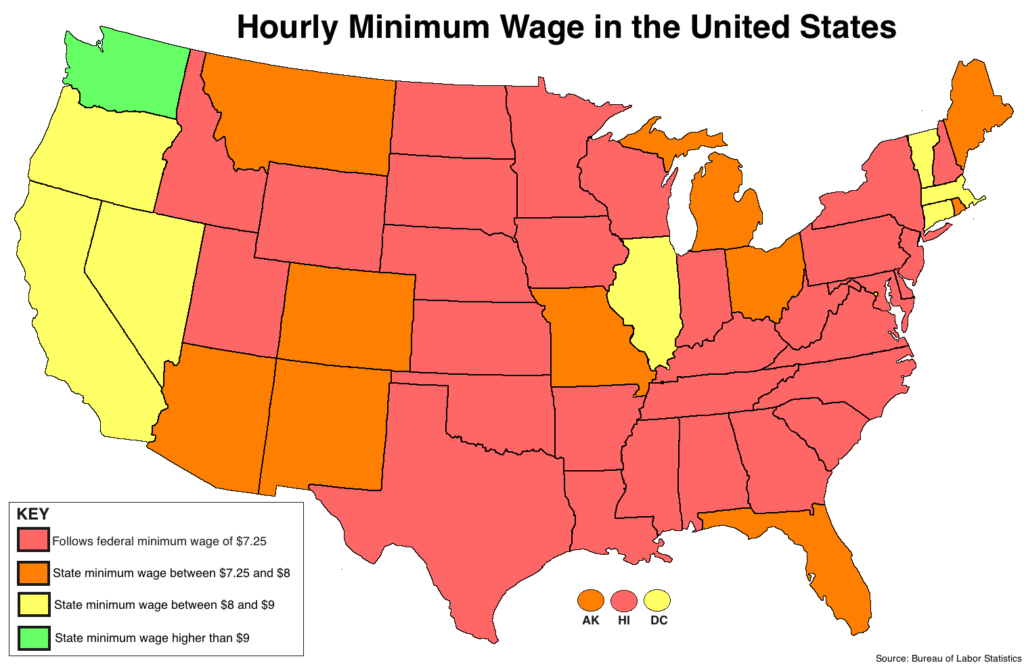
The minimum hourly wage varies significantly across the United States, as each state sets its own labor standards within the framework established by federal law.
While the federal minimum wage remains unchanged at $7.25 per hour since 2009, many states have enacted higher rates to reflect local cost of living and economic conditions. Some states adjust their minimum wage annually based on inflation, while others have set schedules to reach a specific target, such as $15 per hour.
This variation creates a complex landscape for workers and employers alike. Understanding these differences is crucial for evaluating economic equity, workforce policies, and the overall impact on low-income families.
 Ohio workers compensation true up
State-by-State Comparison of the Minimum Hourly Wage Across the United States
The minimum hourly wage by state in the United States varies significantly, reflecting differences in local economies, cost of living, and legislative priorities. While the federal minimum wage has remained at $7.25 per hour since 2009, many states and even cities have enacted higher rates to better align with rising living costs.
States like California and Washington lead the nation with minimum wages exceeding $15 per hour, whereas others, such as Georgia and Wyoming, formally maintain a lower base rate—though employers subject to federal law still adhere to $7.25.
Additionally, some states index their minimum wage to inflation, ensuring automatic annual adjustments. This decentralized system means workers’ earnings depend heavily on their geographic location, creating disparities in income even for similar jobs.
Current Minimum Wage Rates by State and Key Exceptions
Each state sets its own minimum wage, which may be higher than the federal standard, but cannot legally fall below it unless a business is exempt from federal regulations. As of 2024, 29 states and the District of Columbia have minimum wages above the federal floor.
 Phoenix attorney highest success rate workers' compensation
For instance, Washington state has one of the highest rates at $16.28 per hour, while California is at $16.00. In contrast, five states—Alabama, Louisiana, Mississippi, South Carolina, and Tennessee—have no state minimum wage law, defaulting entirely to the federal rate.
Moreover, jurisdictions like Seattle and San Francisco have implemented even higher local minimum wages, often exceeding $18 per hour. Employers must comply with the highest applicable wage—whether federal, state, or local—ensuring workers receive the most favorable rate.
States That Adjust Minimum Wage Annually Based on Inflation
Several states use inflation indexing to automatically adjust their minimum wage each year, helping wages keep pace with the cost of living. These include Arizona, Colorado, Florida, Minnesota, Montana, New Jersey, Ohio, South Dakota, Vermont, and Washington.
For example, Florida's minimum wage rose to $12.00 in 2023 and continues to increase incrementally due to a voter-approved amendment aiming for $15 by 2026. Indexing reduces the need for political negotiations each year and provides more predictability for both workers and employers.
 Phoenix az workers' compensation lawyers success rate
It also protects low-wage earners from the erosion of purchasing power over time, especially during periods of high inflation. This mechanism ensures that low-income workers see modest but consistent wage growth without relying on legislative action.
Impact of Minimum Wage Differentials on Workers and Local Economies
Variations in the minimum hourly wage by state have profound implications for income inequality, consumer spending, and employment levels.
Higher minimum wages can lift workers out of poverty and increase local economic activity, as low-wage earners tend to spend additional income immediately in their communities. However, critics argue that substantial increases may lead some small businesses to reduce hiring, cut hours, or raise prices.
Studies show mixed results: while some regions see minimal job loss following wage hikes, others, particularly rural areas with lower margins, report operational challenges. Ultimately, the effectiveness of a state's minimum wage policy depends on its economic environment, labor market structure, and business adaptability.
 Pico rivera workers compensation lawyer
| State | Minimum Wage (2024) | Federal Minimum Applicable? | Inflation-Indexed? |
|---|---|---|---|
| California | $16.00 | No | Yes |
| Washington | $16.28 | No | Yes |
| New York | $15.00 (varies by county) | No | Yes |
| Texas | $7.25 | Yes | No |
| Florida | $12.00 | No | Yes |
| Mississippi | $7.25 | Yes | No |
| Vermont | $13.18 | No | Yes |
| Wyoming | $7.25 | Yes | No |
| Maine | $14.15 | No | Yes |
| Illinois | $14.00 | No | No |
Frequently Asked Questions
What is the minimum hourly wage by state in the U.S.?
The minimum hourly wage varies by state, as each state sets its own rate, which can be higher than the federal minimum of $7.25 per hour.
As of 2024, numerous states have rates above the federal level, with some exceeding $15. Employers must follow the higher of the federal, state, or local minimum wage. Rates are subject to change annually based on legislation or cost-of-living adjustments.
Why do minimum wage rates differ from state to state?
Minimum wage rates differ because states have the authority to set their own wage laws based on local economic conditions, cost of living, and political priorities.
While the federal government sets a baseline, states can enact higher wages to better support workers. Urban areas with higher living costs often have increased minimum wages compared to rural regions, leading to significant variation across state lines.
 Process for workers compensation
Which states have the highest minimum hourly wages in 2024?
In 2024, states with the highest minimum hourly wages include California, Washington, and Massachusetts, all with rates at or above $16 per hour.
Washington, D.C., has one of the highest at $17. Employees in these states benefit from stronger wage protections, often adjusted annually for inflation. These rates reflect efforts to align pay with the high cost of living in these areas compared to the national average.
Does the federal minimum wage apply if a state has no minimum wage law?
Yes, if a state has no minimum wage law or a rate lower than the federal minimum, the federal rate of $7.25 per hour applies. The Fair Labor Standards Act (FLSA) ensures that workers receive at least this baseline. Employers in such states must comply with federal standards, though cities or counties may establish higher local minimum wages. Workers are always entitled to the highest applicable rate.
Leave a Reply