
Tipped worker minimum wage by state
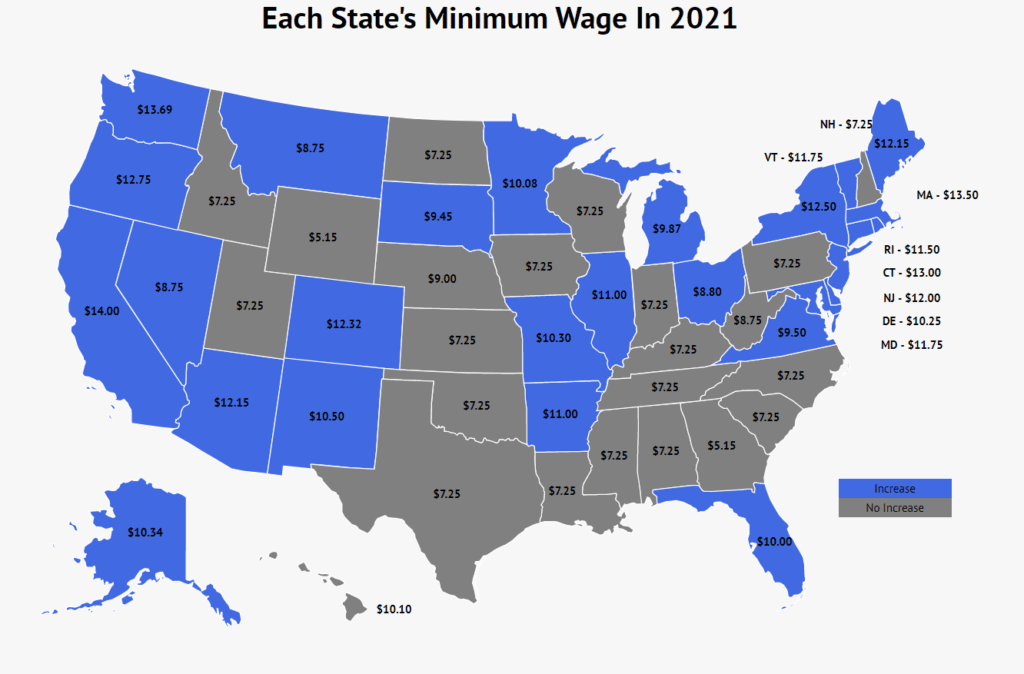
The minimum wage for tipped workers varies significantly across the United States, creating a complex patchwork of standards that reflect differing state policies and economic conditions.
While the federal government allows employers to pay tipped employees as little as $2.13 per hour, provided tips bring their earnings up to the federal minimum wage, many states have established higher base wages or eliminated the subminimum wage altogether.
Some states, like California and Washington, require tipped workers to receive the full state minimum wage before tips, while others adhere to the federal framework. This variation impacts worker income, employer practices, and regional labor markets, making it essential to understand how each state regulates tipped wages.
 What is the minimum wage by state
Tipped Worker Minimum Wage by State: A Comprehensive Overview
In the United States, the minimum wage for tipped workers varies significantly from state to state, reflecting a complex landscape of federal and local labor regulations. Under the Fair Labor Standards Act (FLSA), the federal government permits employers to pay tipped employees a base wage of $2.13 per hour, as long as tips bring their total earnings up to at least the federal minimum wage of $7.25 per hour.
This practice is known as a tip credit, where the value of tips is credited toward the minimum wage obligation. However, many states have implemented stronger protections, setting their own minimum cash wage for tipped workers that is higher than the federal baseline or eliminating the tip credit altogether.
Some states, like California and Washington, require employers to pay the full state minimum wage before tips, ensuring that tipped workers are not financially dependent on customer gratuities. Understanding these differences is crucial for both employees and employers to ensure compliance with labor laws and fair compensation practices.
What Is the Federal Tipped Minimum Wage?
The federal tipped minimum wage has remained unchanged at $2.13 per hour since 1991, as stipulated by the Fair Labor Standards Act (FLSA).
 Minimum wage by state 2020
This rate only applies if the employee earns enough in tips to bring their hourly compensation up to the regular federal minimum wage of $7.25. The difference, $5.12, can be claimed by the employer as a tip credit. However, if tips combined with the employer’s direct wage do not reach $7.25 per hour, the employer is required to make up the difference.
While this framework provides a baseline, it often falls short in ensuring stable earnings for tipped workers, especially in industries with inconsistent tipping patterns. Because the FLSA sets a floor and not a ceiling, states and localities are free to establish higher standards, leading to a wide variation in actual wages received by tipped employees across the U.S.
States with Higher Tipped Minimum Wages Than Federal Law
Numerous states have taken steps to provide better financial security for tipped workers by setting a minimum cash wage above the federal $2.13 standard. For example, in Colorado, the tipped minimum wage for 2024 is $9.78 per hour, while the regular minimum wage is $14.42.
Similarly, in New York, tipped workers in restaurants outside of New York City must be paid at least $10.85 per hour, with scheduled increases to close the gap with the standard minimum wage. These states still allow a tip credit, but the higher base wage reduces employee reliance on tips and helps buffer against income volatility.
 Minimum wage by state 2021
Employers in these states must stay updated on annual wage adjustments and regional differences, as some states also implement geographically tiered wage rates based on cost of living. This trend reflects growing recognition of the economic vulnerability faced by tipped workers under the federal standard.
States That Do Not Allow a Tip Credit (One-Wage System)
Several states have abolished the tip credit system entirely, adopting a one-wage policy where tipped employees must be paid the full state minimum wage before tips. States such as California, Oregon, Washington, Montana, Minnesota, Alaska, Nevada, and Nebraska fall into this category.
In Washington State, for instance, workers are guaranteed a base wage of $16.28 per hour in 2024, regardless of tips received. This model ensures greater income stability, reduces wage theft risks, and eliminates employer dependence on customer generosity to meet compensation obligations.
It also simplifies payroll compliance and promotes workplace equity across different job roles within hospitality industries. While critics argue that this system can increase labor costs for businesses, proponents highlight improved employee retention, reduced poverty rates among service workers, and stronger consumer service due to less financial pressure on staff.
 Minimum wage by state 2026
| State | Tipped Minimum Wage (2024) | Regular Minimum Wage (2024) | Tip Credit Allowed? |
|---|---|---|---|
| California | $16.00 | $16.00 | No (One-Wage System) |
| Washington | $16.28 | $16.28 | No (One-Wage System) |
| New York | $10.85–$11.90 | $15.00–$16.00 | Yes |
| Colorado | $9.78 | $14.42 | Yes |
| Florida | $8.98 | $12.00 | Yes |
| Texas | $2.13 | $7.25 | Yes (Follows federal standard) |
| Maine | $6.75 | $14.15 | Yes |
Note: Some states have regional or industry-specific rates; values represent common benchmarks for 2024. All data based on state labor department guidelines and subject to change.
Frequently Asked Questions
What is the tipped worker minimum wage?
The tipped worker minimum wage is the minimum hourly wage employers can pay employees who regularly receive tips, such as servers and bartenders. Under federal law, this rate is $2.13 per hour, provided that tips bring the worker’s total hourly earnings up to at least the federal minimum wage of $7.25. If tips do not make up the difference, the employer must pay the shortfall.
Do all states follow the federal tipped minimum wage?
No, not all states follow the federal tipped minimum wage of $2.13 per hour. Many states have established higher tipped minimum wages, and some require employers to pay the full state minimum wage before tips. States like California, Washington, and Oregon do not allow a tip credit, meaning tipped workers must receive the full minimum wage directly from their employer regardless of tips received.
How do tip credits work?
A tip credit allows employers to pay tipped workers less than the standard minimum wage, as long as the difference is made up by tips. For example, if the state minimum wage is $10 and the tipped wage is $7, the employer can claim a $3 tip credit. However, if tips do not bring the worker’s total to $10 per hour, the employer must pay the difference to meet the full minimum wage.
Where can I find current tipped minimum wage rates by state?
Current tipped minimum wage rates by state can be found through official sources like the U.S. Department of Labor’s website, state labor department websites, or reputable legal and employment resources. These sites provide updated wage tables, state-specific regulations, and information on tip credits. It's important to verify the rules for your specific state, as they can change annually and vary significantly.
Leave a Reply