
Osha heat standard proposal

The U.S. Occupational Safety and Health Administration (OSHA) has proposed a new heat standard aimed at protecting workers from the growing dangers of extreme heat in the workplace.
As climate change contributes to more frequent and intense heatwaves, the need for enforceable safety measures has become increasingly urgent. The proposed rule would require employers to implement heat illness prevention plans, provide rest breaks, and ensure access to water and shade.
Covering both indoor and outdoor workers across industries like construction, agriculture, and warehousing, the standard marks a significant step toward addressing a long-standing gap in worker protection.
 Racial discrimination in jury selection
OSHA's Proposed Heat Standard: Advancing Worker Safety in High-Temperature Environments
The Occupational Safety and Health Administration (OSHA) has introduced a proposed heat standard designed to protect workers from heat-related illnesses across various industries, particularly those exposed to outdoor and indoor heat stress such as construction, agriculture, and manufacturing.
This initiative marks a significant step in formalizing enforceable protections to reduce heat exhaustion, heat stroke, and other life-threatening conditions caused by excessive heat exposure.
The proposed rule would require employers to implement heat injury and illness prevention programs, including provisions for adequate water, rest breaks in cool areas, acclimatization plans for new or returning workers, and emergency response procedures.
By establishing both outdoor and indoor heat thresholds that trigger specific actions, OSHA aims to create a standardized, proactive framework that adapts to changing climate conditions and workplace realities.
 Racial discrimination in movies
Key Components of the Proposed OSHA Heat Standard
The proposed OSHA heat standard outlines several mandatory elements aimed at reducing heat-related risks in the workplace. Employers would be required to develop and implement a written heat illness prevention plan tailored to their specific work environment.
This plan must include procedures for providing workers with frequent breaks in shaded or cool areas, ensuring access to drinking water, and establishing effective communication systems for reporting symptoms of heat stress. Acclimatization is a core component, especially for new or returning workers, with guidelines recommending gradual exposure over a 7- to 14-day period.
The standard also mandates emergency response protocols, including immediate cooling measures and medical assistance in case of heat stroke. Additionally, training for both workers and supervisors on heat illness recognition and prevention must be conducted annually and whenever workplace conditions change.
Heat Thresholds and Trigger Actions by OSHA
Central to the proposed heat standard are defined heat risk levels based on the OSHA-NIOSH Heat Safety Tool and the wet-bulb globe temperature (WBGT) index, which offers a more accurate assessment of heat stress than air temperature alone.
 Racial discrimination in the classroom
The rule sets specific action triggers: for instance, when the heat index reaches 80°F (26.7°C), employers must begin implementing basic preventive measures such as water access and encouraging rest breaks. At 90°F (32.2°C), additional steps like mandatory cool-down rest periods of at least 5 minutes and enhanced supervision are required.
In extreme conditions above 104°F (40°C), the standard demands increased monitoring, shaded recovery areas, and limits on physical exertion. For indoor environments, where factors like humidity and lack of ventilation intensify risk, employers must conduct heat assessments and adjust operations accordingly, ensuring continuous protection regardless of setting.
Industry Impact and Compliance Requirements
The proposed OSHA heat standard is expected to significantly affect high-risk sectors such as agriculture, construction, warehousing, and landscaping, where thousands of workers face daily heat exposure. Employers in these industries would be required to evaluate their work sites for heat hazards and maintain records of heat-related incidents and preventive actions taken.
Small businesses may benefit from extended compliance timelines and technical assistance programs to support implementation. The rule also emphasizes worker participation, mandating that employees be involved in identifying hazards and contributing to prevention strategies.
 Racial discrimination lawyer allen
OSHA will enforce the standard through inspections, complaints, and the authority to issue citations for non-compliance. Employers failing to adhere to provisions like rest and water access, acclimatization, or emergency planning could face penalties, underscoring the importance of proactive safety culture development.
| Heat Index (°F) | Required Employer Actions | At-Risk Work Environments |
|---|---|---|
| 80–89°F | Provide water access, encourage breaks, and initiate training | Outdoor construction, landscaping, warehousing |
| 90–103°F | Mandatory 5-minute rest breaks, shaded areas, active supervision | Agriculture, roadwork, recycling facilities |
| ≥104°F | Emergency planning, cooling measures, reduced workloads | Foundries, commercial kitchens, steel mills |
| Indoor environments with high humidity and poor ventilation | WBGT assessments, engineering controls (e.g., fans, cooling units) | Manufacturing plants, bakeries, auto repair shops |
Comprehensive Guide to the OSHA Heat Standard Proposal
What is the current status of the OSHA heat standard proposal for 2025?
Current Timeline and Regulatory Status of the OSHA Heat Standard Proposal
- As of early 2024, the Occupational Safety and Health Administration (OSHA) has taken significant steps toward developing a federal heat standard, with the proposal expected to be finalized by 2025. The initiative was formally added to OSHA's regulatory agenda in October 2023, reflecting increased urgency due to rising temperatures and heat-related workplace fatalities.
- The agency published an Advance Notice of Proposed Rulemaking (ANPRM) in the fall of 2022, which gathered public input from stakeholders including employers, labor organizations, and health experts. This data collection phase informed the development of a proposed rule expected in late 2024 or early 2025.
- While a formal rule has not yet been issued, OSHA has emphasized its commitment to addressing heat hazards through its National Emphasis Program on outdoor and indoor heat, initiated in April 2022. This enforcement program allows OSHA to conduct targeted inspections in high-risk industries even in the absence of a finalized standard.
Key Provisions Expected in the 2025 Heat Standard
- The anticipated heat standard is expected to include requirements for employers to implement heat illness prevention plans, particularly in high-risk sectors such as construction, agriculture, and warehousing. These plans would mandate procedures like providing water, rest, shade, and acclimatization schedules for workers new to hot environments.
- Specific thresholds for heat exposure based on the heat index are likely to be established, triggering mandatory protective measures when temperatures reach certain levels. For instance, actions may be required when the heat index exceeds 80°F, with more stringent controls at higher levels.
- The rule is also expected to address indoor heat hazards in facilities such as foundries, kitchens, and manufacturing plants. Monitoring requirements, training for supervisors and workers, and recordkeeping of heat-related incidents are potential components under consideration.
Stakeholder Reactions and Challenges Facing the Proposal
- Labor advocacy groups and public health organizations have strongly supported the development of a federal heat standard, citing data showing hundreds of heat-related worker deaths over the past two decades. They argue that a unified rule is essential to protect vulnerable populations, especially in regions with extreme summer temperatures.
- On the other hand, some industry groups have expressed concerns over the compliance costs and operational impact of the proposed rule. Businesses in agriculture and construction have called for flexibility in implementation, including tailored requirements for small employers and seasonal work variations.
- OSHA faces challenges in balancing scientific accuracy with enforceability, particularly in defining exposure limits and determining how to measure heat strain in diverse work environments. The agency continues to evaluate technical data and economic feasibility studies before releasing the final rule.
What are the key provisions of OSHA's proposed heat injury and illness prevention standard?
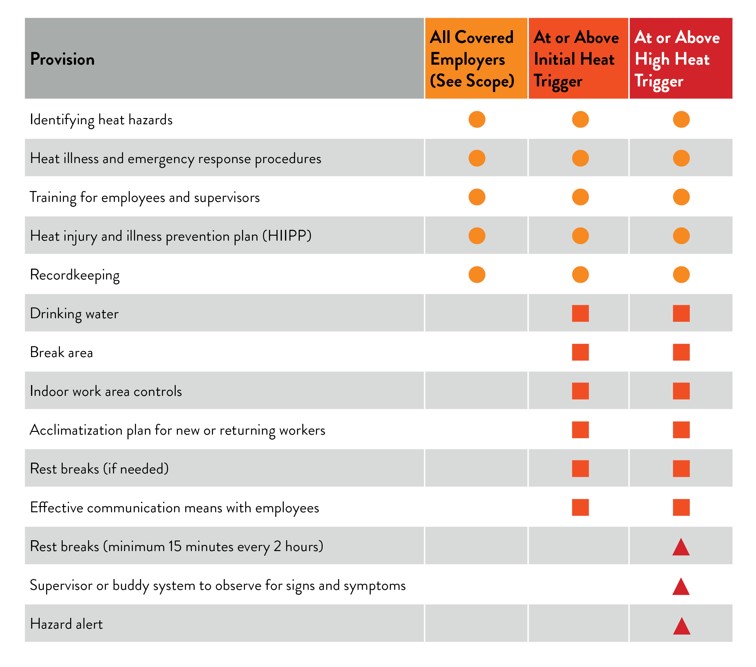
Establishment of Heat-Specific Exposure Limits and Trigger Temperatures
- OSHA’s proposed heat injury and illness prevention standard introduces defined action levels tied to environmental heat conditions, measured using the heat index or Wet Bulb Globe Temperature (WBGT). These levels determine when employers must initiate specific protective measures.
- The standard sets specific trigger temperatures, such as a heat index of 80°F (26.7°C), which activates baseline requirements like access to water and shade. At higher thresholds—such as a heat index of 90°F (32.2°C)—more stringent controls like mandatory rest breaks and close monitoring become required.
- Employers in both indoor and outdoor settings would be required to assess environmental conditions regularly and maintain documentation of temperature monitoring, particularly when conditions exceed established action levels.
Core Requirements for Employer Preventive Measures
- Employers must develop and implement a written heat injury and illness prevention plan tailored to their specific workplace, which includes procedures for acclimatization, emergency response, and employee training.
- The standard mandates proactive cooling measures such as providing cool water, shaded or air-conditioned rest areas, and scheduled cool-down rest periods—especially when heat thresholds are exceeded.
- Special emphasis is placed on protecting new or returning workers by requiring acclimatization schedules that gradually increase heat exposure over several days, reducing the risk of heat-related illness during initial work periods.
Provisions for Employee Training, Monitoring, and Emergency Response
- Employers must train workers and supervisors on the symptoms of heat illness, the importance of hydration, the use of protective measures, and the procedures for reporting heat-related concerns without fear of retaliation.
- The standard requires active monitoring of workers exposed to high-heat conditions, including regular checks by trained personnel or the use of buddy systems to identify early signs of heat stress.
- In the event of a heat-related illness, employers must have an emergency response plan in place that includes immediate cooling methods, access to medical services, and notification procedures to ensure prompt and effective treatment.
What is the current status of the OSHA heat stress standard proposal for 2024?
Current Status of the OSHA Heat Stress Standard Proposal in 2024
- As of 2024, the Occupational Safety and Health Administration (OSHA) has not yet finalized a national heat stress standard, but it remains an active and prioritized initiative under its National Emphasis Program on Outdoor and Indoor Heat-Related Hazards.
- The agency issued an Advance Notice of Proposed Rulemaking (ANPRM) in October 2021, which initiated a public comment period to gather data, stakeholder input, and scientific evidence on heat-related illness prevention in both outdoor and indoor work environments.
- Throughout 2023 and into 2024, OSHA has continued working on the rulemaking process, including reviewing thousands of public comments, conducting stakeholder meetings, and assessing feasibility studies on potential limits for heat exposure, such as action levels based on the heat index or Wet Bulb Globe Temperature (WBGT).
Key Components Under Consideration in the Proposed Standard
- OSHA is evaluating requirements for heat illness prevention programs, including provisions for access to water, rest breaks, shade or cool-down areas, acclimatization procedures, and emergency response protocols for workers showing signs of heat-related illness.
- The proposed standard may establish specific exposure thresholds—such as mandatory rest periods when the heat index exceeds certain levels—and require employers to implement engineering and administrative controls to reduce heat stress risks.
- Particular attention is being given to high-risk industries, including construction, agriculture, transportation, warehousing, and landscaping, where workers are frequently exposed to extreme heat conditions for prolonged periods.
Public and Industry Engagement in 2024
- OSHA has maintained an ongoing dialogue with labor unions, employer groups, public health organizations, and climate advocates through workshops and technical advisory meetings leading into 2024.
- Stakeholders have submitted detailed recommendations, with labor organizations pushing for strict exposure limits and enforcement mechanisms, while some industry representatives have raised concerns about implementation costs and operational challenges.
- The agency is expected to publish a notice of proposed rulemaking (NPRM) in the coming months, which will mark a critical step toward a formal regulation, allowing for another round of public comment and review before any potential final rule is issued.
Frequently Asked Questions
What is the OSHA heat standard proposal?
The OSHA heat standard proposal is a set of regulations under development to protect workers from extreme heat exposure. It aims to require employers to implement heat illness prevention programs, including providing water, rest, shade, and emergency procedures. The proposal targets outdoor and indoor workplaces in high-risk industries like construction, agriculture, and manufacturing to reduce heat-related illnesses and deaths.
 Racial discrimination lawyer mckinney tx
Why is OSHA creating a heat standard?
OSHA is creating a heat standard to address the growing risk of heat-related illnesses and fatalities among workers, especially as climate change increases extreme heat events. Without a federal heat standard, protections have been limited and inconsistent. The new rule aims to establish enforceable requirements to ensure employers take proactive steps to protect employees from dangerous heat conditions in the workplace.
Which workers are covered by the OSHA heat standard proposal?
The OSHA heat standard proposal covers most outdoor and indoor workers exposed to high heat levels, particularly in industries like construction, agriculture, landscaping, warehousing, and manufacturing. It applies to both public and private sector employees. Temporary, seasonal, and migrant workers are also included, ensuring vulnerable populations receive protection from heat-related hazards during work in hot environments.
What requirements would the OSHA heat standard impose on employers?
The proposed OSHA heat standard would require employers to develop a written heat illness prevention plan, provide frequent water and rest breaks, offer shade or cool-down areas, and implement emergency response procedures. Employers must also train workers on heat risks and acclimatization processes. Monitoring high-risk conditions and allowing employee access to medical assistance during heat exposure would be mandatory under the rule.
Leave a Reply