
Minimum wage vs cost of living by state
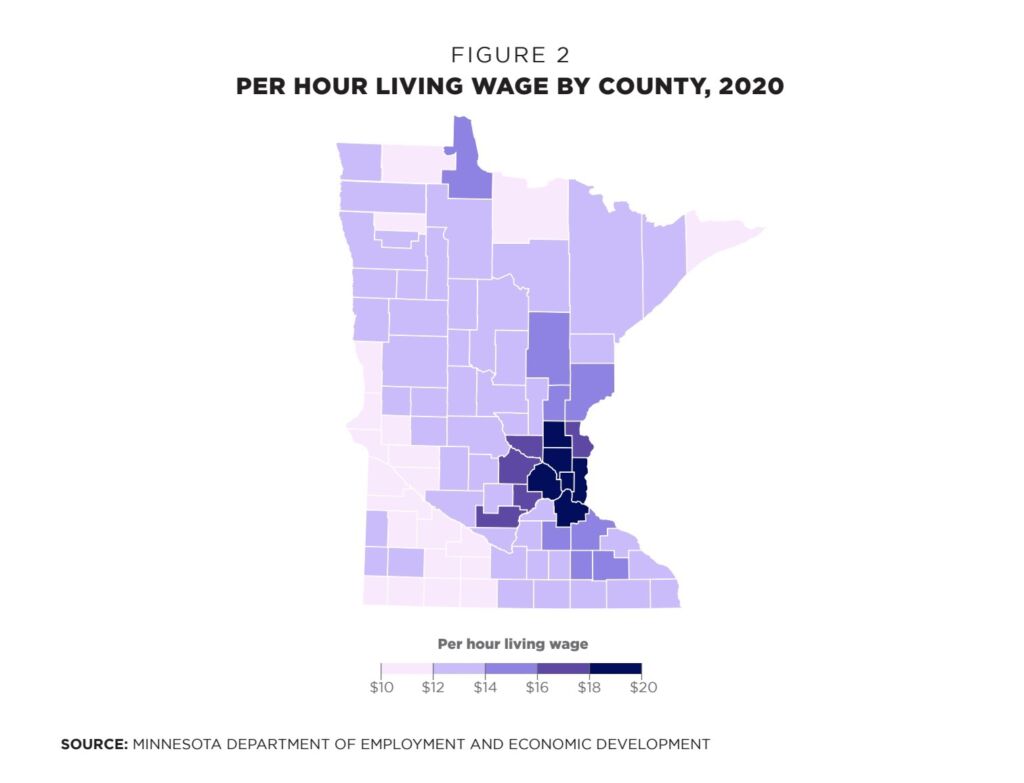
The disparity between minimum wage and the cost of living varies significantly across U.S. states, highlighting a growing economic challenge for low-income workers.
While some states have raised their minimum wage to better align with rising living expenses, others still rely on the federal minimum of $7.25 per hour, leaving many struggling to afford basic necessities.
Housing, healthcare, and childcare costs continue to outpace wage growth in numerous regions, forcing workers to hold multiple jobs or rely on public assistance.
 California ccpap workers compensation
This article examines how minimum wage policies compare to the actual cost of living in each state, revealing which areas offer a more sustainable balance and where economic pressures remain most acute.
Minimum Wage vs Cost of Living by State: A State-by-State Comparison
The disparity between minimum wage and the cost of living varies significantly across the United States, with some states providing wages that fall far short of what is needed to afford basic necessities.
While the federal minimum wage remains at $7.25 per hour since 2009, many states have set their own higher minimums to reflect local economic conditions. However, even in states with elevated minimum wages, workers often struggle to keep up with housing, healthcare, transportation, and food costs.
The gap becomes especially pronounced in high-cost states like California, New York, and Hawaii, where the official minimum wage, though higher than the federal baseline, still may not cover a typical household’s monthly expenses.
 California law for workers compensation
Conversely, in lower-cost states such as Mississippi or Alabama—where no state minimum wage exceeds the federal rate—low wages are more aligned with lower living costs, but poverty rates remain high due to insufficient income growth. This complex relationship underscores the need for policy solutions tailored to regional economic realities rather than a one-size-fits-all approach.
How Minimum Wage Differs Across States
Minimum wage laws in the U.S. are determined at both federal and state levels, resulting in a patchwork of standards that reflect regional economic priorities.
As of 2024, 30 states and the District of Columbia have set minimum wages above the federal rate of $7.25, with Washington, California, and Massachusetts leading at $16.28, $16.00, and $15.75 per hour, respectively.
States like Florida and Illinois are gradually increasing their minimums to $15 per hour in the coming years, recognizing the pressures of inflation and rising costs. In contrast, states such as Texas, Georgia, and Wyoming adhere to the federal minimum, allowing employers to pay as little as $7.25 if not covered by state legislation.
 California workers' compensation insurance requirement employers dir
Additionally, some cities have enacted even higher local minimum wages—for example, Seattle at $19.97 and San Francisco at $18.07—demonstrating how urban centers with higher costs of living attempt to protect low-wage workers. These differences highlight how economic conditions and political climates shape wage policy across state lines.
Understanding the True Cost of Living by State
The cost of living is not uniform across the U.S. and is influenced by factors such as housing prices, transportation, healthcare, groceries, and taxes.
For example, living in Hawaii requires nearly double the income needed in Mississippi to maintain a similar standard of living, according to cost-of-living indexes. Housing is typically the largest expense, and in states like California and New York, rent for a one-bedroom apartment can exceed $2,500 per month in major cities.
In contrast, rural states like Oklahoma or Kentucky often offer rental units for under $800. Other contributors include state income taxes—ten states have no income tax—and variations in sales and property taxes.
The Mittie Schwarz Cost of Living Index and tools from MIT’s Living Wage Calculator reveal that a full-time worker earning the state minimum wage in over half of U.S. states cannot afford a two-bedroom apartment at fair market rent without spending more than 30% of their income, the threshold for being cost-burdened. These metrics underscore that wage levels must be evaluated in the context of regional prices to reflect economic well-being accurately.
State-by-State Comparison of Minimum Wage and Cost of Living
To illustrate the imbalance between wages and expenses, the table below compares selected states by their 2024 minimum wage, average monthly rent for a two-bedroom apartment, and the MIT estimated living wage for a single adult.
The data reveals stark disparities: in Missouri, a minimum wage worker earns $1,256 per month (full-time at $10.30/hour), but needs $2,638 to live decently—an income gap of over $1,300.
In California, while the minimum wage is higher ($16.00), monthly rent averages $2,770, and the living wage is $3,950, indicating that even elevated wages fall short. Only a few states, such as South Dakota and Tennessee, show minimum wages closer to covering basic needs due to lower housing and utility costs.
The living wage—defined as the hourly income needed to cover essentials without public assistance—is consistently higher than the minimum wage in every state, demonstrating that legal wage floors are rarely sufficient for economic self-sufficiency.
Frequently Asked Questions
What is the relationship between minimum wage and cost of living by state?
The relationship depends heavily on each state’s economic conditions. In high-cost states like California or New York, minimum wage rates tend to be higher to reflect increased living expenses. However, even in these states, the minimum wage often does not fully cover basic needs.
In lower-cost states, minimum wages are typically lower as well, but they may still fall short of supporting essential expenses. As a result, many minimum wage workers struggle to maintain financial stability regardless of where they live.
Which states have the highest minimum wage compared to cost of living?
States such as Washington, California, and Massachusetts maintain some of the highest minimum wages in the country, which helps partially offset their elevated cost of living. For instance, Washington’s minimum wage exceeds $16 per hour, offering some relief from high housing and transportation costs.
Still, even in these states, many residents find it difficult to afford basic necessities. Rapidly rising prices—especially in major cities—often outpace wage increases, leaving low-income workers financially strained despite higher state minimums.
Are there states where minimum wage is not enough to cover basic living expenses?
Yes. In nearly every state, the minimum wage is insufficient to cover essential living expenses. Even states with relatively high minimum wages struggle with high costs for housing, healthcare, childcare, and other necessities.
According to MIT’s Living Wage Calculator, no state currently provides a true living wage at the minimum wage level. As a result, many workers must rely on multiple jobs, government programs, or other forms of support to meet their basic needs.
How does cost of living affect the real value of minimum wage?
Cost of living directly shapes the purchasing power of minimum wage earnings. In high-cost areas, the same hourly wage buys less, significantly reducing its real value. For example, $15 per hour might be manageable in rural Mississippi but would be insufficient in a city like San Francisco.
This gap illustrates that nominal wage increases do not always translate into improved living standards. Indexing minimum wage to local cost-of-living levels could help ensure that workers across different regions maintain greater financial stability.
| State | Minimum Wage (2024) | Avg. 2-Bedroom Rent | MIT Living Wage (Single Adult) | Wage Gap |
|---|---|---|---|---|
| California | $16.00 | $2,770 | $26.85 | $10.85/hour |
| New York | $15.00 | $2,950 | $16.24 | $1.24/hour |
| Texas | $7.25 | $1,650 | $15.86 | $8.61/hour |
| Florida | $12.00 | $2,100 | $15.65 | $3.65/hour |
| Mississippi |
Leave a Reply