
States by minimum wage 2024
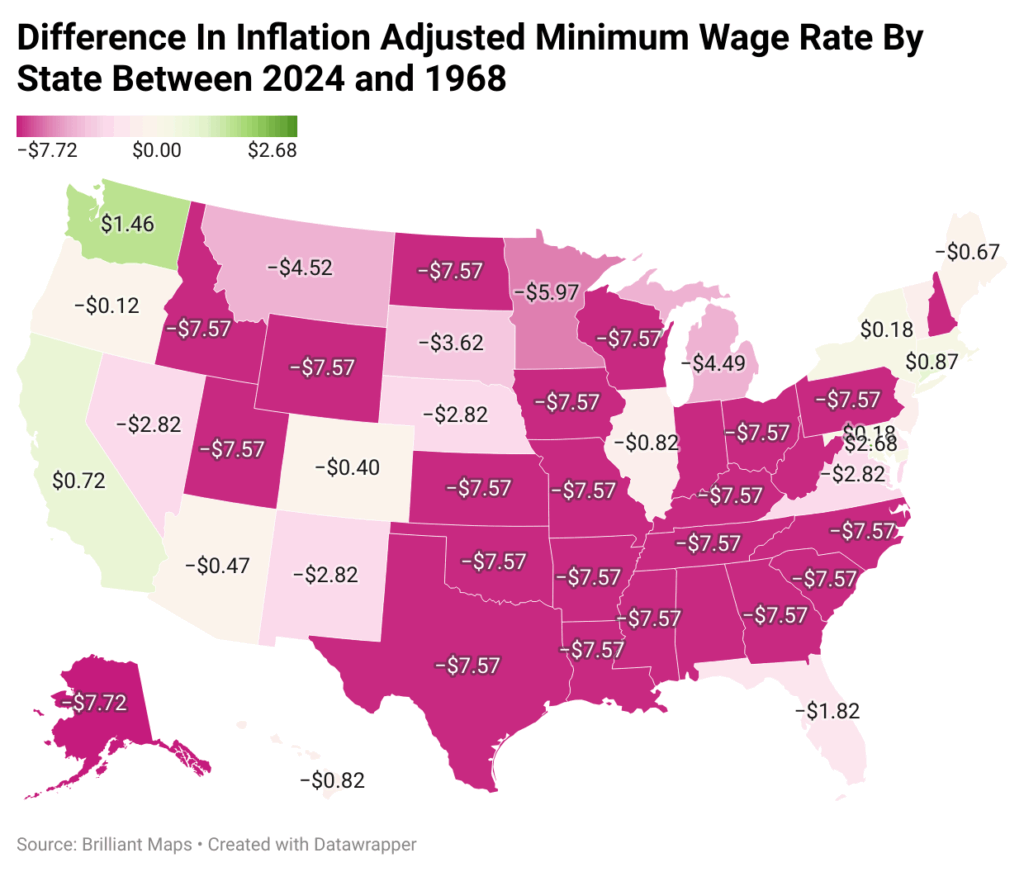
As of 2024, minimum wage rates across the United States reflect a patchwork of economic policies shaped by regional cost of living, labor market conditions, and political priorities.
While the federal minimum wage remains unchanged at $7.25 per hour, many states have implemented higher rates to better support low-income workers. A growing number of states, including Washington, California, and Massachusetts, have set minimum wages well above the federal level, with some exceeding $15 per hour.
Conversely, several states still adhere to the federal baseline or have no state-specific minimum wage at all. These disparities highlight the ongoing debate over fair wages, inflation, and economic equity in a rapidly evolving job market.
 Minimum wage in 2024 by state
States by Minimum Wage 2024: A Comparative Overview
As of 2024, the landscape of minimum wage laws across the United States continues to reflect significant variation between states, driven by differing economic conditions, cost of living, and legislative priorities. While the federal minimum wage remains at $7.25 per hour—a rate unchanged since 2009—many states have implemented higher minimum wages to better support low-income workers.
Some states, such as Washington and California, lead the nation with minimum wages exceeding $16 per hour, factoring in inflation and regional economic demands. Others, like Georgia and Wyoming, either adhere to the federal baseline or maintain slightly lower rates for certain employment categories.
Additionally, numerous cities and counties enforce local minimum wage ordinances that surpass even their state's rate, creating a complex patchwork that employers and employees must navigate. This ongoing divergence highlights the growing trend toward state-level wage autonomy and the increasing role of sub-federal governance in labor policy.
Top States with the Highest Minimum Wage in 2024
In 2024, several states stand out for setting the highest minimum wage rates in the country, with Washington leading at $16.75 per hour, followed closely by California at $16.00 for all employers, regardless of size.
 Minimum wage in 2025 by state
Massachusetts and Connecticut also rank among the top, with rates of $15.00 and $15.63 per hour, respectively. These states have implemented gradual annual increases often tied to inflation or cost-of-living adjustments, ensuring that wage standards keep pace with economic changes.
The high minimum wages in these regions reflect efforts to address skyrocketing housing costs and overall high costs of living, particularly in urban centers like Seattle, San Francisco, and Boston. Notably, some of these states also have provisions for tipped employees and youth workers, ensuring broader worker protections.
States That Adhere to the Federal Minimum Wage
Despite growing momentum for higher wages, several states continue to adhere to or set rates near the federal minimum wage of $7.25 per hour.
These include Alabama, Idaho, Indiana, Iowa, Kansas, Kentucky, Michigan, Mississippi, Pennsylvania, Tennessee, Texas, Utah, Virginia, and Wyoming. Among them, Wyoming and Georgia formally set their minimum wage at $5.15 per hour, but federal law supersedes this in any workplace engaged in interstate commerce, effectively making $7.25 the de facto rate.
 minimum wage 2023 by state
These states typically have lower costs of living, but critics argue that even modest increases would benefit workers without significantly impacting employment. The lack of state-level increases often stems from political resistance or legislative gridlock, leaving millions of workers without legally mandated raises despite inflation and rising expenses.
States with Planned Minimum Wage Increases Beyond 2024
Several states have already legislated future increases to their minimum wage beyond 2024, signaling a continued commitment to wage growth. For example, Illinois will reach $15.00 per hour in 2025, and Maryland is set to achieve the same milestone by 2026.
States like New Jersey and Rhode Island are implementing annual cost-of-living adjustments, ensuring that wages evolve with inflation. These forward-looking policies are often part of broader economic equity initiatives aimed at reducing income inequality and boosting consumer spending power.
Additionally, states such as Florida, which passed a $15 minimum wage via ballot initiative, are enforcing phased-in increases, with full implementation expected by 2026. This trend suggests a national shift—albeit uneven—toward recognizing the importance of livable wages in maintaining a stable workforce.
| State | 2024 Minimum Wage ($) | Tipped Minimum Wage ($) | Notes |
|---|---|---|---|
| Washington | 16.75 | 14.92 | Highest state minimum wage; adjusted annually for inflation. |
| California | 16.00 | Varies by employer size & local laws | No tip credit; some cities like San Francisco exceed $18. |
| Massachusetts | 15.00 | 6.75 | Tipped workers must earn at least minimum wage after tips. |
| New York | 15.00 (NYC, Nassau, Suffolk, Westchester); $14.20–$15.00 elsewhere | Varies by region | Regional wage tiers based on cost of living. |
| Florida | 12.00 | 8.98 | Increasing annually to reach $15 by 2026. |
| Texas | 7.25 | 2.13 | Follows federal minimum wage; no state-mandated increase. |
| Illinois | 13.20 | 9.24 | Increases annually; targets $15 by 2025. |
| Mississippi | 7.25 | 2.13 | No state minimum wage law; defaults to federal rate. |
Frequently Asked Questions
What are the states with the highest minimum wage in 2024?
California and Washington have the highest minimum wages in 2024, both exceeding $16 per hour. California’s minimum wage reaches $16 for all employers, while Washington’s is approximately $16.28, adjusted for inflation. These rates apply to most workers, with some exceptions for specific industries. These states consistently lead in wage standards, aiming to support livable incomes amid high costs of living.
Are there states with the federal minimum wage in 2024?
Yes, as of 2024, numerous states still follow the federal minimum wage of $7.25 per hour. These include Alabama, Idaho, Indiana, Iowa, Kansas, Kentucky, Louisiana, Mississippi, North Carolina, South Carolina, Tennessee, Texas, Utah, and Wisconsin. In these states, employers not covered by higher local laws must pay at least $7.25. Many workers in these states rely on additional income sources due to the low base wage.
Which states will increase minimum wage in 2024?
Several states implemented minimum wage increases in 2024, including Florida, Illinois, Michigan, and New Jersey. These adjustments are often tied to inflation or pre-scheduled legislative plans. For example, Florida raised its minimum wage to $12, with planned annual increases. States with automatic cost-of-living adjustments ensure wages keep pace with economic changes, supporting low-income workers amidst rising living expenses across different regions.
Do any states have different minimum wages by city or county?
Yes, some states allow cities or counties to set higher local minimum wages. Examples include California, Washington, and Illinois, where cities like Los Angeles, Seattle, and Chicago enforce wages above the state level. These local laws address regional cost-of-living differences. Employers must comply with the highest applicable rate—federal, state, or local. This tiered system ensures workers in high-cost urban areas receive greater pay.
Leave a Reply