
What are the requirements of the osha bloodborne pathogen standard

The OSHA Bloodborne Pathogens Standard is a critical regulation designed to protect workers from health hazards associated with exposure to blood and other potentially infectious materials.
Established by the Occupational Safety and Health Administration, this standard applies to all employees who may reasonably anticipate contact with blood or bodily fluids in the course of their duties.
It mandates employers to implement comprehensive exposure control plans, provide proper personal protective equipment, offer hepatitis B vaccinations, and ensure proper training and recordkeeping.
 Osha's bloodborne pathogen standard
The goal is to minimize or eliminate occupational exposure through engineering controls, work practices, and education, thereby ensuring a safer workplace in healthcare and related environments.
What Are the Requirements of the OSHA Bloodborne Pathogen Standard?
The Occupational Safety and Health Administration (OSHA) Bloodborne Pathogens Standard (29 CFR 1910.1030) establishes guidelines to protect workers from health hazards associated with exposure to blood and other potentially infectious materials (OPIM).
This standard applies to all employees who may have reasonably anticipated occupational exposure to blood or OPIM, including those in healthcare, emergency response, cleaning services, and certain laboratory environments.
Employers are mandated to implement a comprehensive exposure control plan, provide appropriate training, ensure the use of personal protective equipment (PPE), and offer hepatitis B vaccinations to at-risk employees.
 Racial discrimination expert witness
The goal of the standard is to minimize or eliminate occupational exposure through engineering and work practice controls, proper handling and disposal of sharps, and clear procedures for post-exposure evaluation and follow-up.
Exposure Control Plan and Exposure Determination
Every employer covered by the OSHA Bloodborne Pathogens Standard must develop and implement a written Exposure Control Plan that identifies job classifications and tasks where occupational exposure to blood or other potentially infectious materials (OPIM) may occur.
This plan must be reviewed and updated at least annually to reflect changes in technology or procedures that reduce or eliminate exposure risks. The Exposure Determination component specifically lists positions with occupational exposure, regardless of whether PPE is used.
The plan must also outline how engineering controls, work practices, and employee training will be implemented. It must be accessible to employees and include documentation of the use of safer medical devices such as needleless systems or sharps with engineered sharps injury protections (SESIPs).
 Evaluate the legal services company spivak lipton on racial discrimination
Training and Employee Education
Employers are required to provide comprehensive, job-specific training on bloodborne pathogens to all employees who may be exposed to blood or OPIM. This training must be conducted at the time of initial assignment, annually thereafter, and when new or modified tasks or procedures affect occupational exposure.
Training must cover the epidemiology and symptoms of bloodborne diseases (e.g., HIV, hepatitis B and C), the modes of transmission, the employer’s Exposure Control Plan, methods to recognize potentially infectious materials, the use and limitations of PPE, procedures for handling and disposing of contaminated sharps, and the appropriate actions to take in case of exposure.
The training must be conducted in a language and educational level that employees can understand, ensuring full comprehension of prevention and response strategies.
Post-Exposure Evaluation and Follow-Up
One of the critical requirements under the OSHA Bloodborne Pathogens Standard is the provision of a confidential medical evaluation and follow-up after any exposure incident.
An exposure incident is defined as a specific eye, mouth, mucous membrane, non-intact skin, or parenteral contact with blood or OPIM. Following an exposure, the employer must make available without cost to the employee, a medical evaluation and follow-up, including documentation of the route(s) of exposure and the source individual (if known and permissible).
This must include collection and testing of blood for HBV and HIV, post-exposure prophylaxis if medically indicated, counseling, and evaluation of any reported illnesses. The evaluation must be performed by a licensed healthcare professional, and all records must be kept confidential and maintained for specified periods.
| Requirement | Description | OSHA Reference |
|---|---|---|
| Exposure Control Plan | Written plan identifying occupational exposure and methods to reduce risks; must be reviewed annually. | 29 CFR 1910.1030(c) |
| Universal Precautions | Treat all human blood and OPIM as if known to be infectious regardless of perceived status. | 29 CFR 1910.1030(d)(1) |
| Hepatitis B Vaccination | Offered to all exposed employees within 10 days of initial assignment; provided free of charge. | 29 CFR 1910.1030(f)(1) |
| Personal Protective Equipment (PPE) | Employers must provide, train on, and ensure use of appropriate PPE such as gloves, gowns, and face shields. | 29 CFR 1910.1030(d)(3) |
| Training Program | Annual, role-specific training on bloodborne pathogens, exposure prevention, and post-exposure procedures. | 29 CFR 1910.1030(g)(2) |
OSHA Bloodborne Pathogens Standard Requirements: A Comprehensive Guide
What does OSHA require under the Bloodborne Pathogens Standard for workplace compliance?
Exposure Control Plan
Employers must develop, implement, and maintain a written Exposure Control Plan (ECP) that outlines the measures taken to protect employees from bloodborne pathogens. This plan must be reviewed and updated at least annually to reflect changes in tasks, procedures, or employee positions that affect occupational exposure.
- Identify job classifications and tasks where occupational exposure to blood or other potentially infectious materials (OPIM) may occur, ensuring all at-risk employees are included.
- Describe the schedule and methods for implementing other provisions of the standard, including engineering and work practice controls, training, and medical surveillance.
- Ensure the plan is accessible to employees and updated to reflect new or modified equipment, procedures, and control technologies that reduce exposure to bloodborne pathogens.
Engineering and Work Practice Controls
OSHA mandates the use of engineering and work practice controls to eliminate or minimize employee exposure to bloodborne pathogens. These mechanisms are designed to isolate or remove the hazard from the workplace environment.
- Engineering controls include safer medical devices such as sharps with engineered sharps injury protections and needleless systems, which must be evaluated and implemented where feasible.
- Work practice controls involve procedures that reduce the likelihood of exposure by altering how a task is performed—for example, prohibiting the recapping of needles and requiring prompt cleanup of spills involving blood or OPIM.
- Employers must regularly examine and maintain engineering controls, ensure proper disposal of contaminated sharps in labeled, puncture-resistant containers, and avoid practices such as mouth pipetting or suctioning of infectious materials.
Training and Employee Education
OSHA requires that employees with potential occupational exposure receive comprehensive training at the time of initial assignment and annually thereafter. The training must cover various aspects of the Bloodborne Pathogens Standard and be appropriate in content and vocabulary to the educational level and language of the participants.
- Training must include information on the transmission of bloodborne diseases such as hepatitis B, hepatitis C, and HIV, as well as the epidemiology and symptoms of these infections.
- Employees must be educated on the contents of the Exposure Control Plan, the use of personal protective equipment (PPE), and the procedures for handling and disposing of contaminated materials.
- Interactive opportunities must be provided for employees to ask questions, and training records must be maintained for at least three years, including the training date, content, trainer’s name, and attendee roster.
What are the OSHA bloodborne pathogens standard requirements?
Exposure Control Plan and Employee Training
Employers must establish and implement an exposure control plan designed to eliminate or minimize employee exposure to bloodborne pathogens. This plan must be reviewed and updated at least annually and include a schedule for implementing other provisions of the standard. The plan must also identify tasks and procedures where occupational exposure may occur, as well as the positions involved.
- Employers are required to use universal precautions, treating all human blood and certain body fluids as if they are infectious for HIV, HBV, and other pathogens.
- Comprehensive training must be provided to employees at risk, covering topics such as transmission routes, protective measures, and the location and use of the exposure control plan.
- Training must occur at initial assignment, at least annually thereafter, and whenever changes in tasks or procedures affect occupational exposure.
Use of Engineering and Work Practice Controls
To reduce or eliminate exposure, OSHA mandates the use of engineering and work practice controls that are effective in minimizing risk. These controls are designed to isolate or remove the hazard from the workplace.
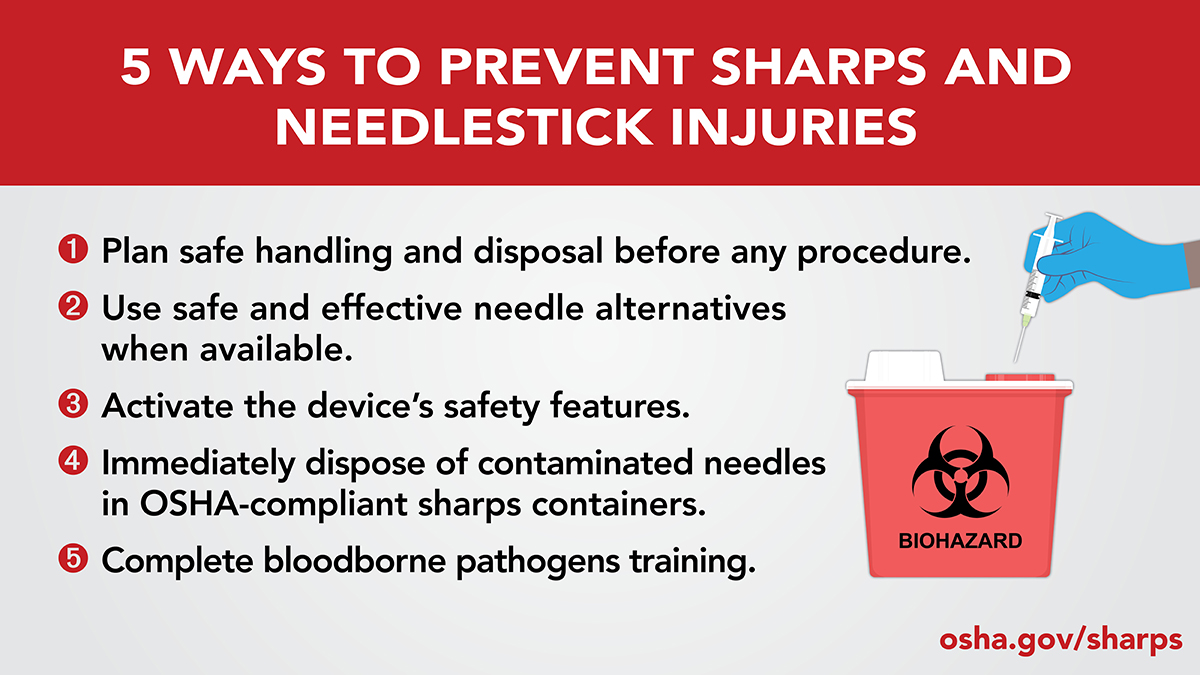
- Engineering controls include safer medical devices such as needleless systems, sharps with engineered sharps injury protections, and needle-retracting technology, which must be evaluated and implemented annually.
- Work practice controls involve modifying how tasks are performed to reduce the likelihood of exposure incidents—for example, prohibiting recapping needles and ensuring proper handling and disposal of contaminated sharps.
- Contaminated sharps must be discarded immediately in containers that are closable, puncture-resistant, leak-proof on the sides and bottom, and labeled or color-coded appropriately.
Hepatitis B Vaccination and Post-Exposure Follow-Up
OSHA requires employers to make the hepatitis B vaccine and vaccination series available at no cost to all employees who have occupational exposure to bloodborne pathogens. This provision aims to prevent infection after potential exposures occur.
- The hepatitis B vaccine must be offered within 10 days of initial assignment to employees at risk, provided after required training and free of charge.
- If an exposure incident occurs, employers must provide a prompt and confidential medical evaluation and follow-up, including documentation of the route of exposure and the source individual if feasible and permitted by law.
- Post-exposure evaluation must include collection and testing of blood for HBV and HIV, counseling, and post-exposure prophylaxis as recommended by the U.S. Public Health Service, regardless of whether the employee received the vaccine.
Frequently Asked Questions
What is the OSHA Bloodborne Pathogens Standard?
The OSHA Bloodborne Pathogens Standard (29 CFR 1910.1030) is a regulation designed to protect workers exposed to blood or other potentially infectious materials. It requires employers to implement safety measures that reduce or eliminate employee risk. The standard applies to all occupational exposure in healthcare and other industries. It mandates training, personal protective equipment, and procedures to prevent transmission of diseases like HIV, hepatitis B, and hepatitis C through bloodborne pathogens.
Who must comply with the OSHA Bloodborne Pathogens Standard?
Employers with employees at risk of exposure to blood or other infectious materials must comply with the OSHA Bloodborne Pathogens Standard. This includes healthcare workers, emergency responders, janitorial staff in medical facilities, and others in occupations where exposure is reasonably anticipated. Compliance applies regardless of company size or employment type. Employers must evaluate job classifications and tasks to determine which workers are covered and ensure they receive required protections and training.
What are the key requirements of the Bloodborne Pathogens Standard?
Key requirements include developing an exposure control plan, implementing universal precautions, offering hepatitis B vaccination, providing personal protective equipment (PPE), ensuring proper sharps disposal, and conducting employee training. Employers must also establish procedures for handling exposure incidents, including post-exposure evaluation and follow-up. The exposure control plan must be reviewed annually and updated to reflect changes in technology or work practices that eliminate or reduce occupational exposure to bloodborne pathogens.
How often is bloodborne pathogens training required?
OSHA requires bloodborne pathogens training to be provided at initial assignment and annually thereafter for all at-risk employees. Training must be conducted during work hours and include information on transmission routes, protective measures, use of PPE, and post-exposure procedures. It must also cover the location and use of exposure control plans and safety equipment. Employers must keep training records for at least three years, including dates, contents, and participant names.
Leave a Reply