
What does the osha hazard communication standard require
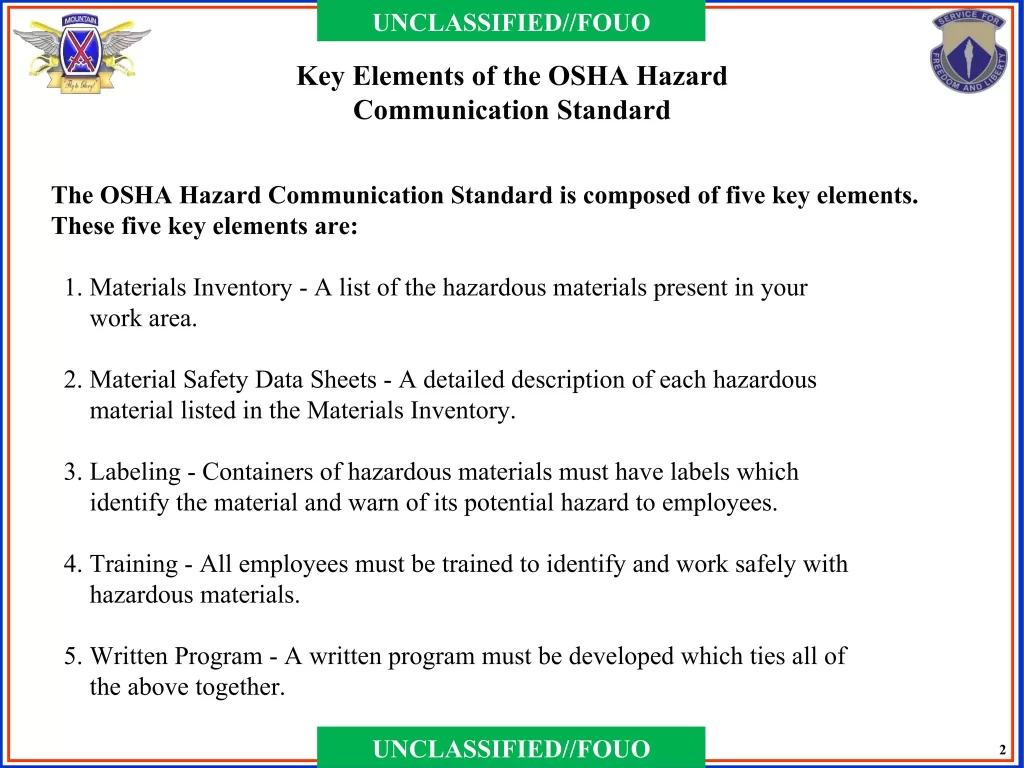
The OSHA Hazard Communication Standard (HCS) is a crucial regulation designed to ensure the safe handling, storage, and use of hazardous chemicals in the workplace.
It mandates that employers provide comprehensive information about chemical hazards to employees through clear labeling, safety data sheets (SDSs), and effective training programs. The standard requires chemical manufacturers and importers to evaluate the hazards of the substances they produce or import and communicate those findings accurately.
By promoting transparency and awareness, the HCS empowers workers to take informed safety measures, reducing the risk of chemical-related injuries and illnesses across various industries.
 1983 osha hazard communication standard
What Does the OSHA Hazard Communication Standard Require?
The OSHA Hazard Communication Standard (HCS), found in 29 CFR 1910.1200, mandates that employers ensure employees are informed about the chemical hazards they may encounter in the workplace. This regulation was established to guarantee that workers have the right to know about the identities and dangers of chemicals they work with.
Employers must develop and implement a comprehensive written hazard communication program that includes chemical inventory lists, proper labeling of containers, distribution of Safety Data Sheets (SDSs), and employee training.
The standard applies to all employers who have hazardous chemicals in their workplaces and requires alignment with the Globally Harmonized System of Classification and Labelling of Chemicals (GHS), which standardizes hazard classifications and communication methods internationally.
Chemical Inventory and Hazard Classification
Under the Hazard Communication Standard, manufacturers and importers of chemicals are required to evaluate the chemicals they produce or import to determine their physical and health hazards.
 2012 osha hazard communication standard
This process is known as hazard classification and involves identifying properties such as flammability, toxicity, corrosivity, and reactivity. Employers must maintain a chemical inventory of all hazardous substances present in the workplace and ensure each is properly classified according to GHS criteria.
Accurate classification lays the foundation for all other elements of the standard—labels, SDSs, and training. If a chemical is not properly classified, downstream safety measures may fail, putting workers at risk.
Labels and Warning Information
The HCS requires all containers of hazardous chemicals to be properly labeled with information that alerts employees to potential dangers.
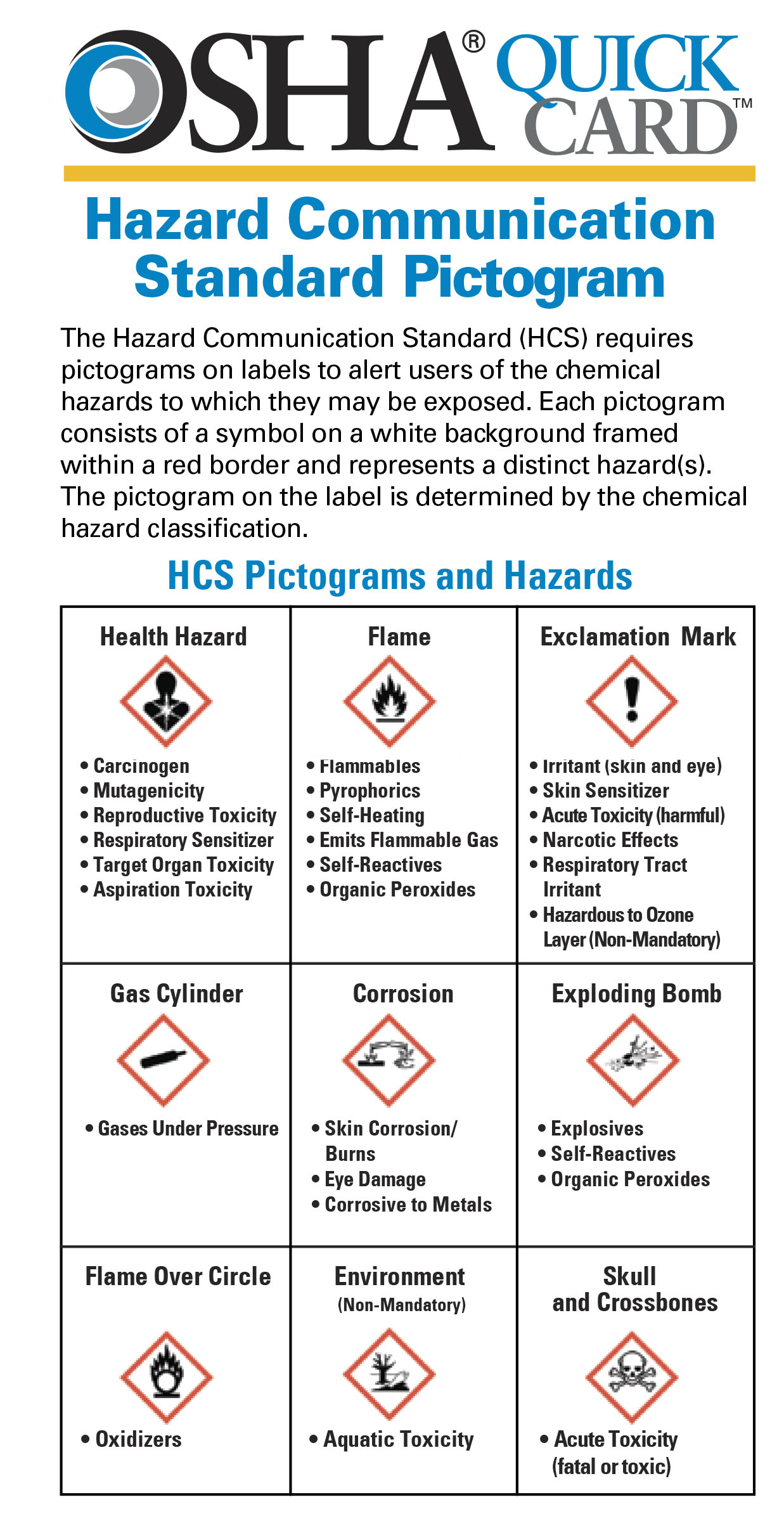
Labels must include the product identifier, signal word (such as Danger or Warning), hazard statements, precautionary statements, pictograms, and supplier information. These elements must be consistent with the GHS format to ensure clear and universal understanding.
 Osha hazard communication standard 2024
Employers must ensure that labels on incoming containers are not removed or defaced and must affix new labels to secondary containers if the contents are transferred. Immediate visibility of hazard warnings through standardized labeling systems is essential for reducing exposure incidents and promoting workplace safety.
Safety Data Sheets (SDSs) and Employee Training
Each hazardous chemical in the workplace must be accompanied by a Safety Data Sheet (SDS), which provides detailed information about the substance, including its properties, health effects, first aid measures, fire response, storage and disposal, and exposure controls.
Employers must keep SDSs readily accessible to employees during each work shift.
In addition, employee training is a critical requirement—the HCS mandates that workers are trained on the hazards of chemicals in their work area and on how to read labels and SDSs. Training must occur at the time of initial assignment and whenever new chemicals are introduced, ensuring that workers understand how to protect themselves effectively.
 What is the purpose of the osha hazard communication standard
| Requirement | Description | OSHA Compliance Element |
|---|---|---|
| Written Hazard Communication Program | A site-specific plan detailing how the employer will meet HCS requirements. | Mandatory for all workplaces with hazardous chemicals. |
| Proper Chemical Labeling | Includes signal words, pictograms, hazard and precautionary statements. | Aligned with GHS standards; must be on all containers. |
| Safety Data Sheets (SDSs) | 16-section standardized documents providing comprehensive chemical data. | Must be accessible to all employees at all times. |
| Employee Training | Education on chemical hazards, label interpretation, and safe handling practices. | Required at initial assignment and upon new chemical exposure. |
| Hazard Classification | Identification of physical and health hazards of chemicals by suppliers and importers. | Foundation for all labeling and SDS development. |
OSHA Hazard Communication Standard Requirements: A Comprehensive Guide
What are the key requirements of OSHA’s Hazard Communication Standard?
Written Hazard Communication Program
Employers must develop and implement a written hazard communication program tailored to the specific workplace. This plan outlines how the employer will meet OSHA's requirements and ensure employee safety when handling hazardous chemicals.
- The written program must include a list of all hazardous chemicals present in the workplace, which helps identify potential risks and ensures that all substances are accounted for in safety procedures.
- It must designate a responsible person or team to manage the program, ensuring consistent oversight and accountability for maintaining compliance with OSHA regulations.
- The program should also describe how labeling, safety data sheets, and employee training will be implemented and maintained, providing a structured approach to hazard management across all operations.
Chemical Labeling and Warning Systems
Proper labeling is a critical component of OSHA's Hazard Communication Standard, as it ensures that workers receive immediate information about the dangers associated with each chemical.
- All containers of hazardous chemicals must be labeled with specific information including the product identifier, signal word, hazard statement, pictogram, and supplier details as defined by the Globally Harmonized System (GHS).
- Labels must be legible, in English, and prominently displayed so that employees can quickly identify the risks before handling a substance.
- Employers are required to ensure that labels are not removed or defaced and to replace damaged or missing labels promptly to maintain continuous hazard awareness.
Safety Data Sheets (SDSs) and Employee Training
Safety Data Sheets and training programs ensure that workers have both the knowledge and resources to work safely with hazardous materials.
- Employers must have a Safety Data Sheet for each hazardous chemical, and these sheets must follow the standardized 16-section format established by OSHA to ensure consistency and clarity in communication.
- The SDSs must be readily accessible to employees during each work shift, either in print or electronically, so that workers can quickly review procedures in case of exposure or emergencies.
- Regular employee training is required when workers are first assigned to a hazardous area and whenever new chemicals or processes are introduced, covering how to read labels, interpret SDSs, use protective measures, and respond to incidents.
What are the five key components required by the OSHA Hazard Communication Standard?
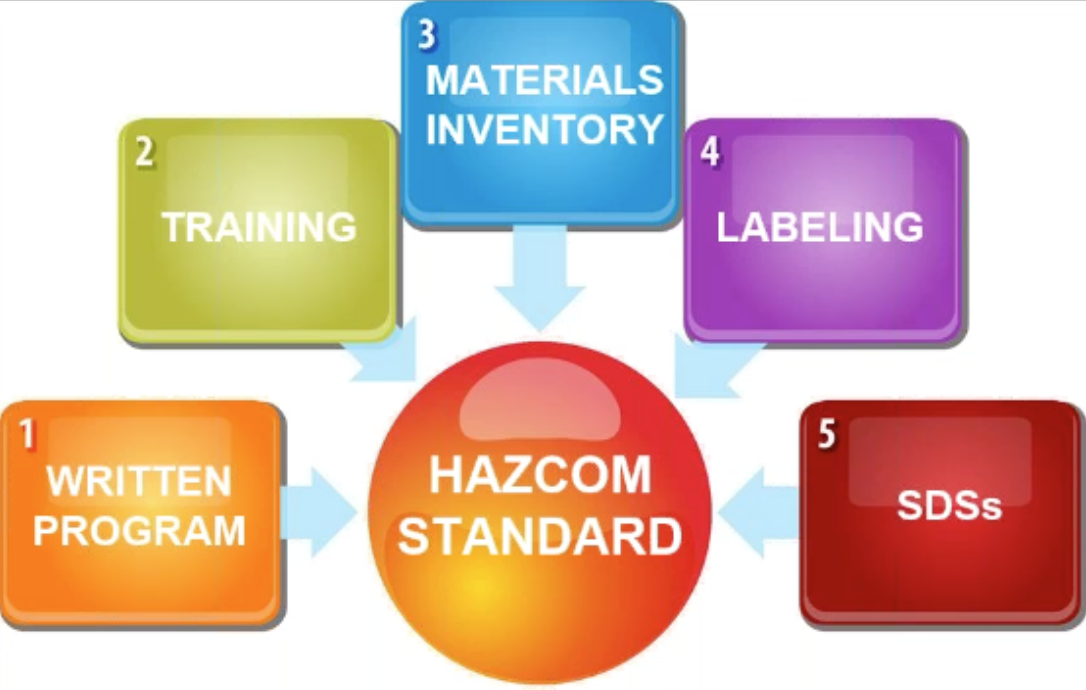
1. Written Hazard Communication Program
Every employer covered by the OSHA Hazard Communication Standard (HCS) must develop and implement a written hazard communication program specific to their workplace.
This program serves as a blueprint for how the employer will meet the requirements of the standard and ensure employee safety. The written program must include details about labeling systems, availability of safety data sheets (SDSs), and employee training procedures.
It should also identify the responsible person or team managing hazardous chemicals within the facility. Maintaining this document helps ensure consistency and accountability in handling hazardous substances across different work operations.
- The program must be accessible to employees and inspectors at all times during the workday.
- It should be regularly reviewed and updated to reflect changes in chemicals, processes, or regulations.
- It outlines procedures for identifying and evaluating chemical hazards present in the workplace.
2. Proper Labeling of Hazardous Chemicals
One of the core requirements of the OSHA Hazard Communication Standard is the proper labeling of all containers holding hazardous chemicals. These labels must be clear, visible, and durable, providing immediate information about the risks associated with each chemical.
Under the Globally Harmonized System (GHS), labels must include specific elements such as a product identifier, signal word, hazard statement(s), precautionary statement(s), pictograms, and supplier information. This standardized labeling system enhances comprehension and reduces confusion in multi-language workplaces, helping employees quickly assess risks and take appropriate precautions.
- Labels must remain intact and legible throughout the chemical’s use in the workplace.
- Secondary containers, such as smaller bottles or spray bottles, must also be labeled if not used immediately by the person who transferred the chemical.
- Employers are responsible for ensuring that new chemicals entering the workplace are properly labeled upon receipt.
3. Safety Data Sheets (SDSs) for Each Hazardous Chemical
Safety Data Sheets (SDSs) are essential documents that provide comprehensive information about each hazardous chemical used in the workplace. OSHA requires that an SDS be available for every hazardous chemical, following a standardized 16-section format as defined by the GHS.
These sheets include critical details such as chemical composition, physical and health hazards, first-aid measures, storage requirements, and emergency procedures. Employers must ensure that SDSs are readily accessible to employees during each work shift, either in print or through electronic systems, so workers can quickly retrieve vital safety information.
- SDSs must be kept up to date, and a current version must be obtained whenever a new chemical is introduced or when updates are issued by the manufacturer.
- Employees must be trained on how to locate and interpret the information contained in SDSs.
- The collection of SDSs should be maintained in a central, easily accessible location or through a reliable digital platform with backup access.
What are the four key requirements of OSHA’s Hazard Communication Standard for employee protection?
1. Proper Labeling of Hazardous Chemicals
OSHA’s Hazard Communication Standard (HCS) mandates that all hazardous chemicals in the workplace must be properly labeled to ensure employees can easily identify potential dangers. These labels must include specific elements to convey the type of hazard and necessary precautions.
- Each container of hazardous chemicals must have a label that includes the product identifier, signal word, hazard statement, precautionary statements, and pictograms as defined by the Globally Harmonized System (GHS).
- Employers are required to ensure that labels are not removed or defaced and that they remain legible throughout the chemical’s use.
- In cases where chemicals are transferred to secondary containers, labels must be applied unless the container is for immediate use by the employee who performed the transfer.
2. Availability and Maintenance of Safety Data Sheets (SDSs)
A critical component of employee protection under the Hazard Communication Standard is the accessibility of Safety Data Sheets (SDSs) for all hazardous chemicals used in the workplace. These documents provide comprehensive information about each chemical, enabling workers to understand risks and take appropriate protective actions.
- Employers must obtain an up-to-date SDS for every hazardous chemical present in the workplace from manufacturers or suppliers.
- SDSs must be readily accessible to employees during each work shift, either in physical form or electronically, provided employees have access to and training on how to use the electronic system.
- The SDS must include standardized sections such as hazard identification, composition, first-aid measures, fire-fighting measures, accidental release procedures, handling and storage instructions, exposure controls, and toxicological information.
3. Employee Training and Information
Training is a fundamental requirement of the Hazard Communication Standard, ensuring that employees understand the hazards they may be exposed to and know how to protect themselves in the workplace.
- Employers must provide effective training when employees are initially assigned to work with hazardous chemicals and whenever new chemicals or processes are introduced.
- Training must cover how to read and interpret labels and SDSs, the physical and health hazards of the chemicals in their work area, and protective measures such as engineering controls, work practices, and personal protective equipment (PPE).
- Information must also be provided about the employer’s hazard communication program, including how labeling, SDS access, and in-house procedures are implemented.
Frequently Asked Questions
What does the OSHA Hazard Communication Standard require employers to do?
The OSHA Hazard Communication Standard requires employers to establish a written hazard communication program, ensure all hazardous chemicals are properly labeled, maintain safety data sheets (SDSs) for each chemical, and provide employee training. Employers must also make the program accessible to workers and update it when new chemicals are introduced. These measures help ensure that employees understand chemical hazards and how to work safely with or around them.
Why are safety data sheets (SDSs) important under the Hazard Communication Standard?
Safety data sheets (SDSs) are essential because they provide detailed information about each hazardous chemical, including its properties, health and physical hazards, protective measures, and safety precautions for handling, storage, and emergency response. Under the Hazard Communication Standard, employers must have an SDS for every hazardous chemical in the workplace and ensure employees can access them. This promotes informed decision-making and enhances workplace safety.
What labeling requirements does the OSHA Hazard Communication Standard mandate?
The OSHA Hazard Communication Standard mandates that all containers of hazardous chemicals be labeled with specific information, including the chemical identity, appropriate hazard warnings, and the name and address of the chemical manufacturer or distributor. Labels must include pictograms, signal words (like “Danger” or “Warning”), and precautionary statements. These standardized labels help workers quickly recognize chemical hazards and take necessary safety precautions.
What type of employee training is required by the Hazard Communication Standard?
Employers must train employees on the hazards of chemicals they may encounter and how to protect themselves. Training must cover how to read labels and safety data sheets, the proper use of personal protective equipment, and emergency procedures. This training must occur when employees are first assigned to work with chemicals and whenever new hazards are introduced. Effective training ensures workers can recognize risks and respond appropriately.
Leave a Reply