
Australia racial discrimination
Australia’s history with racial discrimination is complex and deeply rooted in colonial legacies, particularly in its treatment of Indigenous peoples and non-European immigrants. Despite its multicultural image, systemic racism persists in areas such as housing, employment, education, and the justice system.
Aboriginal and Torres Strait Islander communities continue to face disproportionate disadvantages and institutional bias. Recent years have seen increased public discourse on racism, fueled by global movements and local incidents, prompting national debate about equity and inclusion.
While legal frameworks like the Racial Discrimination Act exist, enforcement and societal attitudes remain inconsistent, highlighting the ongoing challenge of achieving true racial equality in contemporary Australian society.
 Australia racial discrimination act
Racial Discrimination in Australia: Challenges and Systemic Issues
Australia, often celebrated for its multiculturalism and inclusive national identity, continues to grapple with persistent issues of racial discrimination that affect Indigenous communities, migrants, and people of colour.
Despite legal protections such as the Racial Discrimination Act 1975, which was landmark legislation affirming Australia's commitment to international human rights standards like the International Convention on the Elimination of All Forms of Racial Discrimination (ICERD), many individuals still face discrimination in employment, education, healthcare, and interactions with law enforcement.
Indigenous Australians—particularly Aboriginal and Torres Strait Islander peoples—experience disproportionate levels of systemic racism, including overrepresentation in the criminal justice system and lower life expectancy.
Additionally, rising reports of racism against Asian, African, and Middle Eastern communities, especially during global crises such as the COVID-19 pandemic, demonstrate that racial prejudice remains a significant social challenge. Addressing these issues requires not only stronger enforcement of anti-discrimination laws but also a national commitment to education, cultural awareness, and empowering marginalized voices.
 Australia racial discrimination act 1975
Historical Roots of Racial Discrimination in Australia
The legacy of colonization and policies such as the White Australia Policy, which officially restricted non-European immigration from the late 19th century until the 1970s, has deeply influenced societal attitudes and institutional practices in Australia.
This policy institutionalized racial hierarchies and excluded non-white populations from full participation in society, creating long-term socioeconomic disparities. Even after its abolition, the residual impacts are evident in the marginalization of Indigenous peoples and the barriers faced by newly arrived migrants from Africa, Asia, and the Pacific.
Historical injustices such as the Stolen Generations, where Indigenous children were forcibly removed from their families, continue to affect intergenerational trauma and distrust in governmental institutions. Acknowledging this history is essential for understanding the depth of systemic racism and implementing effective reconciliation and reform measures.
Contemporary Manifestations of Racism in Public Life
Racial discrimination in modern Australia manifests in both overt acts and covert institutional practices that undermine equality. Reports from the Australian Human Rights Commission (AHRC) indicate that nearly half of all racial discrimination complaints are related to employment, followed by education and goods and services.
 Wrongful termination lawsuits
Indigenous Australians are significantly more likely to be stopped by police under move-on laws and are incarcerated at alarming rates—Aboriginal and Torres Strait Islander adults are 15 times more likely to be imprisoned than non-Indigenous Australians.
Moreover, racially motivated hate speech, especially on digital platforms, has surged in recent years, with Asian-Australians facing a notable spike in harassment since the emergence of the pandemic. These patterns reflect not only individual prejudice but also systemic failures in ensuring equitable treatment across public sectors.
Legal Frameworks and Anti-Discrimination Measures
Australia’s primary legal instrument against racial discrimination is the Racial Discrimination Act 1975 (RDA), which makes it unlawful to discriminate based on race, colour, descent, or national or ethnic origin in various areas of public life.
The Act also established the basis for Australia’s compliance with ICERD and led to pivotal decisions, such as the Mabo case, which recognized native title and challenged the doctrine of terra nullius. However, critics argue that the RDA lacks enforcement teeth, especially concerning Section 18C, which prohibits offensive behaviour based on race—debates over free speech versus racial protection have led to repeated attempts to weaken this section.
Anti-discrimination bodies like the AHRC can investigate and conciliate complaints, but they cannot impose penalties, highlighting a gap in legal remedies. Enhancing these frameworks with stronger redress mechanisms and expanding education on racial equity are vital steps toward effective change.
| Issue | Key Statistics | Relevant Law or Initiative |
|---|---|---|
| Indigenous Incarceration | Aboriginal people represent 30% of the prison population despite being ~3% of the general population | Close the Gap strategy, Royal Commission into Aboriginal Deaths in Custody (1991) |
| Racial Discrimination Complaints | 1,819 race-related complaints reported to AHRC in 2022–2023 | Racial Discrimination Act 1975, Section 18C |
| Life Expectancy Gap | Indigenous Australians live 7–8 years less on average than non-Indigenous Australians | COAG National Agreement on Closing the Gap (2020) |
Understanding Racial Discrimination in Australia: A Comprehensive Guide
Is racial discrimination a prevalent issue in Australia today?
Historical Context and Ongoing Systemic Challenges
- Australia's history of racial discrimination dates back to colonization, particularly through policies such as the White Australia Policy, which formally restricted non-European immigration until the 1970s. This legacy has had enduring effects on social structures and institutional practices.
- Indigenous Australians, including Aboriginal and Torres Strait Islander peoples, continue to face disproportionate levels of disadvantage stemming from systemic discrimination in areas such as health, education, employment, and the criminal justice system.
- Despite efforts to address historical injustices, institutional racism persists in governance and public services, evidenced by policies that disproportionately impact marginalized communities and contribute to intergenerational inequality.
Contemporary Experiences of Racial Discrimination
- Recent surveys and reports, including data from the Australian Human Rights Commission, indicate that a significant proportion of Australians from culturally and linguistically diverse backgrounds experience racial discrimination in daily life, especially in employment and public services.
- Acts of overt racism, including hate speech and racially motivated harassment, are frequently reported by migrant communities, particularly those of Asian, Middle Eastern, and African descent, with spikes during periods of social tension such as the COVID-19 pandemic.
- Discrimination is also evident in housing and access to healthcare, where individuals from minority backgrounds report being denied services or receiving lower quality treatment due to racial or ethnic bias.
Legal Framework and Anti-Discrimination Measures
- Australia has several legal protections against racial discrimination, including the Racial Discrimination Act 1975, which makes it unlawful to discriminate based on race, color, descent, or national or ethnic origin in various areas of public life.
- However, enforcement of these laws is often criticized as inconsistent, and reporting mechanisms can be difficult to access, particularly for vulnerable populations who may fear retaliation or lack awareness of their rights.
- While organizations such as the Australian Human Rights Commission work to address complaints and raise awareness, structural barriers and underfunding limit the effectiveness of current anti-discrimination initiatives, necessitating stronger policy reforms and community engagement.
Is racial discrimination permitted under Australian law?
Legal Framework Prohibiting Racial Discrimination in Australia
- Australia has comprehensive anti-discrimination laws that explicitly prohibit racial discrimination. The primary legislation is the Racial Discrimination Act 1975, which makes it unlawful to discriminate against individuals on the basis of race, color, descent, or national or ethnic origin.
- This Act aligns Australia with international human rights standards, particularly the International Convention on the Elimination of All Forms of Racial Discrimination (ICERD), which Australia ratified in 1975. The law applies to various areas of public life, including employment, education, access to premises, provision of goods and services, and housing.
- Under Section 9 of the Act, racial discrimination is defined as any distinction, exclusion, restriction, or preference based on race that impairs the recognition, enjoyment, or exercise of human rights and fundamental freedoms.
Role of the Australian Human Rights Commission
- The Australian Human Rights Commission (AHRC) plays a key role in enforcing anti-discrimination laws. It investigates complaints of racial discrimination filed by individuals and attempts to resolve them through conciliation.
- Any person who believes they have been subjected to racial discrimination can lodge a complaint with the AHRC. The process is free and accessible, and complaints can be made online or via other communication methods.
- If conciliation fails, the complainant may take the matter to the Federal Court of Australia or the Federal Circuit and Family Court of Australia, where legal remedies such as compensation or injunctions can be sought.
Limitations and Controversies Around Section 18C
- Section 18C of the Racial Discrimination Act prohibits conduct that is reasonably likely to offend, insult, humiliate, or intimidate a person because of their race. This provision has been central in addressing racial vilification in public contexts.
- While Section 18C is widely supported by community groups and human rights advocates, it has generated public debate about the balance between freedom of speech and protection from racial abuse. Critics argue it may restrict free expression, while supporters emphasize its importance in promoting social harmony.
- Defenses to a Section 18C complaint are outlined in Section 18D, which protects speech that is done in good faith for academic, artistic, scientific, or fair comment purposes, provided it is reasonable in the circumstances.
When did racial discrimination officially end in Australia?

Legislative Milestones in the End of Official Racial Discrimination
- The formal end of state-sanctioned racial discrimination in Australia is best marked by the passage of the Racial Discrimination Act 1975, which legally prohibited discrimination on the basis of race, color, or national or ethnic origin. This was a transformative piece of legislation that aligned Australia with international human rights standards, particularly the International Convention on the Elimination of All Forms of Racial Discrimination, which Australia ratified in 1972.
- Prior to 1975, various state and federal laws enabled discriminatory practices, most notably under the White Australia Policy, which restricted non-European immigration and marginalized Indigenous Australians. Although this policy was gradually dismantled starting in the 1940s and formally abandoned in the 1970s, it wasn’t until the 1975 Act that racial equality gained enforceable legal standing.
- The Racial Discrimination Act applied to all levels of government and extended to employment, housing, education, and access to services, effectively ending legally sanctioned racial discrimination across the country. While social and systemic racism persisted, this law marked the official legal turning point in Australia’s commitment to racial equality.
The Role of the 1967 Referendum in Advancing Equality
- The 1967 referendum was a critical moment in the movement toward ending racial discrimination in Australia. It altered the Australian Constitution to allow the federal government to make laws for Aboriginal and Torres Strait Islander peoples and include them in the national census, a symbolic and practical step toward legal recognition and equality.
- Though the referendum did not immediately outlaw discrimination, it demonstrated a growing public mandate for change. With over 90% of voters supporting the amendments, it highlighted a shift in national consciousness and laid the groundwork for future anti-discrimination legislation, including the 1975 Act.
- The referendum empowered Indigenous advocacy groups and increased pressure on governments to address systemic disparities. This momentum contributed directly to legal reforms that dismantled racially discriminatory policies in areas such as land rights, education, and healthcare over the following decades.
Ongoing Challenges Despite Legal Protections
- While racial discrimination officially ended in legal terms with the 1975 Act, Indigenous Australians and minority communities continue to experience systemic inequalities in health, education, employment, and the criminal justice system. These disparities reflect the enduring legacy of past discriminatory policies and ongoing structural bias.
- Reports from human rights organizations and government inquiries, such as the Royal Commission into Aboriginal Deaths in Custody (1991), have consistently highlighted the gap between legal equality and lived reality for many Australians of non-European backgrounds.
- Efforts to address these inequities include treaties at the state level, constitutional recognition debates, and the Uluru Statement from the Heart (2017), which calls for a First Nations Voice enshrined in the Constitution. These initiatives underscore that while legal racial discrimination ended in 1975, the pursuit of true racial justice in Australia remains ongoing.
What are the key racial discrimination challenges facing human rights in Australia today?
Indigenous Disadvantage and Systemic Discrimination
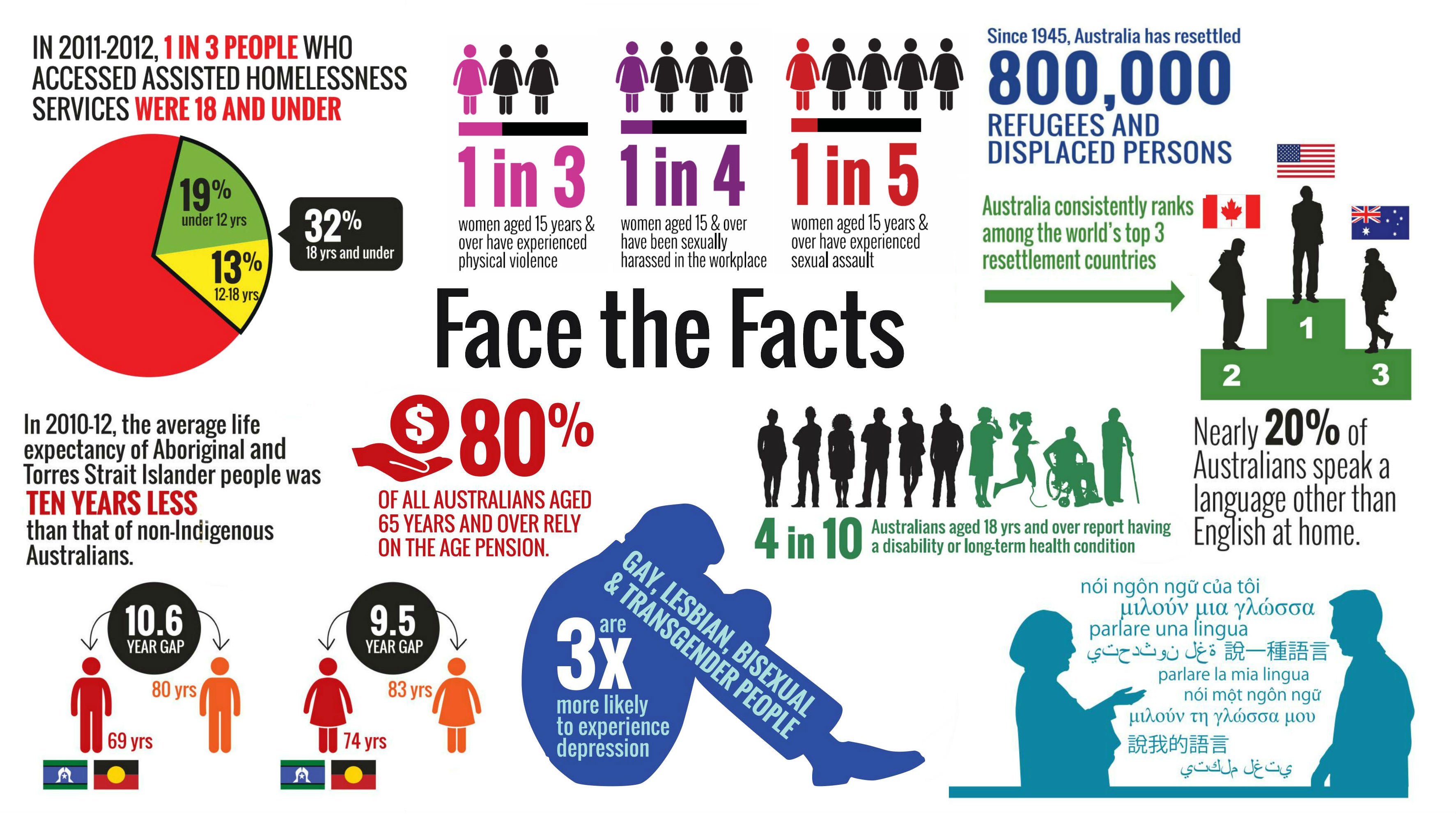
Indigenous Australians, including Aboriginal and Torres Strait Islander peoples, continue to face profound racial discrimination that undermines their human rights.
Systemic inequities are evident across multiple sectors, resulting in lower life expectancy, poorer health outcomes, reduced access to quality education, and higher rates of incarceration compared to non-Indigenous Australians.
Historical dispossession, forced removals, and the intergenerational trauma from policies such as the Stolen Generations have contributed to ongoing marginalization. Despite efforts to close the gap, progress has been slow, and structural racism persists in institutions such as the justice system and healthcare.
- Indigenous Australians are significantly overrepresented in the criminal justice system, making up around 30% of the prison population despite comprising only 3.8% of the national population.
- Discriminatory policing practices, including racial profiling and the overuse of community-based sentencing, disproportionately impact Indigenous communities.
- Barriers to equitable healthcare access, such as geographic isolation, cultural insensitivity, and lack of Indigenous-led health services, contribute to poorer health outcomes.
Racism in Education and Employment
Racial discrimination in education and employment remains a significant human rights concern in Australia, particularly for people from culturally and linguistically diverse (CALD) backgrounds, Indigenous peoples, and recent migrants.
Students from minority backgrounds often encounter racial bias in schools, including lower academic expectations and disciplinary actions that are disproportionately applied. In the workforce, individuals with non-Anglo names face hiring discrimination, while Indigenous and migrant workers are often underemployed or concentrated in low-wage sectors. These disparities limit social mobility and reinforce cycles of poverty.
- Studies show that job applicants with Chinese, Middle Eastern, or African names are less likely to receive callbacks compared to those with Anglo-sounding names, even when qualifications are identical.
- Indigenous students report experiencing bullying and lack of culturally inclusive curricula, contributing to lower school retention rates.
- Workplace discrimination, including denial of promotions and racial harassment, persists despite existing anti-discrimination laws and employer diversity policies.
Rise in Xenophobia and Anti-Immigrant Sentiment
Australia has seen a concerning rise in xenophobia and racially motivated violence, particularly against Asian, Middle Eastern, Muslim, and African communities.
The spread of misinformation, political rhetoric that frames migration as a threat, and social media amplification of hate speech have contributed to an environment where racial minorities feel increasingly targeted.
The COVID-19 pandemic exacerbated anti-Asian racism, with reports of verbal abuse, physical assaults, and social exclusion rising sharply. Additionally, asylum seekers and refugees, especially those held in offshore detention, face state-sanctioned discrimination and human rights violations.
- There has been a documented surge in racially motivated incidents against people of Chinese and other Asian ancestries during and after the pandemic, often fueled by racist stereotypes.
- Muslim Australians report widespread discrimination in public spaces, including hate crimes and surveillance practices that undermine religious freedom.
- Refugees and people seeking asylum face prolonged detention, restricted movement, and limited access to legal resources, reinforcing racialized inequalities in migration policies.
Frequently Asked Questions
What is racial discrimination in Australia?
Racial discrimination in Australia occurs when a person is treated unfairly or less favorably because of their race, color, descent, or national or ethnic origin. This includes exclusion, harassment, or unequal treatment in areas like employment, education, housing, and services. Australia’s Racial Discrimination Act 1975 makes such treatment unlawful and aims to promote equality for all people regardless of background.
What laws protect against racial discrimination in Australia?
The main law protecting against racial discrimination in Australia is the Racial Discrimination Act 1975. This federal law makes it unlawful to discriminate based on race, color, descent, or national or ethnic origin. The Australian Human Rights Commission investigates complaints under this Act. State and territory anti-discrimination laws also offer additional protections in various areas of public life.
Where can someone report racial discrimination in Australia?
Individuals experiencing racial discrimination in Australia can lodge a complaint with the Australian Human Rights Commission (AHRC). Complaints can be submitted online, by mail, or over the phone. The AHRC provides a free, confidential process to resolve issues through conciliation. State and territory anti-discrimination bodies can also assist with local or regional concerns.
How common is racial discrimination in Australia today?
Racial discrimination remains a persistent issue in Australia, affecting many people from diverse backgrounds. Studies and surveys show significant numbers of individuals report discrimination in workplaces, schools, and public spaces. While laws exist to combat it, underreporting is common. Ongoing efforts by government and community groups aim to increase awareness, promote inclusion, and strengthen responses to racism.
Leave a Reply