
Florida law undocumented workers

Undocumented workers in Florida navigate a complex legal landscape shaped by state policies and federal enforcement priorities. While these individuals contribute significantly to industries such as agriculture, construction, and hospitality, they often face legal vulnerabilities due to their immigration status.
Florida law does not explicitly prohibit undocumented immigrants from working, but compliance with federal employment verification systems like E-Verify is increasingly enforced. This creates challenges for both employers and employees, especially amid shifting political and legislative agendas.
Debates continue over labor rights, workplace protections, and access to services, leaving many undocumented workers in precarious situations despite their essential roles in the state’s economy.
 How many agricultural workers in the us are undocumented
Understanding Florida's Legal Landscape for Undocumented Workers
Florida’s approach to undocumented workers is shaped by a combination of federal immigration enforcement and state-level labor and employment laws. While immigration enforcement remains primarily a federal responsibility, Florida has implemented policies that affect how undocumented individuals interact with the workforce.
State laws do not explicitly prohibit undocumented immigrants from working, but employers are required under both federal and state regulations to verify work eligibility using Form I-9. In recent years, Florida has strengthened measures to ensure compliance, including mandating the use of E-Verify for public contractors and some private employers since 2023. This system electronically confirms an employee's identity and employment authorization.
Undocumented workers in Florida often face challenges such as wage theft, unsafe working conditions, and reluctance to report violations due to fear of deportation. Despite their immigration status, these workers are still protected under certain federal labor laws, including the Fair Labor Standards Act (FLSA), which guarantees minimum wage and overtime protections.
Legal advocates argue that stronger enforcement of labor standards is essential to protect all workers, regardless of status, and prevent exploitation in industries that rely heavily on immigrant labor, such as construction, agriculture, and hospitality.
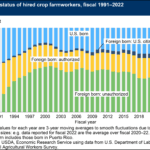 How many undocumented farm workers
Employment Verification and E-Verify Requirements in Florida
Since July 1, 2023, Florida law mandates that all employers, both public and private, must use the federal E-Verify system to confirm the employment eligibility of newly hired workers. This expansion, signed into law by Governor Ron DeSantis, applies to nearly all businesses operating in the state and requires them to confirm an employee’s work authorization status within a specific timeframe after hire.
The goal of this policy is to reduce unauthorized employment and promote a legal workforce. Failure to comply can result in fines, suspension of business licenses, or contract termination for public contractors.
Critics argue the law may lead to workplace discrimination or discourage qualified workers from applying, while supporters claim it ensures a level playing field and protects legal U.S. workers. Importantly, the law does not authorize state law enforcement to enforce immigration statutes, which remains a federal responsibility, but it significantly increases accountability for employers.
Legal Protections for Undocumented Workers in the Workplace
Despite their immigration status, undocumented workers in Florida are entitled to basic labor protections under federal law. The Fair Labor Standards Act (FLSA) ensures that all workers, regardless of immigration status, must receive at least the federal minimum wage and be paid for overtime when applicable.
 How many undocumented immigrants are essential workers
Additionally, the Occupational Safety and Health Act (OSHA) guarantees safe working conditions for every employee, and workers can report unsafe environments without legal distinction based on status.
Courts have ruled that employers cannot avoid wage claims simply by asserting a worker is undocumented. In fact, retaliating against a worker for filing a wage complaint—even if the individual lacks legal status—violates federal labor protections.
These safeguards are crucial in industries like agriculture and construction, where exploitation risks are high, but fear of deportation or employer retaliation often prevents undocumented employees from asserting their rights.
Impact of Florida's Immigration Policies on Labor Markets
Florida’s tightened employment verification laws and broader immigration enforcement priorities have generated significant discussion about their economic impact, particularly in labor-intensive sectors.
Industries such as agriculture, landscaping, hospitality, and food services have expressed concern about labor shortages following the implementation of mandatory E-Verify, citing difficulty in hiring enough workers even when wages are competitive.
Some economists argue that excluding undocumented workers—many of whom contribute to Florida’s economy through labor and consumption—could lead to increased operational costs and reduced productivity.
On the other hand, proponents of strict enforcement believe that these laws encourage employers to hire legally authorized workers and strengthen the integrity of the labor market. The long-term effects of these policies remain under scrutiny, especially as other states adopt contrasting approaches, potentially influencing migration patterns and the competitiveness of Florida’s economy.
| Aspect | Florida Law or Policy | Key Implication |
|---|---|---|
| E-Verify Requirement | Mandatory for all employers since 2023 | Reduces unauthorized employment; increases compliance burden |
| Workplace Protections | FLSA and OSHA apply to all workers | Undocumented workers can claim unpaid wages and report unsafe conditions |
| Employer Penalties | Fines and license suspension for non-compliance | Strengthens enforcement but may lead to hiring challenges |
Understanding the Legal Landscape for Undocumented Workers in Florida
The legal environment for undocumented workers in Florida is shaped by a combination of federal immigration enforcement and state-level labor policies. While federal law governs immigration status and deportation proceedings, Florida state laws influence how these individuals interact with the labor market, access to benefits, and employer obligations.
Despite being unauthorized to work under federal law, undocumented workers in Florida are still entitled to certain basic labor rights, including minimum wage protections and safe working conditions under the Fair Labor Standards Act (FLSA).
However, fear of detection often prevents many from reporting wage theft or workplace violations. The state does not offer driver’s licenses or in-state tuition to undocumented individuals, further limiting economic mobility. As debates over immigration reform continue, Florida law remains one of the stricter state frameworks affecting undocumented laborers.
Employment Verification and E-Verify Requirements in Florida
Employers in Florida are mandated by state law to use the E-Verify system to confirm the employment eligibility of new hires, a requirement that applies to all businesses with 25 or more employees. This electronic verification process cross-references employee information with federal databases from the Department of Homeland Security and Social Security Administration.
The goal is to reduce the hiring of undocumented workers, but critics argue it can lead to errors that disproportionately affect lawful workers with documentation discrepancies.
Compliance is strictly monitored, and failure to use E-Verify can result in penalties, including loss of state contracts and business licenses. This enforcement mechanism underscores Florida’s strict stance on unauthorized employment and shapes how employers manage their hiring practices.
Labor Rights and Protections for Undocumented Workers
Despite their immigration status, undocumented workers in Florida are protected under federal labor laws, including the right to receive the federal minimum wage, overtime pay, and a safe working environment.
The National Labor Relations Act grants them the right to organize and form unions, though exercising these rights carries significant risk of retaliation or deportation. Agencies like the Wage and Hour Division of the Department of Labor investigate cases of wage theft even if the employee is undocumented.
However, fear of employer retaliation and immigration enforcement discourages many from seeking justice. These protections highlight a critical contradiction: while the system acknowledges their labor contributions, Florida law offers little shelter from immigration consequences once reported.
Impact of Florida’s Immigration Enforcement Policies on Workplaces
Florida has strengthened its immigration enforcement through laws like Senate Bill 168, which prohibits sanctuary city policies and mandates cooperation between local law enforcement and Immigration and Customs Enforcement (ICE).
This collaboration increases the risk of workplace raids and deportation for undocumented laborers. Employers who are found to be knowingly hiring unauthorized workers may face criminal charges or civil penalties.
The heightened enforcement climate fosters fear among immigrant communities, reducing cooperation with police and public services. While state officials argue these policies uphold the rule of law, advocates contend they create exploitative conditions where workers are less likely to report abuse, undermining broader labor standards.
Access to Workers’ Compensation for Undocumented Laborers
Undocumented workers in Florida generally qualify for workers’ compensation benefits if injured on the job, regardless of immigration status.
Courts have ruled that eligibility is based on employment, not legal residency, ensuring that injured workers receive medical treatment and wage replacement. However, some employers resist claims by questioning the legality of the worker’s employment, creating legal hurdles.
The Florida Division of Workers’ Compensation does not inquire about immigration status when processing claims, emphasizing the principle that workplace safety protections apply universally. This access remains a crucial safeguard, though many undocumented individuals still avoid filing claims due to fear of exposure or retaliation.
Economic Contributions of Undocumented Workers in Florida
Undocumented workers play a vital role in key sectors of Florida’s economy, including agriculture, construction, hospitality, and landscaping.
They often fill essential but low-wage jobs that many native-born workers avoid, helping to sustain industries critical to the state’s economic health. Studies show these workers contribute significantly to tax revenues through sales and property taxes—even if they are ineligible for most public benefits.
Moreover, their labor supports business growth and consumer affordability across multiple markets. Despite their economic impact, Florida law largely excludes them from formal recognition or support systems, creating a paradox where their labor is both indispensable and marginalized.
Frequently Asked Questions
Can undocumented workers in Florida receive workers' compensation?
Undocumented workers in Florida are entitled to workers' compensation benefits if injured on the job. State law does not require legal residency for coverage. Employers must provide compensation regardless of immigration status.
Benefits include medical care and wage replacement. Courts have upheld that eligibility is based on employment, not documentation. Undocumented status cannot be used to deny valid claims under Florida’s Workers’ Compensation Law.
Are undocumented workers protected by Florida labor laws?
Yes, undocumented workers in Florida are protected by most labor laws, including minimum wage and overtime protections under the Fair Labor Standards Act. Employers cannot withhold wages or retaliate based on immigration status.
While employment may be unauthorized, the right to earned wages remains. These protections apply regardless of documentation to ensure fair treatment and prevent exploitation in the workplace across industries.
Can undocumented immigrants sue for workplace injuries in Florida?
Undocumented immigrants can sue for workplace injuries in Florida, particularly in cases involving third-party liability or employer negligence outside of workers' comp. Immigration status is typically irrelevant in personal injury claims. Courts focus on the facts of the injury and liability. However, claims must meet legal requirements, and damages may be affected by employment legality. Legal representation is crucial in such cases.
Do Florida employers face penalties for hiring undocumented workers?
Yes, Florida employers can face penalties for knowingly hiring undocumented workers. While Florida does not mandate E-Verify for most employers, federal law holds employers accountable under the Immigration Reform and Control Act. Penalties include civil fines and possible criminal charges for repeated violations. Employers must verify eligibility using Form I-9, though enforcement primarily occurs at the federal level, not state.
Leave a Reply