
Minimum wage list by state 2024
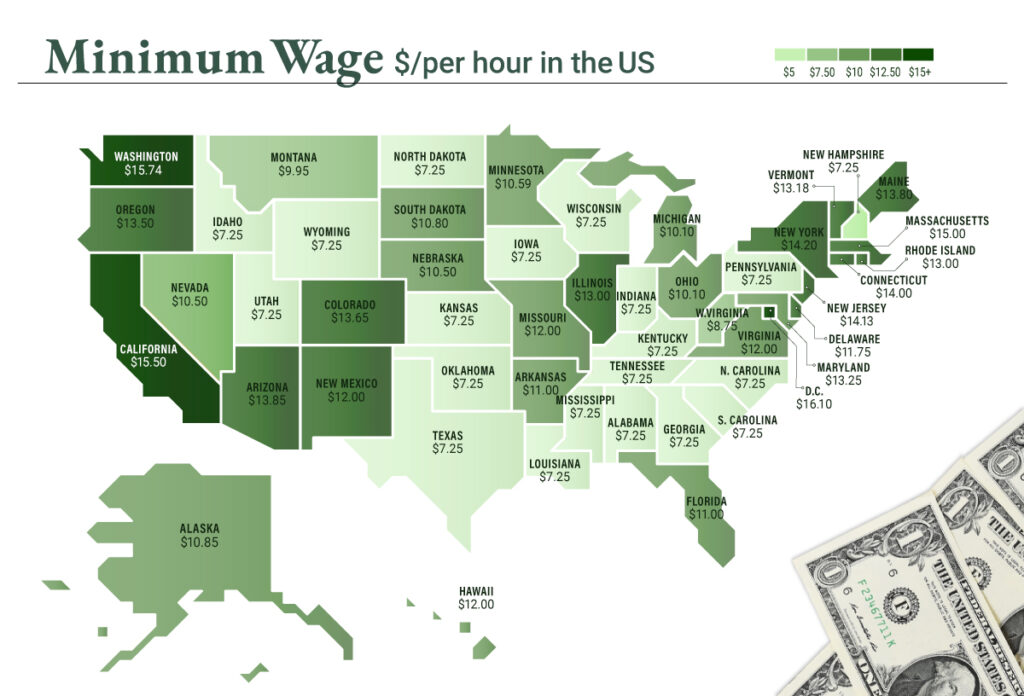
The minimum wage varies significantly across the United States, with each state setting its own rate, often above the federal baseline of $7.25 per hour.
As of 2024, numerous states have implemented increases to address rising living costs, reflecting ongoing efforts to support low-income workers. This comprehensive list details the current minimum wage in each state, highlighting differences between standard, tipped, and youth wages where applicable.
From states with the highest minimum wages to those adhering to the federal floor, this guide provides up-to-date information for employees, employers, and policymakers navigating wage regulations in a shifting economic landscape.
 Georgia workers' compensation insurance requirement number of employees
State-by-State Minimum Wage Rates in 2024: What Workers and Employers Need to Know
In 2024, the landscape of minimum wage laws across the United States continues to reflect significant variation from state to state, shaped by differing economic conditions, cost of living, and legislative priorities. While the federal minimum wage remains at $7.25 per hour, many states have implemented higher rates to better support low-income workers.
As of January 1, 2024, over half of the U.S. states have minimum wages above the federal baseline, with some cities and counties adopting even more elevated rates through local ordinances. These variations create a complex patchwork that employers with multi-state operations must carefully navigate to ensure compliance with labor laws.
Additionally, several states have scheduled automatic annual adjustments tied to inflation, ensuring that wage floors keep pace with rising living costs. Workers, job seekers, and businesses alike must stay informed about these rates to understand their rights and obligations in the evolving labor market.
States with the Highest Minimum Wages in 2024
In 2024, several states lead the nation in establishing the highest minimum wage rates, primarily driven by high costs of living and strong worker advocacy. Washington tops the list with a minimum wage of $16.28 per hour, reflecting its commitment to fair compensation amid rising urban expenses.
 Geklaw public safety workers' compensation page
California and Massachusetts follow closely, with rates of $16.00 and $15.00 per hour, respectively, and certain cities like Seattle and San Francisco exceed these through local ordinances. These states often index their minimum wages to inflation, ensuring that the rates increase annually based on the Consumer Price Index (CPI).
Such proactive adjustments help maintain purchasing power for low-wage workers and reduce income inequality. Employers in these regions must remain vigilant about impending rate changes and associated compliance requirements, especially in sectors like retail, hospitality, and food service.
States That Follow the Federal Minimum Wage
Despite national and regional trends toward higher pay floors, several states continue to adhere strictly to the federal minimum wage of $7.25 per hour without establishing a higher state-level standard. These states include Mississippi, Alabama, Louisiana, South Carolina, Tennessee, and Kentucky, among others.
In these states, employers are only required to pay the federal rate unless local jurisdictions have enacted higher minimums—a relatively rare occurrence in these regions. The absence of state-level increases often reflects conservative economic policies and concerns about impacting small businesses and rural economies.
 Goose creek workers compensation attorney
However, this also means that full-time workers in these areas may earn below the living wage needed to cover basic necessities, prompting debate over economic fairness and workforce sustainability. Advocacy groups continue to push for change, but legislative action remains limited.
Upcoming Minimum Wage Increases by State in 2024
Several states implemented or are set to implement minimum wage increases in 2024 as part of previously passed legislation or inflation-based adjustments. For instance, Ohio raised its minimum wage to $10.45 per hour for non-tipped workers, with higher rates in large metro areas.
Similarly, Illinois reached $14.00 per hour in 2024, continuing its multi-year climb toward higher pay. New Jersey increased its rate to $15.49, while Rhode Island adjusted to $13.00. These changes are often phased in over multiple years to allow businesses time to adapt.
The scheduled increases are typically publicized well in advance through state labor departments, enabling payroll planning and reducing compliance risks. Employers should monitor announcements from state agencies to ensure timely implementation and avoid penalties.
| State | Minimum Wage (2024) | Tipped Wage | Notes |
|---|---|---|---|
| California | $16.00 | $16.00 | State-wide rate; some cities higher |
| Washington | $16.28 | $13.69 | Highest state rate; adjusted annually |
| Massachusetts | $15.00 | $6.75 | Indexing to CPI begins in 2024 |
| New York | $15.00–$16.00 | $10.00–$10.95 | Varies by region and city size |
| Texas | $7.25 | $2.13 | Follows federal rate |
| Florida | $12.00 | $8.98 | Will reach $15 by 2026 |
| Mississippi | $7.25 | $2.13 | No state minimum wage law |
| Illinois | $14.00 | $8.40 | Rate increases phased by year |
| Ohio | $10.45 | $5.20 | Higher in metro counties |
| New Jersey | $15.49 | $5.13 | Annual inflation adjustments |
Frequently Asked Questions
What is the federal minimum wage in 2024?
The federal minimum wage in 2024 remains $7.25 per hour, unchanged since 2009. However, many states have set higher minimum wages, and employers must follow the higher standard when state and federal rates differ. Workers are entitled to the greater of the two, ensuring better pay in states with stronger labor protections. Some localities also have even higher minimums.
Which state has the highest minimum wage in 2024?
As of 2024, Washington state has the highest minimum wage at $16.28 per hour. This rate is adjusted annually for inflation, helping maintain purchasing power for low-wage workers. California closely follows, with a $16.00 minimum for businesses with 26 or more employees. These rates reflect efforts to address high living costs in urban and tech-driven economies.
Do all states have the same minimum wage in 2024?
No, not all states have the same minimum wage in 2024. Each state can set its own rate, leading to significant variation across the U.S. Twenty-one states increased their minimum wages in 2024, often tied to inflation. Some states follow only the federal rate of $7.25, while others, like Washington and California, exceed $16. Rates also differ based on city or county laws.
How often are state minimum wages updated?
State minimum wages are typically updated annually, often on January 1st, based on cost-of-living adjustments or legislative changes. Some states tie increases to inflation using a consumer price index, while others require new legislation. Not all states increase wages each year—some remain static for years. Workers should check their state labor department website annually for updates and planned changes.
Leave a Reply