
Number of minimum wage workers by state
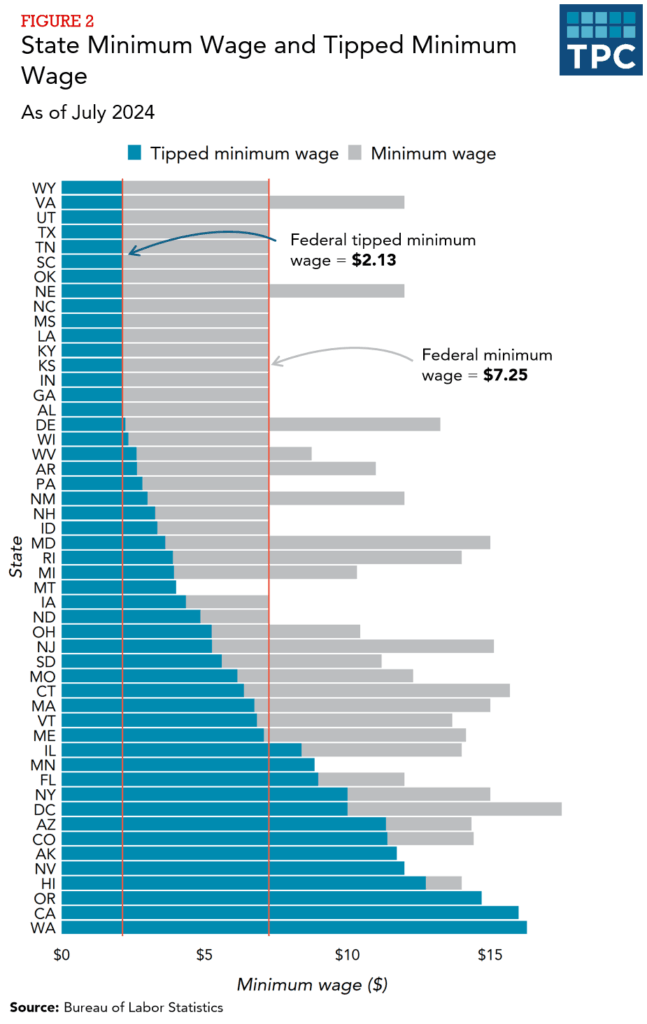
The number of minimum wage workers varies significantly across U.S. states, reflecting differences in cost of living, state wage laws, and economic conditions.
While the federal minimum wage remains unchanged at $7.25 per hour since 2009, many states have implemented higher minimum wages to better support low-income workers. As a result, the proportion of workers earning at or near the minimum wage differs widely, with some states reporting only a small fraction and others showing notably higher concentrations.
Factors such as local industries, youth employment, and urban versus rural demographics further influence these patterns. Understanding this distribution offers insight into regional labor market dynamics and the real-world impact of wage policies across the country.
 Percentage of minimum wage workers by state
Number of Minimum Wage Workers by State in the United States
The number of minimum wage workers by state provides critical insight into labor market dynamics, economic disparities, and the effectiveness of wage policies across the U.S.
While the federal minimum wage is set at $7.25 per hour, many states and localities have established higher minimum wages, creating a patchwork of wage standards nationwide. According to data from the U.S. Bureau of Labor Statistics (BLS), approximately 1.5 million workers earned at or below the federal minimum wage in 2022, representing about 1% of all hourly paid workers.
However, this figure varies significantly by state due to differing state-mandated minimum wages, cost of living, and workforce composition. States with higher minimum wages, such as California and Washington, tend to have fewer workers at the federal minimum, as their state laws push wages above that level.
Conversely, in states without a state-level minimum wage or with rates aligned with the federal floor—such as Mississippi, Alabama, and Georgia—a greater proportion of the workforce is likely to earn the federal minimum or less, often due to exemptions in certain industries like agriculture or small businesses. Understanding the distribution of minimum wage workers by state is essential for policymakers, economists, and advocates focused on income inequality, worker protections, and economic mobility.
 Top-rated law firms workers' compensation chicago
State-by-State Distribution of Minimum Wage Workers
The distribution of minimum wage workers across states reflects broader socioeconomic trends, including regional cost of living, industrial composition, and political decisions on wage legislation.
States with large service-sector economies—such as Texas, Florida, and Georgia—often report higher absolute numbers of minimum wage workers, even though their percentages of the workforce may not be the highest. In contrast, smaller states or those with aggressive minimum wage increases, like Massachusetts and New York, tend to have a lower share of workers at the minimum wage.
The BLS data groups workers into two categories: those earning exactly the prevailing federal or state minimum, and those earning below it (often due to legal exceptions such as tipped wage credits or youth rates). States in the Southeast, where minimum wage laws either mirror the federal rate or do not exist independently, consistently show higher concentrations of minimum wage earners.
For example, in 2022, Mississippi and Louisiana reported some of the highest percentages of hourly workers at or below $7.25. This geographic disparity underscores how state-level policy choices directly affect worker earnings and financial stability.
 Truck driver workers compensation rates
| State | Min. Wage (2022) | % of Hourly Workers at or Below Min. Wage | Total Min. Wage Workers (Est.) |
|---|---|---|---|
| California | $15.00 | 0.8% | 195,000 |
| Texas | $7.25 | 2.1% | 420,000 |
| Florida | $11.00 → $12.00 | 1.7% | 220,000 |
| Mississippi | $7.25 | 3.8% | 45,000 |
| New York | $14.20 → $15.00 | 0.6% | 100,000 |
Factors Influencing the Prevalence of Minimum Wage Jobs by State
Several key factors influence why certain states have a higher number of minimum wage workers. One of the most significant is the presence or absence of a state-level minimum wage law.
The 21 states that adhere to the federal minimum wage of $7.25—without a higher state-mandated floor—tend to see greater numbers of workers earning at or near this rate. Other influential factors include the dominance of low-wage industries such as hospitality, retail, and agriculture, which are more prevalent in Southern and rural states.
Demographics also play a role; younger workers, part-time employees, and those with lower educational attainment are more likely to be in minimum wage jobs, and such demographics are overrepresented in certain regions.
Additionally, enforcement policies, access to union representation, and the availability of living wage ordinances in cities or counties can reduce reliance on minimum wage employment. For example, in states with strong local labor regulations, like Colorado or Illinois, municipalities often implement wages above the state rate, further reducing the number of workers at the bare minimum.
 Workers compensation advances
The proportion of minimum wage workers in a state has far-reaching implications for economic health and social equity. High concentrations of low-wage workers can signal underlying issues such as limited upward mobility, increased reliance on public assistance programs, and wider income inequality.
States with a large share of minimum wage earners often experience higher rates of poverty and food insecurity, particularly in areas with rising housing and healthcare costs.
On a macroeconomic level, a substantial low-wage workforce can suppress consumer spending power, as these workers have less discretionary income. Conversely, states that have raised their minimum wages, such as Washington and Maryland, aim to boost worker productivity, reduce employee turnover, and stimulate local economies by increasing low-income household spending.
Critics argue that aggressive minimum wage increases may lead to job loss or reduced hiring, particularly in small businesses, but recent research suggests that moderate increases do not lead to significant negative employment effects. Thus, understanding the scale and distribution of minimum wage workers is essential for crafting balanced, effective labor policies.
 Workers compensation and stress
Frequently Asked Questions
What does number of minimum wage workers by state refer to?
The term refers to the estimated count of individuals working at or below the federal or state minimum wage in each U.S. state. These figures are typically gathered by government agencies like the Bureau of Labor Statistics and reflect part-time and full-time workers in jobs paying the lowest legal wage. Data may vary based on state-specific minimum wage laws and economic conditions.
How is the number of minimum wage workers measured?
The number is measured through national surveys like the Current Population Survey (CPS) conducted by the U.S. Census Bureau and analyzed by the Bureau of Labor Statistics. Workers self-report their hourly wages, and those earning at or near the minimum wage are categorized accordingly. Estimates are updated annually and adjusted for sampling errors to provide reliable state-level data.
Why do minimum wage worker numbers differ by state?
Numbers differ due to variations in state minimum wage laws, cost of living, economic structure, and labor demand. States with higher minimum wages tend to have fewer workers at the federal minimum, while states with lower living costs may have more. Industries like hospitality and retail, which employ more low-wage workers, are also concentrated differently across states.
Where can I find reliable data on minimum wage workers by state?
Reliable data is available from the U.S. Bureau of Labor Statistics (BLS), particularly in the annual Characteristics of Minimum Wage Workers report. The BLS provides detailed tables by state, industry, and demographics. Additional sources include the Economic Policy Institute and state labor departments, which may offer more localized or updated analyses based on federal data.
Leave a Reply