
Workers compensation and stress

Workplace stress is an increasingly recognized factor in workers’ compensation claims, challenging traditional views of occupational injuries. While physical harm has long been the focus, mental health conditions stemming from prolonged stress are now gaining attention in compensation systems.
Employees in high-pressure environments may develop anxiety, depression, or even post-traumatic stress disorder, potentially qualifying for benefits. However, proving psychological harm can be complex, requiring clear evidence linking job conditions to the condition.
Employers and insurers often face difficulties assessing legitimacy, leading to disputes. As awareness grows, legal frameworks continue evolving to address stress-related claims fairly, balancing employee protection with preventing misuse.
 Title vii sexual harassment
Workers' compensation is traditionally associated with physical injuries sustained on the job, but the landscape is evolving to include mental health conditions, including work-related stress.
In many jurisdictions, employees may be eligible to file a workers' compensation claim for stress-related conditions such as anxiety, depression, or even post-traumatic stress disorder (PTSD), provided certain criteria are met. The key requirement is proving that the psychological condition arose primarily from workplace conditions and was not due to personal or non-work-related factors.
This can be challenging, as stress is often subjective and difficult to quantify. However, if an employee can demonstrate that their stress resulted from excessive workload, harassment, traumatic incidents, or hostile work environments, and that it's supported by medical evidence, compensation may be granted.
Each state or country has different laws governing these claims—some are more permissive than others—making it essential for employees and employers alike to understand specific legal standards and procedural requirements.
 Eeoc sexual harassment definition
Work-related stress acknowledged in workers' compensation cases generally falls into two main categories: mental-mental and physical-mental claims. The physical-mental type occurs when a physical injury leads to psychological consequences, such as developing anxiety after recovering from a workplace accident. These are typically easier to prove and more widely accepted. In contrast, mental-mental claims involve psychological stress stemming purely from workplace conditions—like persistent bullying, extreme job demands, or lack of support—without a prior physical injury. These claims face greater scrutiny because of the difficulty in objectively measuring emotional distress and the potential for pre-existing mental health conditions. Jurisdictions vary widely; for example, some U.S. states like California allow such claims under specific conditions, while others like Texas exclude them entirely. Employers may require detailed documentation, including psychological evaluations, employment records, and witness statements, to validate the claim and determine whether the stress level exceeds normal occupational pressures.
| Stress Claim Type | Description | Acceptance Rate | Examples |
|---|---|---|---|
| Physical-Mental | Psychological condition resulting from a physical workplace injury. | Generally high acceptance across most jurisdictions. | Anxiety after a fall at work, depression following recovery from an on-the-job injury. |
| Mental-Mental (General) | Stress from workplace environment without physical injury. | Varies by state; often requires strict proof. | Chronic anxiety due to workplace bullying or intense deadlines. |
| Mental-Mental (Acute Trauma) | Psychological injury from a specific traumatic event at work. | More likely to be accepted if evidence is clear. | PTSD after witnessing a workplace fatality or violent incident. |
One of the most significant hurdles in pursuing a stress-related workers' compensation claim is proving causation—that is, demonstrating that the workplace was the primary or dominant cause of the psychological condition.
Insurers and employers often argue that stress can result from multiple sources outside of work, such as family issues, financial problems, or pre-existing mental health disorders, making it difficult to isolate work as the root cause.
Additionally, the subjective nature of stress means symptoms vary widely between individuals, and what one person perceives as intolerable, another may manage without issue. To overcome these barriers, claimants typically need strong medical documentation from licensed mental health professionals, a consistent work history showing deterioration under specific job pressures, and ideally, corroboration from coworkers or supervisors.
 Quid pro quo sexual harassment definition workplace
In some cases, the worker must also show that the stress was above and beyond normal job-related pressures—a critical distinction since everyday workplace challenges are generally not compensable under workers' compensation statutes.
Employer Responsibilities and Preventive Measures
Employers play a crucial role in both managing and potentially mitigating stress-related workers' compensation claims. While they are not required to guarantee a completely stress-free environment, they do have a responsibility to provide a safe and reasonably healthy workplace, which includes psychological safety.
This duty may involve implementing anti-harassment policies, offering mental health resources such as employee assistance programs (EAPs), and training managers to recognize signs of employee burnout or distress. Proactively addressing high-stress conditions—such as understaffing, excessive overtime, or lack of role clarity—can reduce the risk of compensable claims.
Moreover, when a stress claim is filed, employers should respond promptly, conduct fair internal investigations, and cooperate with medical and legal processes. A thoughtful and supportive approach not only aids in resolving individual claims but can also improve employee morale, productivity, and retention, ultimately reducing long-term liability and fostering a more resilient workforce.
 Hostile work environment sexual harassment definition
Understanding Workers' Compensation and Stress Claims: A Comprehensive Guide
What Constitutes a Work-Related Stress Claim?
- Work-related stress may qualify for workers' compensation if it arises primarily from job duties and is directly tied to specific workplace conditions or events. Unlike physical injuries, psychological harm such as stress must meet higher thresholds in many jurisdictions to be recognized as compensable.
- Typically, the stress must be documented and diagnosed by a qualified mental health professional, showing that it significantly impairs the employee’s ability to work. Examples include chronic anxiety, depression, or post-traumatic stress disorder linked to workplace incidents like harassment, bullying, or excessive workload.
- Claimants must demonstrate that the stress is not due to personal or non-work factors, and that it exceeds the normal pressures of the job. For instance, routine deadlines or interpersonal disagreements may not be sufficient unless they are unusually severe or sustained over time.
How Do Jurisdictions Vary in Accepting Stress Claims?
- Legal acceptance of stress-related workers' compensation claims varies significantly by state or country. In some U.S. states, like California and Massachusetts, employees may file for psychological injuries if they can provide strong medical evidence linking stress to the workplace. Others, including Texas and Florida, impose stricter limitations or exclude non-traumatic mental stress entirely unless accompanied by a physical injury.
- In Canada and parts of Europe, compensation boards often require proof that the stress resulted from extraordinary circumstances, such as witnessing a workplace accident or enduring prolonged harassment. These systems may use a threshold of significant mental disturbance rather than general fatigue or job dissatisfaction.
- The burden of proof usually rests with the employee, who must present medical records, employment history, and often testimony from coworkers or supervisors. The varying standards mean that eligibility depends heavily on local labor laws and legal precedents.
What Evidence Is Needed to Support a Stress Claim?
- A supported stress claim typically includes a formal diagnosis from a licensed psychiatrist or psychologist stating the nature and severity of the condition. This diagnosis must correlate the onset or worsening of symptoms with specific work-related events or environments, such as a sudden increase in responsibilities or toxic workplace culture.
- Employment records, including performance reviews, emails, incident reports, and statements from colleagues, can substantiate claims of excessive work demands, discrimination, or hostile behavior. Documentation showing a change in behavior, attendance, or productivity following a workplace event strengthens the case.
- Medical documentation should establish a timeline linking work exposure to the development of symptoms. In some cases, objective evidence like workplace audits or safety reports may also be used to demonstrate hazardous psychological working conditions.
What is the average workers' compensation payout for stress and anxiety claims?
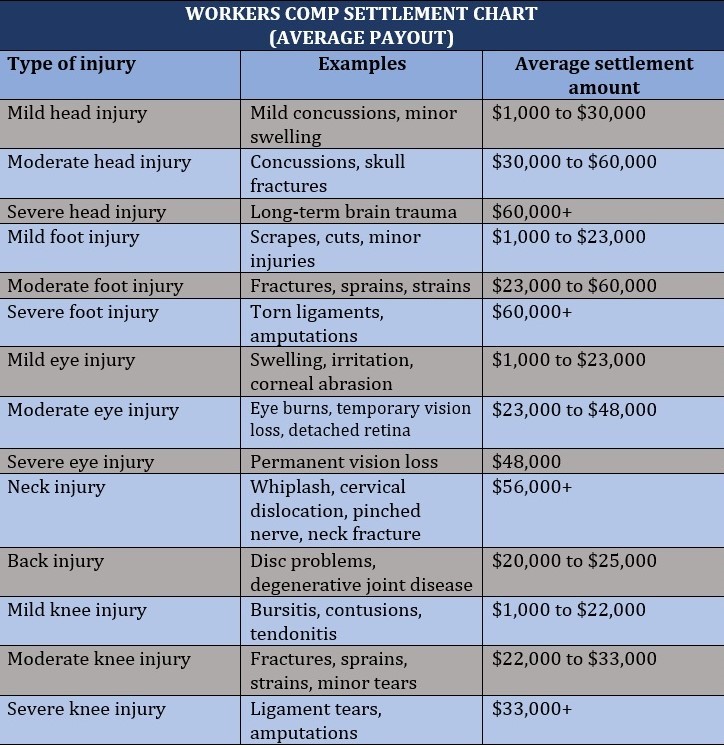
Factors Influencing Workers' Compensation Payouts for Stress and Anxiety
- Severity and diagnosis of the mental health condition play a critical role in determining compensation. Claims supported by documented diagnoses from licensed mental health professionals, such as clinical anxiety or post-traumatic stress disorder (PTSD) directly linked to the workplace, typically receive higher payouts.
- The jurisdiction where the claim is filed significantly affects the compensation amount. Workers' compensation laws vary by state or country, with some regions recognizing psychological injuries more readily than others. For instance, certain U.S. states provide equal benefits for mental and physical injuries if causation is well-documented, while others impose stricter requirements for mental-only claims.
- Degree of work-relatedness is essential. To qualify, the stress or anxiety must be primarily caused by employment conditions rather than personal factors. Claims are stronger when tied to specific incidents like harassment, excessive workload, or traumatic events at work, supported by witness statements, medical records, and employer documentation.
Average Settlement Amounts and Compensation Ranges
- There is no national standardized payout for stress and anxiety claims, but settlements typically range from $2,000 to $40,000 in the United States, depending on the factors mentioned. Minor stress-related claims with short-term treatment may fall on the lower end, while chronic conditions requiring long-term therapy or leading to extended work absences can exceed $25,000.
- Temporary disability benefits are commonly awarded when an employee must take time off work due to diagnosed work-related anxiety. These are usually calculated as a percentage of the worker’s average weekly wage and can last for months depending on recovery timelines.
- In more severe cases, such as when a worker is deemed permanently unfit for their previous role due to psychological trauma, compensation may include permanent disability benefits, vocational rehabilitation, and ongoing medical care, significantly increasing the total payout value.
Challenges in Filing and Approving Mental Health Claims
- Proving causation is one of the biggest challenges. Unlike physical injuries, mental health conditions often have multiple contributing factors, making it difficult to establish that workplace stress was the primary cause. Insurers and employers may contest these claims heavily, requiring extensive documentation and expert testimony.
- Some states require objective evidence of psychological harm, which may include psychological evaluations, treatment plans, and diagnostic imaging in rare cases. This creates a higher burden of proof for claimants compared to physical injury cases.
- Stigma and employer resistance can also delay or deny claims. Companies may be reluctant to accept liability for workplace stress, fearing reputational damage or increased insurance premiums, which can lead to prolonged disputes and appeals before a settlement is reached.
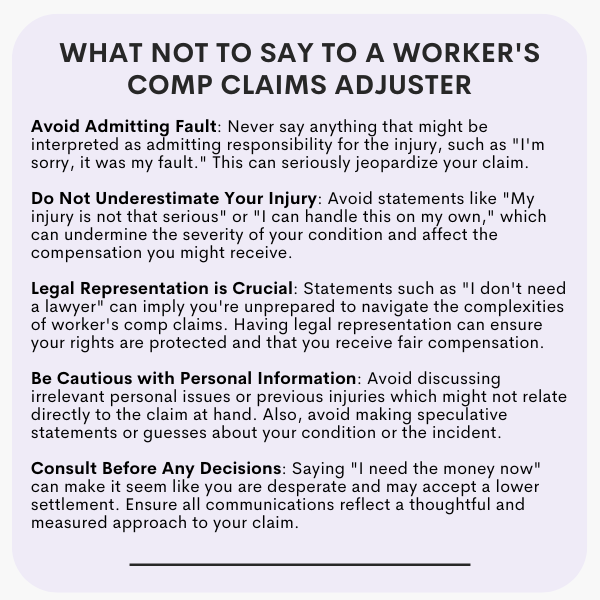
Admitting Fault or Downplaying Your Condition
When speaking with a workers' comp adjuster about a stress-related injury, it is crucial to avoid statements that suggest you are at fault for the condition or that minimize its severity. Adjusters are trained to gather information that could reduce the insurer's liability, and any admission—even a casual comment about just being too sensitive—can be used to dispute your claim. You should also refrain from saying that the stress was due to personal issues unrelated to work, as this may weaken the connection between your job and the injury.
- Saying “I might be overreacting” can imply your condition isn’t legitimate, giving the adjuster reason to question the severity.
- Commenting “It’s partly my own fault” may be interpreted as accepting responsibility, which can lead to partial or full denial of benefits.
- Stating “I’ve had stress problems before” might be used to argue your condition stems from a pre-existing issue, not workplace conditions.
Speculating About Events or Providing Unverified Details
Avoid offering guesses or assumptions about when or how your stress developed, especially if you're uncertain. Workers' comp adjusters may ask open-ended questions to collect statements that can later contradict medical reports or workplace records.
 Civil penalties for sexual harassment in new york
If you speculate—for instance, by estimating the start date of symptoms inaccurately—it could damage your credibility. Stick to factual, firsthand experiences and documented incidents.
- Saying “I think it started around March” without being certain may conflict with your medical records, raising doubts about your reliability.
- Adding “Maybe it was because my coworker said something” introduces unverified gossip that cannot support a legal claim.
- Claiming “I felt stressed every single day” without consistency in your documentation may seem exaggerated if medical notes don’t reflect constant treatment.
While personal stressors may contribute to your overall well-being, describing them in depth during a workers’ comp interview can open the door for the insurer to argue your condition isn't work-related.
Focus should remain on job-specific stressors such as excessive workload, harassment, lack of support, or unsafe work environments. Sharing too much about family or financial problems may lead the adjuster to dismiss your claim as stemming from external factors.
- Mentioning “I’ve been going through a divorce” shifts attention away from workplace causes, potentially discrediting work as the primary source.
- Explaining “My child has health issues” might lead the insurer to claim emotional distress originated outside the job.
- Discussing “Money problems” in detail could be used to argue that financial anxiety, not job duties, caused the stress condition.
Frequently Asked Questions
Yes, you can claim workers' compensation for stress-related conditions if the stress results from your work environment and is supported by medical evidence.
The condition must be severe enough to affect your ability to perform job duties. Each state has specific criteria, so it's essential to report the issue early and consult a healthcare provider to document the diagnosis and link it to workplace factors.
What types of stress are covered under workers' compensation?
Workers' compensation typically covers chronic or acute stress caused by exceptional job demands, harassment, or traumatic incidents at work.
Coverage varies by state, but generally, the stress must be work-related and more severe than normal job pressures. Conditions like anxiety, depression, or PTSD may be compensable if medically documented and directly linked to workplace events or conditions.
To prove your stress is work-related, you must provide medical documentation from a licensed mental health professional linking your condition to specific job factors.
Evidence such as work records, witness statements, emails, or incident reports can support your claim. It's crucial to show that the stress exceeds normal workplace challenges and directly results from your employment duties or environment.
If your employer denies your stress-related workers' compensation claim, you should appeal the decision through your state’s workers' compensation board.
Consult an experienced attorney who specializes in workers' comp to help navigate the process. Gather all supporting evidence, including medical records and workplace documentation, to strengthen your case during the review or hearing.
Leave a Reply