
Osha boot standards
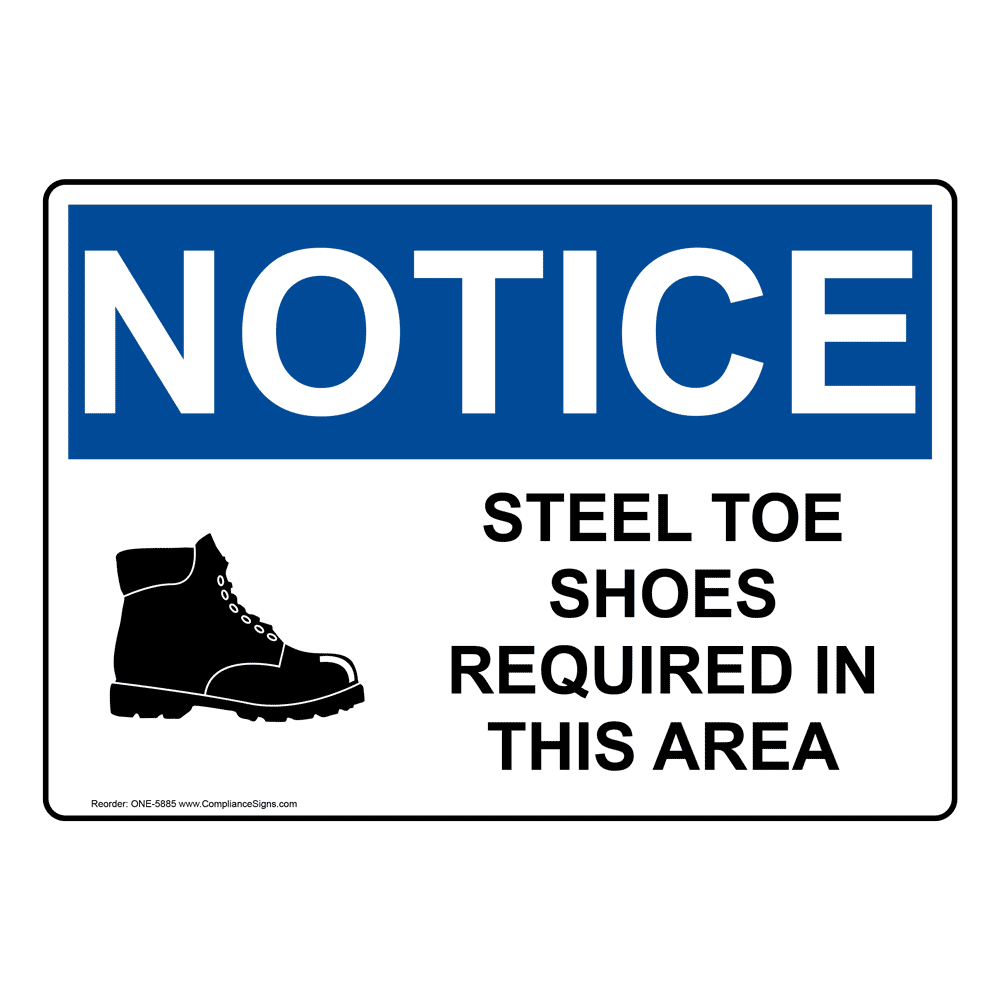
Protective footwear is a critical component of workplace safety, especially in high-risk environments such as construction, manufacturing, and industrial operations.
The Occupational Safety and Health Administration (OSHA) establishes specific standards to ensure that safety boots provide adequate protection against common hazards like falling objects, electrical exposure, and punctures.
These standards work in conjunction with guidelines from organizations like ASTM International, which set performance criteria for impact resistance, compression, and electrical insulation.
 Victims of racial discrimination
Compliance with OSHA boot standards not only reduces the risk of injury but also helps employers meet regulatory requirements. Choosing the right safety footwear can significantly enhance worker protection and overall job site safety.
Understanding OSHA Boot Standards for Workplace Safety
The Occupational Safety and Health Administration (OSHA) does not issue specific standards for work boots per se, but it enforces comprehensive regulations that require employers to provide appropriate foot protection wherever hazards exist in the workplace.
These regulations are outlined primarily under 29 CFR 1910.136 of the General Industry Standards, which mandates that protective footwear must meet established consensus standards, such as those defined by the American National Standards Institute (ANSI) and the American Society for Testing and Materials (ASTM).
Employers are responsible for conducting a hazard assessment to determine whether risks such as falling objects, sharp instruments, electrical hazards, or slippery surfaces necessitate the use of protective footwear. Compliance with OSHA boot standards ensures that footwear is designed and tested to reduce foot injuries in industries like construction, manufacturing, warehousing, and utilities.
 Racial discrimination attorney philadelphia
Ultimately, OSHA defers to performance-based criteria established by ASTM International, particularly ASTM F2413-18, which outlines the minimum design, performance, and labeling requirements for protective footwear.
Key Requirements of ASTM F2413-18 Standard
The ASTM F2413-18 standard is the benchmark used to certify that work boots meet OSHA's performance expectations for protective footwear.
This standard details testing methods and performance criteria for various protective features, including impact resistance, compression resistance, protective toe components, and electrical hazard protection.
For instance, a boot labeled with I/75 C/75 means it satisfies minimum impact resistance of 75 foot-pounds and compression resistance of 2,500 pounds. Additional designations cover puncture resistance, metatarsal protection, and static-dissipative or conductive properties for environments with ignition risks.
 Racial discrimination black and white
Manufacturers must conduct rigorous testing and include permanent labeling inside the boot indicating the specific protections offered. Work boots certified under ASTM F2413-18 ensure that users receive reliable protection against common workplace foot hazards.
Common Workplace Hazards Requiring Protective Footwear
OSHA requires employers to assess workplace conditions and provide proper foot protection when employees face hazards such as falling objects, sharp materials, rolling equipment, wet or slippery surfaces, and electrical exposure.
In construction or manufacturing environments, for example, the risk of materials dropping from heights necessitates the use of steel-toe or composite-toe boots to prevent crush injuries. In facilities with chemical exposure or wet conditions, slip-resistant soles and water-resistant materials are essential for safety.
Environments with live electrical components demand boots certified for electrical hazard (EH) protection, which are designed to reduce the risk of electric shock by providing a secondary barrier. Additionally, occupations involving walking over rough terrain or handling sharp tools may require metatarsal guards or puncture-resistant midsoles to protect vulnerable foot structures.
 Racial discrimination cases australia
Types of Protective Features in OSHA-Compliant Footwear
OSHA-compliant boots incorporate a variety of safety features tailored to specific job demands, all verified under the ASTM F2413-18 standard. The most common feature is the protective toe, available in steel, composite, or aluminum materials, each offering different weight and conductivity profiles.
Slip-resistant soles enhance traction on oily, wet, or uneven surfaces, reducing fall risks. Some boots include electrical hazard (EH) classification, indicating insulation against open circuits under 600 volts in dry conditions.
Others offer puncture resistance using midsoles made of steel or synthetic materials to guard against nails and sharp objects. Specialized boots may also provide static-dissipative (SD) properties to safely release accumulated static electricity in sensitive environments like electronics manufacturing.
| Protection Type | ASTM Code | Description |
|---|---|---|
| Impact Resistance | I/50 or I/75 | Protects toes from falling objects; I/75 meets higher impact standards (75 ft-lbs). |
| Compression Resistance | C/50 or C/75 | Withstands compressive loads; C/75 supports up to 2,500 pounds. |
| Electrical Hazard (EH) | EH | Reduces risk of electric shock in dry conditions up to 600 volts. |
| Puncture Resistance | PR | Incorporates steel or composite plate to prevent sharp objects from penetrating the sole. |
| Metatarsal Protection | Mt | Shields upper foot from heavy impacts or compression near the ankle. |
Frequently Asked Questions
What are OSHA boot standards?
OSHA boot standards are safety requirements for footwear in the workplace to protect workers from foot injuries. These standards mandate protective features like impact resistance, compression resistance, and puncture resistance, depending on the work environment.
While OSHA sets the guidelines, it often references ASTM standards for performance specifications. Employers must ensure workers wear boots that meet these criteria in hazardous environments to comply with safety regulations.
Do OSHA standards require steel-toed boots?
OSHA does not specifically require steel-toed boots, but it mandates that footwear protect against impact and compression hazards when such risks exist. Steel-toed boots are one option that meets these requirements.
Alternative protective toe footwear made from composite or aluminum materials are also acceptable as long as they meet ASTM F2413 performance standards. Employers determine the appropriate type based on workplace hazards.
What is the ASTM F2413 standard for safety boots?
The ASTM F2413 standard outlines the minimum requirements for the design, performance, and testing of protective footwear, including impact, compression, and puncture resistance.
It specifies how boots should protect toes, soles, and heels based on job hazards. Each boot must display a label showing compliance with F2413, including the protection level and manufacturing details. This standard is widely referenced by OSHA to ensure workplace safety.
When are safety boots required on a jobsite?
Safety boots are required on a jobsite whenever there is a potential for foot injuries from falling objects, heavy equipment, sharp materials, or electrical hazards.
OSHA mandates employers to conduct a hazard assessment to determine if protective footwear is necessary. If hazards are present, employers must provide and enforce the use of compliant safety boots meeting ASTM F2413 standards to ensure worker protection and regulatory compliance.
Leave a Reply