
Is new york an at will state for employment

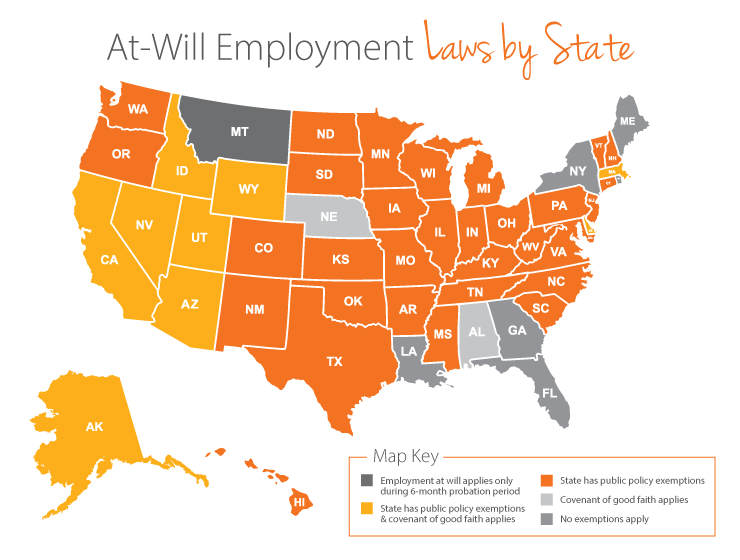
New York is an at-will employment state, meaning that employers and employees have the right to terminate the employment relationship at any time, with or without cause, and with or without notice. This legal principle provides flexibility but also raises important considerations for both workers and employers.
While at-will employment is the default standard, exceptions exist, such as protections against discrimination, retaliation for whistleblowing, or breach of an implied contract. Understanding these nuances is essential for navigating workplace rights and obligations in New York. This article explores the scope, limitations, and practical implications of at-will employment in the state.
Is New York an At-Will Employment State?
Yes, New York is an at-will employment state, meaning that, in general, an employer can terminate an employee at any time for any reason—or no reason at all—as long as the reason is not illegal. Similarly, employees are also free to leave their job at any time without consequences.
 What percent of agricultural workers are immigrants
This legal doctrine forms the foundation of most employment relationships in the state. However, there are important exceptions to the at-will rule, such as protections against termination based on discrimination, retaliation for reporting illegal activity, or violations of public policy.
Additionally, certain employees may be protected by written or implied contracts, union agreements, or specific company policies that can limit the employer’s ability to fire them without cause. While the at-will principle offers flexibility to both employers and workers, understanding its boundaries is critical for protecting legal rights in the workplace.
What Does At-Will Employment Mean in New York?
At-will employment in New York means that either the employer or the employee can end the employment relationship at any time, for any legal reason, with or without notice.
This arrangement applies to most private-sector workers unless they are covered by a specific employment contract, collective bargaining agreement, or protected by a statute. Employers are not required to provide warnings or performance reviews before firing an employee.
 How many farm workers are illegal immigrants
However, the key limitation lies in the legality of the reason for termination—actions based on discrimination, retaliation, or whistleblower activity are prohibited under federal, state, or local laws. While employers have broad discretion under at-will employment, they must ensure their decisions do not violate civil rights, labor protections, or other legal safeguards.
Are There Exceptions to At-Will Employment in New York?
Yes, there are several important exceptions that limit the scope of at-will employment in New York. First, the anti-discrimination laws enforced by both federal statutes (such as Title VII and the ADA) and New York State Human Rights Law prohibit termination based on race, gender, age, religion, disability, sexual orientation, or other protected characteristics.
Second, employees are protected from retaliatory firing if they report illegal conduct (whistleblowing), file a workers' compensation claim, or complain about unsafe working conditions.
Third, if an employee has an explicit or implied contract—such as promises in an employee handbook or verbal assurances that suggest job security—the employer may not fire them without good cause. Also, union members are typically covered by a collective bargaining agreement that outlines disciplinary procedures and grounds for termination.
 How many illegal immigrants are farm workers
How Do Employment Contracts Affect At-Will Status in New York?
Employment contracts play a crucial role in modifying the at-will employment relationship in New York. When a worker has a written agreement specifying the duration of employment, grounds for termination, or procedures for discipline, that contract supersedes the default at-will arrangement.
Even in the absence of a formal written contract, implied contracts can arise from statements in employee handbooks, company policies, or consistent management practices that suggest job security.
New York courts may consider these documents as promises that limit an employer's right to terminate an employee at will. Therefore, employers must be cautious about how they draft policies and communicate employment terms, as ambiguous language could inadvertently create contractual obligations.
| Aspect | Description | Relevance to At-Will Employment |
|---|---|---|
| Employer Discretion | Employers can terminate employees at any time for any legal reason. | Core principle of at-will employment in New York. |
| Prohibited Reasons for Termination | Firing based on race, gender, age, disability, or retaliation is illegal. | Major exception; protected under federal and state laws. |
| Written Contracts | Agreements specifying job duration or termination procedures. | Overrides at-will status; requires cause for dismissal. |
| Employee Handbooks | May create implied contracts if they outline disciplinary steps. | Potential exception; courts may enforce promises made. |
| Union Agreements | Collective bargaining agreements govern termination processes. | Removes at-will status for covered employees. |
Understanding At-Will Employment in New York: What Employees and Employers Need to Know
Can you be terminated without cause in New York as an at-will employment state?
 What percentage of illegal immigrants are farm workers
Yes, you can be terminated without cause in New York because it is an at-will employment state. This means that an employer can end the employment relationship at any time, for any reason, or no reason at all, as long as the termination does not violate federal, state, or local laws.
Similarly, employees are also free to leave their jobs at any time without providing a reason. While at-will employment gives employers broad discretion, there are important legal protections that prevent termination based on discrimination, retaliation, or other unlawful grounds.
What Does At-Will Employment Mean in New York?
- At-will employment in New York means that an employer can dismiss an employee at any time and for any reason that is not prohibited by law. This includes reasons that may seem unfair or arbitrary, as long as they do not involve illegal discrimination or retaliation.
- Employees also hold the same right under at-will employment, meaning they can resign from their positions at any time, with or without notice, and without needing to justify their decision.
- Despite this general rule, exceptions exist when contractual agreements, collective bargaining agreements, or specific public policies limit the employer’s ability to terminate without cause.
What Are the Exceptions to At-Will Employment in New York?
- One major exception occurs when termination violates anti-discrimination laws. Under federal statutes like Title VII of the Civil Rights Act, the Americans with Disabilities Act (ADA), and the Age Discrimination in Employment Act (ADEA), employers cannot fire employees based on race, color, religion, sex, national origin, disability, or age (40 or older).
- Another exception applies to terminations that constitute retaliation. If an employee is fired for reporting workplace violations, such as safety concerns, wage theft, or harassment, they may be protected under whistleblower laws or labor statutes.
- Public policy exceptions also apply; for instance, employers cannot terminate employees for refusing to commit an illegal act, for serving on a jury, or for exercising their legal rights, such as filing for workers' compensation.
Can an Employment Contract Override At-Will Employment?
- Yes, if an employee has a written employment contract that specifies the conditions of employment, including grounds for termination, that agreement can override the at-will doctrine. In such cases, an employer must follow the terms outlined in the contract.
- Implied contracts can also limit at-will employment, such as statements in an employee handbook that outline progressive discipline procedures or specify that employees will only be terminated for cause. Courts in New York may consider these materials as creating an implied contract.
- Collective bargaining agreements negotiated by labor unions also remove employees from at-will status, requiring employers to adhere to specific procedures and justifications before terminating covered workers.
Is New York an at-will employment state?

Yes, New York is an at-will employment state. This means that, in general, employers can terminate an employee at any time, for any reason or no reason at all, as long as the reason is not illegal. Similarly, employees are free to leave their jobs at any time without facing legal consequences. While this provides flexibility for both parties, it also means job security is not guaranteed unless there is a specific contract, collective bargaining agreement, or legal protection in place. Certain federal and state laws protect employees from termination based on discrimination, whistleblowing, or exercising statutory rights, even within the at-will framework.
What Does At-Will Employment Mean in New York?
- In New York, at-will employment means that an employer can dismiss an employee for any reason—positive, negative, or no reason—without having to provide justification, as long as it is not prohibited by law.
- Employees also have the right to resign from their positions at any time, with or without notice, without typically facing legal penalties.
- This principle is foundational in most private-sector employment relationships unless modified by an employment contract, union agreement, or specific statutory protections such as anti-discrimination laws.
Exceptions to At-Will Employment in New York
- One major exception occurs when there is an express or implied employment contract guaranteeing job security for a set term or outlining specific conditions under which termination can occur.
- Another exception includes protections against termination that violate public policy, such as firing an employee for reporting unlawful practices (whistleblowing), serving on a jury, or refusing to commit an illegal act.
- Federal and state anti-discrimination laws also limit at-will practices; employers cannot terminate employees based on race, color, religion, sex, national origin, age, disability, or other protected categories under laws like Title VII, the ADA, or the New York State Human Rights Law.
How Written or Implied Contracts Affect At-Will Status
- A written employment contract that specifies the duration of employment, grounds for termination, or a required disciplinary process can override the at-will doctrine and create enforceable rights for the employee.
- Even in the absence of a formal written contract, certain statements in employee handbooks, offer letters, or company policies may be interpreted as creating an implied contract, especially if they outline progressive discipline procedures or job security assurances.
- Courts in New York have recognized that while at-will employment is the default, consistent practices or specific promises made by employers may lead to the creation of implied contractual obligations limiting arbitrary dismissal.
Frequently Asked Questions
Is New York an at-will employment state?
Yes, New York is an at-will employment state, meaning that employers can terminate employees at any time for any lawful reason, and employees can leave their jobs at any time without notice. However, firing an employee for discriminatory reasons or in violation of a contract is illegal. At-will employment does not remove protections provided by federal, state, or local laws.
Can an employee be fired without cause in New York?
Yes, in New York, employees can be fired without cause because the state follows at-will employment rules. Employers are not required to provide a reason for termination, as long as it is not discriminatory or retaliatory. Exceptions include firings that violate public policy, employment contracts, or collective bargaining agreements. Anti-discrimination laws still fully apply.
Are there any exceptions to at-will employment in New York?
Yes, there are important exceptions to at-will employment in New York. Employees cannot be fired for discriminatory reasons, to retaliate for reporting workplace violations, or for exercising legal rights such as filing a workers' compensation claim. Additionally, written or implied employment contracts and collective bargaining agreements can limit at-will termination and provide additional job protections.
Can an employment contract override at-will status in New York?
Yes, an employment contract can override at-will status in New York. If an employee has a written contract specifying the duration of employment or conditions for termination, the employer must follow those terms. Implied contracts based on company policies or verbal assurances may also create enforceable rights, limiting the employer’s ability to terminate employment at will.
Leave a Reply