
Is human tissue covered by osha standards

Human tissue handling in workplaces raises important safety concerns, particularly in medical, research, and laboratory settings. While OSHA does not specifically regulate human tissue in all contexts, certain standards apply when there is potential exposure to bloodborne pathogens or other potentially infectious materials.
The Bloodborne Pathogens Standard (29 CFR 1910.1030) is the primary regulation addressing such risks, requiring employers to implement safety measures including personal protective equipment, training, and exposure control plans.
Understanding whether human tissue falls under OSHA’s scope is crucial for ensuring workplace safety and regulatory compliance in environments where biological materials are present.
 Racial discrimination against chinese
Is Human Tissue Covered by OSHA Standards?
The Occupational Safety and Health Administration (OSHA) provides regulations designed to protect workers from exposure to potentially infectious materials in the workplace.
Human tissue is indeed covered under OSHA standards, particularly under the Bloodborne Pathogens Standard (29 CFR 1910.1030). This standard applies to all occupational exposure to blood and other potentially infectious materials (OPIM), which explicitly includes human tissues and organs, regardless of whether they contain visible blood.
OSHA defines OPIM to encompass not only blood but also bodily fluids like semen, vaginal secretions, cerebrospinal fluid, synovial fluid, and any tissue or organ material from humans—living or dead—that may harbor bloodborne pathogens such as HIV, hepatitis B (HBV), and hepatitis C (HCV).
Therefore, employees in healthcare, laboratories, mortuaries, and research facilities must follow strict protocols when handling human tissue to minimize health risks. Employers are required to implement an exposure control plan, offer training, provide personal protective equipment (PPE), and ensure proper disposal methods to comply with these regulations.
 Racial discrimination against muslims
What Classifies as Other Potentially Infectious Materials (OPIM) Under OSHA?
According to OSHA’s Bloodborne Pathogens Standard, Other Potentially Infectious Materials (OPIM) include a broad range of biological substances that may carry bloodborne pathogens.
This category specifically covers human body fluids that are difficult to distinguish from blood, any fluid visibly contaminated with blood, and all human tissues or organs (except intact, unbroken skin). Additionally, OPIM includes cerebrospinal, synovial, pleural, pericardial, peritoneal, amniotic, and other tissues and fluids where the presence of bloodborne pathogens poses a potential risk.
OSHA mandates that these materials be treated as potentially hazardous regardless of the perceived infection status of the source individual, ensuring a consistent universal precautions approach across healthcare and laboratory environments to protect employees.
Which Workplaces Must Comply with OSHA's Bloodborne Pathogens Standard?
Various workplaces where employees may encounter human tissue or bodily fluids are required to comply with OSHA’s Bloodborne Pathogens Standard.
 Racial discrimination against women
This includes hospitals, clinics, laboratories, funeral homes, medical examiner offices, research institutions using human specimens, and even tattoo parlors or correctional facility health units. Any employee who could reasonably anticipate exposure to blood or OPIM during their job duties must be protected under the standard.
Covered employers must develop a written exposure control plan, provide appropriate training and vaccinations (such as hepatitis B vaccine), ensure access to PPE like gloves and face shields, and follow procedures for the cleaning and decontamination of equipment. Compliance is essential not only for legal reasons but to prevent occupational transmission of serious diseases.
What Safety Measures Are Required for Handling Human Tissue?
When dealing with human tissue, employers must implement a combination of engineering controls, work practices, and personal protective equipment (PPE) to reduce exposure risk. Engineering controls include using sharps disposal containers, biosafety cabinets, and self-sheathing needles.
Safe work practices involve proper handwashing, decontamination of surfaces, and avoiding food or drink in areas where tissue is handled. PPE such as gloves, gowns, face shields, and masks must be worn depending on the risk of splash or aerosolization.
 Racial discrimination attorney in new york ny
Specimens must be labeled with biohazard symbols, placed in leak-proof containers, and transported safely within facilities. Employees must receive regular training on these procedures, and employers must maintain records of exposures and medical evaluations, ensuring full alignment with OSHA’s protective framework.
| OSHA Requirement | Application to Human Tissue | Examples/Notes |
|---|---|---|
| Bloodborne Pathogens Standard (29 CFR 1910.1030) | Applies to all human tissues and organs | Includes tissues from autopsies, biopsies, and medical research |
| Exposure Control Plan | Mandatory for employers with occupational exposure | Must be reviewed annually and updated with new procedures |
| Personal Protective Equipment (PPE) | Required when handling contaminated tissues | Gloves, lab coats, eye protection, face shields |
| Biohazard Labeling | Containers with human tissue must be labeled | Uses international biohazard symbol and Biohazard text |
| Hepatitis B Vaccination | Must be offered to at-risk employees | Provided at no cost within 10 days of job assignment |
OSHA Standards and Human Tissue: Coverage and Compliance Guidelines
Is human tissue subject to OSHA regulations?
Does OSHA Regulate Human Tissue in the Workplace?
- Yes, human tissue is subject to OSHA regulations when it is present in occupational settings where employees may be exposed to blood or other potentially infectious materials. OSHA’s Bloodborne Pathogens Standard (29 CFR 1910.1030) specifically includes human body fluids, tissues, and organs as regulated substances if there is a potential for occupational exposure.
- The regulation applies particularly in healthcare, medical research, funeral services, and laboratories, where workers routinely handle biological specimens. Employers in these industries must implement safety protocols to minimize transmission risks of pathogens such as HIV, hepatitis B, and hepatitis C.
- OSHA defines other potentially infectious materials (OPIM) to include human tissues and organs from living or dead individuals, unless they are rendered non-infectious or are clearly exempt (e.g., formaldehyde-fixed or embedded in paraffin). This means most human tissue handling falls under regulatory oversight if exposure can occur.
What Types of Human Tissue Are Covered by OSHA Standards?
- Unfixed human tissues, organs, or body parts collected for diagnostic, research, or transplant purposes are considered potentially infectious and therefore covered under OSHA’s Bloodborne Pathogens Standard. This includes fresh or frozen samples where pathogens could remain viable.
- Tissues preserved with fixatives such as formaldehyde or embedded in paraffin are generally not considered infectious and are excluded from OSHA’s bloodborne pathogens regulations because the treatment process deactivates pathogens. However, initial handling before fixation may still require protective measures.
- Frozen tissues that have not undergone chemical fixation are treated as potentially infectious. This includes autopsy specimens and surgically removed tissues stored at low temperatures. Employers must ensure employees are protected during dissection, examination, or transport of such materials.
What Safety Measures Are Required When Handling Human Tissue?
- Employers must develop and implement an Exposure Control Plan that identifies tasks and procedures involving human tissue and assigns protective measures. This plan must be updated annually and include engineering controls, work practices, and personal protective equipment (PPE).
- Employees must receive training on bloodborne pathogens, including risks associated with human tissue exposure, proper use of PPE such as gloves, gowns, and face shields, and procedures for handling spills and contamination incidents.
- Universal precautions must be followed, treating all human tissues as potentially infectious unless their non-infectious status is clearly confirmed. This includes proper labeling of containers, use of sharps disposal containers, and adherence to decontamination protocols after handling tissues.
Is human tissue subject to OSHA's bloodborne pathogens standards?
Yes, human tissue is subject to OSHA's Bloodborne Pathogens Standard under certain conditions. The Occupational Safety and Health Administration (OSHA) includes human blood, blood components, and products made from human blood within the scope of the Bloodborne Pathogens Standard (29 CFR 1910.1030).
Additionally, the standard explicitly extends coverage to human body fluids, unfixed tissues, and organs. This means that any human tissue that has not been adequately preserved—specifically, not fixed in formaldehyde or another fixative—falls under OSHA's regulatory requirements.
Employees who handle such materials in occupational settings, such as in laboratories, morgues, surgical facilities, or research institutions, are considered at risk of exposure to bloodborne pathogens like HIV, HBV, and HCV. Employers are therefore required to implement safeguards such as exposure control plans, personal protective equipment, training, and hepatitis B vaccinations for at-risk workers.
 Racial discrimination attorney oakland
What Types of Human Tissue Are Covered Under OSHA's Standard?
- OSHA's Bloodborne Pathogens Standard applies to human tissues that have not been permanently fixed, such as organs, biopsies, and surgical specimens collected for diagnostic or research purposes.
- Unfixed tissue that is still moist or has the potential to release blood or bodily fluids when manipulated is treated as potentially infectious and must be handled under the same protocols as blood.
- Frozen human tissue is also considered subject to the standard if it has not been rendered non-infectious through proper fixation, as freezing does not eliminate the presence of viable pathogens.
When Is Human Tissue Exempt From OSHA's Requirements?
- Human tissues that have been fixed using formaldehyde or other approved chemical fixatives are generally exempt from the Bloodborne Pathogens Standard because the fixation process reduces pathogen viability.
- Sections of fixed tissue embedded in paraffin blocks for microscopic examination are not considered hazardous under the standard due to the processing and preservation methods used.
- Preserved anatomical specimens used for educational or display purposes, such as those in medical schools or museums, are typically exempt if they have been treated to eliminate infectious agents.
What Protections Must Employers Provide for Workers Handling Human Tissue?
- Employers must develop and implement a written exposure control plan that identifies tasks and procedures involving exposure to human tissue and outlines methods to reduce or eliminate risks.
- Workers must be provided with appropriate personal protective equipment (PPE), including gloves, gowns, face shields, and respirators, based on the type of exposure anticipated during tissue handling.
- Regular training on bloodborne pathogens, safe handling techniques, and emergency procedures must be conducted annually, and workers must have access to hepatitis B vaccinations at no cost.
Are human tissues and bodily fluids covered under OSHA standards?
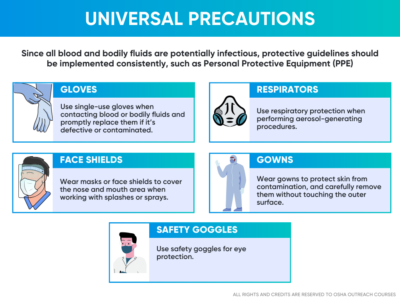
Yes, human tissues and bodily fluids are covered under OSHA standards, specifically under the Occupational Exposure to Bloodborne Pathogens Standard (29 CFR 1910.1030).
This regulation was established to protect workers who may be exposed to blood or other potentially infectious materials (OPIM) during their job duties. Human tissues and most bodily fluids are classified as OPIM, meaning they are subject to the safety and control measures outlined in the standard.
Employers must implement an exposure control plan, provide appropriate personal protective equipment (PPE), offer hepatitis B vaccinations, and ensure proper handling, disposal, and labeling of contaminated materials to reduce the risk of exposure to pathogens like HIV, HBV, and HCV.
Definition of Regulated Human Tissues and Bodily Fluids Under OSHA
- According to OSHA’s Bloodborne Pathogens Standard, regulated bodily fluids include blood, semen, vaginal secretions, cerebrospinal fluid, synovial fluid, pleural fluid, pericardial fluid, peritoneal fluid, amniotic fluid, saliva in dental procedures, and any body fluid that is visibly contaminated with blood.
- Human tissues, such as organs and body parts, are also considered potentially infectious and are included under the definition of OPIM if they contain or are likely to contain bloodborne pathogens.
- Unfixed tissues and organs, as well as cells, cell lines, and experimental samples, are covered under the standard if they come from humans and have not been adequately preserved or treated to eliminate the presence of infectious agents.
Employer Responsibilities for Handling Human Tissues and Fluids
- Employers must develop and implement a written exposure control plan that identifies job classifications and tasks where occupational exposure to blood or OPIM may occur, and this includes work involving human tissues and bodily fluids.
- They are required to provide and ensure the use of appropriate personal protective equipment (PPE), such as gloves, gowns, face shields, and masks, to prevent skin and mucous membrane contact with potentially infectious materials.
- Employers must offer hepatitis B vaccinations to at-risk employees at no cost, provide training on bloodborne pathogens annually, and ensure immediate post-exposure evaluation and follow-up if an exposure incident occurs.
Proper Handling, Labeling, and Disposal Requirements
- All containers of regulated waste, including those holding human tissues and bodily fluids, must be labeled with the biohazard symbol or color-coded in fluorescent orange or red to alert personnel of potential hazards.
- Containers must be closable, constructed to contain all contents and prevent leakage during handling, storage, transport, or disposal, and must be decontaminated or disposed of according to local, state, and federal regulations.
- Sharps contaminated with human tissues or fluids, such as scalpels or biopsy needles, must be placed immediately in puncture-resistant, labeled sharps containers that are also leak-proof on the sides and bottom.
Frequently Asked Questions
Is human tissue covered by OSHA standards?
Yes, human tissue is covered by OSHA standards when it may contain blood or other potentially infectious materials. OSHA’s Bloodborne Pathogens Standard (29 CFR 1910.1030) applies to all human blood and bodily fluids, including tissues, that could transmit infections.
Employers must protect workers through exposure control plans, personal protective equipment, and training if human tissue handling is part of job duties.
Does OSHA regulate the handling of human organs and tissues?
OSHA regulates the handling of human organs and tissues if they are contaminated with blood or other infectious materials. Under the Bloodborne Pathogens Standard, tissues likely to carry pathogens require safe handling procedures.
This includes using protective gear, proper disposal in biohazard containers, and following exposure control protocols to minimize health risks for healthcare and laboratory workers involved in processing or transporting such materials.
Are laboratories handling human tissue subject to OSHA rules?
Yes, laboratories handling human tissue are subject to OSHA regulations, particularly the Bloodborne Pathogens Standard.
If the tissue contains or is contaminated with blood or infectious agents, labs must implement safety measures such as engineering controls, personal protective equipment, staff training, and proper waste disposal. OSHA requires an exposure control plan to protect employees from potential exposure to hazardous biological materials during routine laboratory operations involving human tissue.
What protections does OSHA provide for workers exposed to human tissue?
OSHA provides protections for workers exposed to human tissue through the Bloodborne Pathogens Standard. This includes mandatory training, access to hepatitis B vaccination, use of personal protective equipment like gloves and gowns, and implementation of exposure control plans.
Workers must also have procedures for handling sharps, reporting exposure incidents, and receiving post-exposure medical evaluation to reduce the risk of infection from potentially contaminated human tissue.
Leave a Reply