
Illegal immigrants workers

Illegal immigrant workers remain a complex and often controversial topic in many countries, particularly in nations with strong labor demands and porous borders.
These individuals, seeking better economic opportunities, often take on jobs in agriculture, construction, domestic service, and other labor-intensive industries. While they contribute significantly to the economy, their undocumented status leaves them vulnerable to exploitation, low wages, and poor working conditions.
Governments face ongoing challenges in balancing enforcement of immigration laws with the need for labor and humanitarian concerns. The debate over how to address their presence continues to shape policy, public opinion, and social dynamics across regions affected by migration flows.
 Trump's immigration policies impact workforce as workers lose legal status
The Role and Challenges of Illegal Immigrant Workers in the U.S. Economy
Illegal immigrant workers play a significant, albeit controversial, role in the United States labor market, particularly in industries such as agriculture, construction, hospitality, and food services.
While their presence often sparks political and ethical debates, these individuals contribute to economic growth by filling labor shortages and accepting jobs that many U.S.-born workers are often unwilling to take. However, their undocumented status leaves them vulnerable to exploitation, limited legal protections, and restricted access to benefits such as healthcare and social security.
Despite the lack of formal work authorization, many illegal immigrant workers pay taxes through identification numbers such as the Individual Taxpayer Identification Number (ITIN), contributing to federal and state revenues.
The absence of comprehensive immigration reform continues to complicate their integration into the formal economy and perpetuates a cycle of informal employment and legal uncertainty.
 Trump plans to modify immigration policy to protect migrant workers
Economic Contributions of Undocumented Workers
Undocumented workers make substantial contributions to the U.S. economy by supporting key industries that rely on low-wage labor. According to studies by the Pew Research Center and the Center for American Progress, these workers contribute billions of dollars annually in federal, state, and local taxes—even without access to public benefits.
Their labor helps keep production costs low in sectors like agriculture and landscaping, which in turn benefits consumers through lower prices. Moreover, their spending power fuels local economies, as many undocumented immigrants reside in communities where they rent homes, buy goods, and send their children to public schools.
The gross domestic product (GDP) would likely see a negative impact if this workforce were suddenly removed, underscoring the deep integration of undocumented labor into the national economy.
Working Conditions and Labor Exploitation
Illegal immigrant workers frequently face substandard working conditions due to their vulnerable legal status. Employers may exploit this vulnerability by paying wages below the minimum, denying overtime pay, or imposing unsafe work environments without fear of legal repercussions.
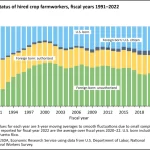
 Trump on immigrant farm workers
Because many fear deportation or job loss, workers are often reluctant to report abuses or seek assistance from labor authorities. This underreporting leads to widespread labor violations, particularly in sectors like meat processing, domestic work, and day labor.
Although federal laws such as the Fair Labor Standards Act (FLSA) technically protect all workers regardless of immigration status, enforcement remains inconsistent due to limited oversight and lack of trust between workers and authorities.
Legal and Policy Frameworks Affecting Undocumented Labor
The legal landscape governing undocumented workers in the U.S. is complex and shaped by a mix of federal immigration laws, labor regulations, and court rulings.
While it is illegal to hire undocumented workers under the Immigration Reform and Control Act (IRCA) of 1986, penalties for employers are often minimal, leading to continued hiring practices that exploit this labor force.
 Did coca cola call ice on immigrant workers
Programs like Deferred Action for Childhood Arrivals (DACA) have provided temporary relief and work permits to certain undocumented individuals, but do not grant permanent legal status.
The absence of a broad legalization pathway or comprehensive immigration reform perpetuates instability for millions, influencing both employment patterns and the broader socioeconomic integration of undocumented populations.
| Aspect | Key Facts | Relevant Data |
|---|---|---|
| Estimated Population | Number of undocumented immigrants in the U.S. | About 10.5 million (Pew Research Center, 2021) |
| Labor Force Participation | Share of undocumented immigrants in U.S. workforce | Approximately 4.6% of total U.S. civilian labor force (Cato Institute) |
| Main Industries | Sectors with highest concentration of undocumented labor | Construction (13%), Agriculture (23%), Food Services (14%) (Pew Research) |
| Tax Contributions | Annual tax payments by undocumented workers | $12 billion in Social Security annually (Institute on Taxation & Economic Policy) |
| Wage Exploitation | Common labor abuses | Up to 50% paid below minimum wage in certain sectors (Economic Policy Institute) |
Frequently Asked Questions
What are illegal immigrant workers?
Illegal immigrant workers are individuals who reside and work in a country without legal authorization. They often enter a country unlawfully or overstay their visas. These workers typically seek employment in sectors like agriculture, construction, or domestic services where demand for low-wage labor is high. While they contribute to the economy, their undocumented status makes them vulnerable to exploitation and limits access to labor protections and benefits.
Do illegal immigrant workers pay taxes?
Yes, many illegal immigrant workers pay taxes despite their status. They often contribute to sales and property taxes, and some pay income taxes using Individual Taxpayer Identification Numbers (ITINs). Social Security and Medicare taxes are also deducted from their wages, although most cannot claim benefits. Studies show undocumented workers add billions in tax revenue annually, supporting public services and social programs, even though they usually lack access to most government benefits.
How do illegal immigrant workers affect the economy?
Illegal immigrant workers impact the economy by filling essential low-skilled labor gaps, especially in agriculture, hospitality, and construction. Their work helps keep labor costs down, benefiting consumers and employers. They also contribute to economic growth through spending and tax payments. While some argue they strain public services, research indicates their overall economic contribution is generally positive, particularly in regions with labor shortages and aging populations.
Can illegal immigrant workers be deported for working?
Yes, illegal immigrant workers can be deported for working without legal authorization. Employing undocumented individuals is illegal under U.S. law, and both employers and workers may face penalties. Immigration enforcement agencies can conduct workplace raids, initiate deportation proceedings, or use other legal mechanisms. While not every undocumented worker is deported, being caught working unlawfully increases the risk of removal, especially under strict enforcement policies or during heightened immigration crackdowns.
Leave a Reply