
Foreign workers immigration and employee eligibility law

The increasing reliance on foreign workers in the global economy has made immigration and employee eligibility laws more critical than ever. Employers must navigate complex regulations to ensure compliance with national labor and immigration standards.
These laws are designed to verify work authorization, prevent unauthorized employment, and protect both domestic and foreign workers from exploitation. Understanding the legal frameworks, such as the Immigration and Nationality Act in the United States, is essential for businesses hiring internationally.
Failure to comply can result in severe penalties, including fines and legal action. This article explores key aspects of foreign worker immigration policies and employee eligibility requirements, offering insight into best practices for lawful and ethical workforce management.
 Foreign workers immigration and employee eligibility laws
Understanding Foreign Workers' Immigration and Employee Eligibility Law in the United States
The legal framework governing foreign workers' immigration and employee eligibility in the United States is a complex system designed to ensure that only authorized individuals are employed while supporting economic needs through regulated immigration channels. U.S. employers are required by law to verify the identity and employment authorization of all employees, regardless of nationality or citizenship status, through the Form I-9 process administered by U.S.
Citizenship and Immigration Services (USCIS). The Immigration and Nationality Act (INA) prohibits employment discrimination based on national origin or citizenship status, placing obligations on employers to avoid discriminatory practices during the hiring, recruitment, and hiring verification processes.
For foreign nationals seeking employment in the U.S., multiple visa classifications exist—such as the H-1B for specialty occupations, L-1 for intracompany transferees, and TN under the USMCA agreement—each with specific eligibility criteria, caps, and documentation requirements.
Compliance with these laws is essential to avoid penalties, including fines, operational restrictions, or criminal charges. Federal agencies such as USCIS, U.S. Immigration and Customs Enforcement (ICE), and the Department of Labor (DOL) jointly oversee enforcement, conducting audits and worksite inspections to ensure adherence.
 Foreign workers immigration and employment eligibility
All U.S. employers must complete and retain Form I-9 for every individual they hire for employment in the United States, including citizens and non-citizens alike, to verify their identity and authorization to work.
Employees must present acceptable documents from the List of Acceptable Documents within three business days of the start of employment, while employers are responsible for examining the documents to ensure they appear genuine and relate to the employee.
The I-9 form is not filed with the government unless requested during an audit, but it must be kept for inspection; for current employees, the form must be retained either for three years after the hire date or one year after employment ends, whichever is later.
Failure to comply with I-9 requirements can lead to civil penalties ranging from hundreds to thousands of dollars per violation, particularly if patterns of negligence or unauthorized hiring are detected.
 Coke undocumented workers
Employers are also prohibited from requesting specific documents or applying the verification process selectively, which could constitute document abuse and result in findings by the Department of Justice’s Office of Special Counsel for Immigration-Related Unfair Employment Practices (OSC).
Common Visa Categories for Foreign Workers and Eligibility Requirements
Foreign nationals seeking to work legally in the United States must obtain a valid work visa or employment-based green card, depending on the duration and nature of employment.
The most widely used temporary work visa is the H-1B, reserved for individuals in specialty occupations requiring at least a bachelor’s degree or its equivalent, typically in fields like engineering, IT, or finance, and subject to an annual numerical cap and a lottery system.
The L-1 visa allows multinational companies to transfer executives, managers, or employees with specialized knowledge from overseas offices to the U.S., supporting global workforce integration without numerical limits but requiring qualifying relationships between foreign and U.S. entities.
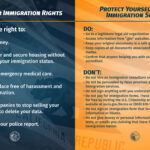 Do undocumented workers have rights
Other notable categories include the TN visa for Canadian and Mexican professionals under the USMCA agreement, the O-1 visa for individuals with extraordinary ability in sciences, arts, education, or business, and the H-2A and H-2B visas for seasonal agricultural and non-agricultural labor, respectively.
Additionally, permanent employment-based immigration is structured through employment-based (EB) green card preferences, such as EB-1 for priority workers, EB-2 for professionals with advanced degrees or exceptional ability, and EB-3 for skilled and unskilled workers, often requiring labor certification from the DOL through the PERM process.
Employer Responsibilities and Enforcement of Immigration Compliance
Employers bear significant legal responsibility in ensuring compliance with federal immigration laws, particularly in avoiding the knowing employment of unauthorized workers and adhering to fair employment practices. U.S.
Immigration and Customs Enforcement (ICE) has the authority to conduct I-9 audits and worksite enforcement operations, issuing Notice of Inspection (NOI) to review employment eligibility verification records; if violations are found, Notice of Intent to Fine (NIF) may follow, leading to monetary penalties or even criminal prosecution in cases of repeated or willful violations.
The Department of Labor also plays a crucial role, particularly for temporary foreign worker programs like H-2A and H-2B, where employers must meet prevailing wage requirements, offer specific working conditions, and demonstrate a lack of available U.S. workers.
Furthermore, the use of E-Verify, an electronic employment eligibility verification program, is mandatory for certain federal contractors and in some states, helping employers cross-check I-9 information against federal databases to confirm work authorization. Maintaining proactive compliance—through regular internal audits, staff training, and proper documentation—is essential for minimizing legal risk and ensuring ethical workforce management.
| Visa Type | Purpose | Key Eligibility Requirements | Duration & Extensions |
|---|---|---|---|
| H-1B | Employment in specialty occupations requiring higher education | Bachelor’s degree or higher in a related field; job must qualify as a specialty occupation; employer must file petition | Initial 3 years, extendable to 6 years total; subject to annual cap and lottery |
| L-1A / L-1B | Intracompany transfer of executives, managers, or specialized knowledge employees | One year of continuous employment abroad with a qualifying organization; U.S. and foreign entity must have qualifying relationship | L-1A: Up to 7 years; L-1B: Up to 5 years |
| TN | Professional employment under USMCA for Mexican and Canadian citizens | Pre-approved profession list (e.g., engineer, scientist, teacher); offer of U.S. employment; proof of citizenship | Initial 3 years, renewable indefinitely in 3-year increments |
| EB-2/EB-3 Green Card | Permanent residency based on employment | Job offer; labor certification (PERM) unless waived (e.g., National Interest Waiver); meeting educational or experiential requirements | Permanent status upon approval; process may take several years depending on backlog |
Frequently Asked Questions
What is the purpose of the Immigration Reform and Control Act (IRCA) of 1986?
The IRCA was enacted to control and deter illegal immigration while establishing legal means for foreign workers to enter the U.S. It requires employers to verify the identity and employment eligibility of all new hires through Form I-9. The law also prohibits discriminatory practices based on national origin or citizenship status. Employers who fail to comply may face civil or criminal penalties.
How does an employer verify a foreign worker’s eligibility to work in the U.S.?
Employers must complete Form I-9 for each employee hired after November 6, 1986, to verify identity and work authorization. The worker presents acceptable documents, such as a U.S. passport, permanent resident card, or employment authorization document. Employers must examine these documents to ensure they appear genuine and relate to the individual, then record the information and retain the form for inspection.
Can employers sponsor foreign workers for U.S. employment visas?
Yes, many U.S. employers can sponsor foreign workers for employment-based visas like H-1B, L-1, or permanent labor certification leading to a green card. Sponsorship typically involves filing petitions with U.S. Citizenship and Immigration Services (USCIS) and proving that no qualified U.S. workers are available. The process varies depending on the visa type and may require Department of Labor certification and extensive documentation.
Hiring unauthorized workers can result in serious penalties for employers, including fines, criminal charges, and loss of business licenses. The government may impose civil penalties ranging from hundreds to thousands of dollars per unauthorized employee. Repeated violations can lead to higher fines and potential imprisonment. Additionally, companies may suffer reputational damage and be barred from federal contracts or benefits.
Leave a Reply