
Immigrant construction workers

Immigrant construction workers play a vital role in shaping the skylines and infrastructure of nations, often working in challenging conditions to build homes, offices, and public facilities.
Drawn by economic opportunity and the promise of a better life, these laborers contribute not only physical strength but also diverse skills and cultural resilience.
Despite facing language barriers, legal uncertainties, and frequently working in precarious jobs, their presence remains integral to the construction industry. Their efforts reflect a dedication that goes beyond the job site—symbolizing perseverance, ambition, and the pursuit of stability in unfamiliar environments.
 Trump's immigration policies impact workforce as workers lose legal status
The Vital Role of Immigrant Construction Workers in the U.S. Building Industry
Immigrant construction workers play a fundamental role in shaping the infrastructure and urban landscapes of the United States. Over the past few decades, their presence in the construction sector has grown significantly, filling labor shortages and contributing essential skills across residential, commercial, and industrial projects. According to data from the U.S.
Bureau of Labor Statistics and research by the Migration Policy Institute, immigrants account for nearly 30% of the construction workforce nationwide, with higher concentrations in states like California, New York, and Texas.
These workers often take on physically demanding roles such as laborers, carpenters, electricians, and masons, many of whom bring construction traditions and techniques from their home countries.
Despite facing challenges such as language barriers, wage exploitation, and workplace safety risks, immigrant workers remain indispensable to sustaining the pace and scale of American construction.
 Trump plans to modify immigration policy to protect migrant workers
Their contributions extend beyond manual labor—they stimulate local economies, support small contracting businesses, and help meet the growing demand for housing and infrastructure amid labor shortages in the skilled trades.
Demographics and Geographic Distribution of Immigrant Construction Workers
Immigrant construction workers in the United States are a diverse group, primarily originating from Mexico, Central America, and increasingly from Asia and the Caribbean.
Data from the American Community Survey indicates that Mexican-born workers represent the largest share, making up over half of the immigrant construction labor force.
These workers are heavily concentrated in metropolitan areas with robust construction markets, including Los Angeles, Houston, Miami, and New York City. In some regions, the reliance on immigrant labor is so pronounced that entire subcontracting networks are built around bilingual or Spanish-speaking crews.
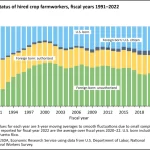
 Trump on immigrant farm workers
Additionally, many immigrant workers are concentrated in specific trades: for example, Central American immigrants often dominate roofing and framing, while South Asian workers are increasingly involved in drywall and insulation.
Understanding these demographic and geographic patterns is essential for employers, policymakers, and advocacy groups aiming to improve labor standards and workforce development strategies.
Legal Status and Workplace Protections
A significant portion of immigrant construction workers are employed without full legal authorization, which increases their vulnerability to labor abuses and limits access to legal protections.
While many work with valid work permits or as green card holders, others are undocumented or employed through informal arrangements, making them hesitant to report unsafe working conditions or wage theft due to fear of deportation or job loss.
Federal and state occupational safety laws, such as those enforced by OSHA, apply to all workers regardless of immigration status, yet enforcement remains inconsistent in subcontracted or cash-based job sites. Immigrant workers are overrepresented in high-risk construction tasks, and studies show they face higher rates of injury and fatality compared to native-born workers.
Advocacy organizations and worker centers have stepped in to provide legal aid, safety training, and hotlines to protect these populations, but systemic gaps in labor enforcement continue to leave many unprotected. Strengthening avenues for legal employment and improving oversight on construction sites is critical for ensuring equitable treatment.
Contributions to Skilled Trades and Economic Growth
Immigrant construction workers are not only laborers but also valuable contributors to the skilled trades, bringing expertise in masonry, plumbing, electrical work, and carpentry.
Many immigrants arrive with prior training or apprenticeship experience from their home countries, though their credentials are often not formally recognized in the U.S., limiting their upward mobility.
Despite these barriers, immigrants frequently start their own contracting businesses, creating jobs and stimulating local economies. The National Roofing Contractors Association and other trade groups have acknowledged that without immigrant labor, project timelines would lengthen and costs would rise significantly.
In fact, research from the Center for American Progress suggests that deporting undocumented construction workers could cost the U.S. economy billions in delayed or canceled projects. Furthermore, immigrant workers pay billions annually in Social Security and state taxes, even if they are not always eligible to collect benefits, underscoring their net positive fiscal impact on public infrastructure funding.
| Aspect | Data/Statistic | Source/Note |
|---|---|---|
| Percentage of construction workforce | Nearly 30% | Migration Policy Institute, 2023 |
| Leading country of origin | Mexico (over 50% of immigrant construction workers) | American Community Survey |
| Fatal injury rate (per 100,000 workers) | 10.7 (higher than native-born average) | OSHA/National Institute for Occupational Safety and Health |
| Economic contribution | $344.7 billion in construction output attributed to immigrant labor (estimated) | Center for American Progress Analysis |
| Tax contributions | $13 billion+ in Social Security taxes paid annually by undocumented immigrants | Institute on Taxation and Economic Policy |
Comprehensive Guide to Immigrant Construction Workers: Roles, Challenges, and Contributions
What opportunities exist for immigrant construction workers in the U.S. workforce?
High Demand for Skilled and Unskilled Labor
The U.S. construction industry faces a persistent labor shortage, particularly in skilled trades such as carpentry, plumbing, electrical work, and masonry. This gap creates significant opportunities for immigrant workers, both documented and undocumented, to enter the workforce and fill essential roles.
Many contractors actively recruit bilingual or multicultural teams to improve communication on diverse job sites. Immigrants often find work through word-of-mouth networks, local hiring halls, or direct employment with small to mid-sized construction firms.
- Immigrant workers are frequently employed in high-need areas such as residential remodeling, roofing, and concrete work, where demand consistently outpaces the domestic labor supply.
- Federal and state infrastructure initiatives, including road repairs, public transportation projects, and broadband deployment, are increasing the need for manual labor, opening doors for entry-level positions.
- Workers with prior experience in construction abroad can transfer their practical knowledge to U.S. job sites, often advancing quickly when they demonstrate reliability and technical aptitude.
Pathways to Skill Development and Certification
Despite initial barriers such as language or lack of formal credentials, numerous programs help immigrant construction workers enhance their qualifications and pursue career advancement.
Community colleges, trade unions, and nonprofit organizations offer training in construction techniques, safety standards, and English for specific occupational purposes (ESOL). These educational opportunities allow immigrants to obtain certifications that increase their employability and earning potential.
- Apprenticeship programs sponsored by unions like the United Brotherhood of Carpenters or the International Brotherhood of Electrical Workers provide paid on-the-job training and classroom education, often welcoming non-native English speakers.
- Some states offer subsidized vocational training for immigrants with work authorization, including courses in OSHA safety compliance, blueprint reading, and equipment operation.
- Nonprofits such as the National Partnership for New Americans and local workforce development boards run bridging programs that connect immigrant laborers to certification pathways and union referral systems.
Entrepreneurial and Self-Employment Opportunities
Many immigrant construction workers leverage their experience and networks to start their own contracting businesses, especially in home renovation, landscaping, and specialty trades.
Low startup costs for certain services, combined with strong demand in growing urban and suburban markets, make self-employment an accessible avenue for upward mobility. Bilingual capabilities and cultural understanding of client preferences further enhance competitiveness in niche markets.
- Immigrant entrepreneurs often begin as subcontractors for larger firms, gradually building reputations and client bases that support independent operations.
- Access to microloan programs and small business development centers (SBDCs) offers financial and logistical support for obtaining licenses, insurance, and tools necessary to launch a construction-related business.
- In regions with large immigrant communities, contractors who speak Spanish, Arabic, or other languages hold an advantage in serving homeowners who prefer culturally responsive services.
What high-paying construction jobs for immigrants can earn $200,000 annually?
High-Paying Construction Specialties with Income Potential
- Specialized construction roles such as unionized elevator installers and repairers often command salaries exceeding $100,000 annually, with top earners surpassing $200,000 when factoring in overtime, union benefits, and regional demand. These positions require extensive apprenticeship and technical training, but immigrants with prior mechanical or electrical experience can transition effectively into this field, especially in major metropolitan areas like New York or Chicago.
- Heavy and industrial equipment operators, particularly those working in oil, gas, or large-scale infrastructure projects, can earn six-figure incomes. Operators with certifications in crane operation (such as CCO certification) and experience in hazardous or remote environments often receive premium wages, per-diem pay, and housing allowances that can push total annual compensation above $200,000.
- Construction management roles, especially project managers overseeing multi-million dollar developments, often offer base salaries in the $120,000–$180,000 range. With performance bonuses, profit-sharing, and extended contracts, especially on commercial, industrial, or government projects, total earnings can reach $200,000. Immigrants with engineering degrees or extensive on-site leadership experience are well-positioned to qualify for these roles, particularly if they hold proper work authorization and language proficiency.
Pathways for Immigrants to Access Lucrative Roles
- Immigrants can access high-paying construction jobs by obtaining recognized certifications and licenses, such as OSHA 30-hour safety training, welding certifications (e.g., AWS), or electrical journeyman credentials. Many trade unions and workforce development programs in the U.S. offer training programs open to legal residents and documented workers, creating a structured pathway into high-demand trades.
- Joining labor unions like the International Union of Operating Engineers (IUOE) or the United Association (UA) for plumbing and pipefitting can provide immigrants with stable, well-paid work and access to apprenticeships. Union contracts typically ensure prevailing wages, health benefits, and pension contributions, which significantly boost overall compensation packages.
- Networking within immigrant communities and ethnic trade associations can lead to job referrals in niche construction sectors, such as high-rise steel erection or commercial kitchen installation, where word-of-mouth hiring is common. Being bilingual or multilingual can also be an asset on diverse job sites or with contractors serving immigrant-heavy markets.
Factors That Enable $200,000 Earnings in Construction
- Overtime and work in high-cost or remote regions dramatically increases earning potential. For example, construction workers on Alaskan oil pipeline projects or offshore wind installations in the Northeast often earn double or triple standard rates due to isolation, harsh conditions, and extended work schedules, allowing qualified individuals to surpass $200,000 in a single year.
- Entrepreneurial immigrants who establish licensed contracting businesses—particularly in booming markets like solar installation, seismic retrofitting, or luxury custom home building—can generate substantial revenue. With a solid client base, proper licensing, and efficient project management, business owners frequently clear six figures in profit, especially when bidding on large or government-funded contracts.
- Specialized technical skills such as high-pressure welding (e.g., pipe welding for refineries), hazardous material abatement, or BIM (Building Information Modeling) coordination are in short supply. Workers with these qualifications, especially those who can pass rigorous certification tests, are highly sought after and can negotiate premium hourly rates or consulting fees that accumulate to over $200,000 annually with consistent work.
Frequently Asked Questions
What challenges do immigrant construction workers face in the United States?
Immigrant construction workers often face language barriers, limited access to safety training, and fear of deportation. Many work in hazardous conditions without proper protective equipment or legal protections. They may also experience wage theft and discrimination.
Lack of documentation can prevent them from reporting abuses. These challenges make it difficult to ensure fair treatment and safe working environments, despite their essential role in the construction industry.
Why are immigrant workers important to the construction industry?
Immigrant workers are vital to the construction industry because they fill critical labor shortages, especially in physically demanding roles. They contribute skilled and unskilled labor, helping meet high demand for infrastructure and housing.
Their hard work supports economic growth and project completion. Many contractors rely on immigrant labor to maintain schedules and reduce costs, making them an indispensable part of the U.S. construction workforce.
Do immigrant construction workers have legal rights in the U.S.?
Yes, all workers in the U.S., including undocumented immigrants, have basic legal rights under federal law. These include the right to fair wages, safe working conditions, and protection from discrimination.
Workers can report unsafe conditions or wage theft regardless of immigration status. However, fear of deportation often prevents many from asserting their rights. Legal protections exist, but awareness and enforcement remain challenges in the construction sector.
How can employers support immigrant construction workers?
Employers can support immigrant construction workers by providing language-accessible safety training, ensuring fair pay, and respecting labor laws. Offering clear communication, translating important documents, and creating inclusive work environments help reduce barriers.
Employers should verify work eligibility without discrimination and protect worker rights regardless of status. Building trust through transparency and respect improves safety, productivity, and job satisfaction among immigrant construction teams.
Leave a Reply