
How many undocumented farm workers
The number of undocumented farm workers in the United States remains a topic of significant debate and uncertainty.
While precise figures are difficult to obtain due to the nature of undocumented labor, estimates suggest hundreds of thousands, if not over a million, undocumented individuals contribute to agricultural production nationwide. These workers play a crucial role in harvesting crops, tending livestock, and maintaining the food supply chain.
Despite their essential contributions, they often face challenging working conditions, limited labor protections, and the constant risk of deportation. Understanding the scale and realities of undocumented labor in farming is vital for informed policy discussions, labor rights advocacy, and food system sustainability.
 How many undocumented farm workers in the us
How Many Undocumented Farm Workers Are There in the United States?
Estimating the exact number of undocumented farm workers in the United States is a complex task due to the informal nature of much of the agricultural workforce and the lack of comprehensive national tracking systems.
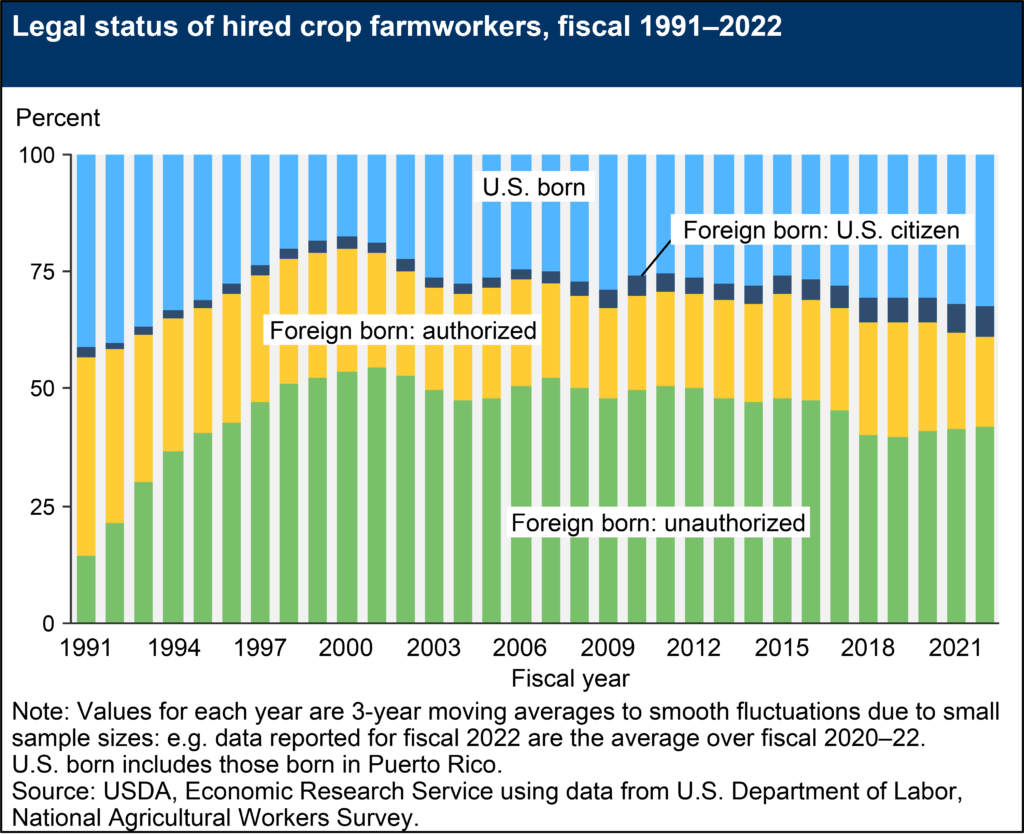
However, numerous studies and federal surveys provide strong indications. According to the U.S. Department of Agriculture (USDA) and the National Agricultural Workers Survey (NAWS), approximately 50% to 70% of farm laborers in the U.S. are believed to be undocumented immigrants.
Given that the total number of hired crop workers in the U.S. is estimated at around 1.2 million, this suggests that between 600,000 and 840,000 undocumented farm workers are actively employed in U.S. agriculture. These individuals are essential to maintaining the productivity of the nation’s farms, particularly in labor-intensive sectors like fruit, vegetable, and dairy production.
Estimates from the National Agricultural Workers Survey (NAWS)
The National Agricultural Workers Survey, conducted by the U.S. Department of Labor, is one of the most reliable sources for data on farm worker demographics.
 How much are undocumented farm workers paid
According to recent NAWS reports, about 73% of hired farm workers in the U.S. were born in Mexico, and a significant portion lack legal authorization to work in the country. The survey estimates that approximately 67% of all agricultural workers are undocumented.
These data are derived from interviews with thousands of farm workers across key agricultural states such as California, Florida, and Texas. The NAWS data are critical for policymakers and researchers seeking to understand labor trends, health conditions, and immigration patterns in rural America.
Regional Distribution of Undocumented Farm Labor
Undocumented farm workers are not evenly distributed across the United States; their presence is concentrated in states with large-scale agricultural industries.
California, Texas, and Florida account for the majority of undocumented farm labor. In California alone, which produces over a third of the nation's vegetables and two-thirds of its fruits and nuts, an estimated 70% of farm workers are undocumented.
 How much do undocumented farm workers get paid per hour
Similarly, states like Washington, North Carolina, and Arizona also have high proportions of unauthorized labor in agriculture. This regional concentration reflects both the seasonal demands of farming and the proximity to the U.S.-Mexico border, which influences migration patterns.
The reliance on undocumented farm workers raises significant economic and policy questions. On one hand, the agricultural sector depends heavily on this labor force to remain competitive, as many U.S.-born workers are unwilling to take on the physically demanding, low-wage jobs associated with farming. On the other hand, the widespread use of undocumented labor complicates efforts to enforce immigration laws and provide labor protections.
Programs such as the H-2A visa allow farmers to hire temporary foreign workers, but many find the process cumbersome and expensive, leading some employers to hire undocumented workers informally. This creates vulnerabilities for workers, including exploitation, wage theft, and unsafe working conditions, while also posing challenges for federal immigration and labor policy.
| State | Estimated % of Undocumented Farm Workers | Key Agricultural Products |
|---|---|---|
| California | 70% | Almonds, grapes, strawberries, dairy |
| Texas | 60% | Cotton, citrus, vegetables |
| Florida | 65% | Oranges, sugarcane, tomatoes |
| Washington | 55% | Apples, cherries, hops |
| Arizona | 60% | Lettuce, cotton, dairy |
Frequently Asked Questions
How many undocumented farm workers are estimated to be in the United States?
Estimates suggest there are approximately 1 to 2 million undocumented farm workers in the United States.
These individuals make up a significant portion—between 50% and 70%—of the total agricultural workforce. Exact numbers are difficult to determine due to the informal nature of some employment and fears of deportation that discourage participation in surveys or censuses.
Why is it difficult to get an exact count of undocumented farm workers?
Obtaining an exact count is challenging because many undocumented farm workers avoid official records due to fear of deportation. They often work under informal arrangements or off-the-books wages.
Additionally, agricultural labor surveys may underrepresent migrants or those without legal status, making accurate data collection difficult despite efforts by government and research organizations to estimate their numbers.
What states have the highest numbers of undocumented farm workers?
California, Texas, Florida, and Washington have some of the highest numbers of undocumented farm workers.
California alone employs a large percentage of the nation’s agricultural labor force, with many workers coming from Mexico and Central America. These states' extensive farming industries rely heavily on seasonal and migrant labor, much of which is undocumented.
Do undocumented farm workers contribute to the U.S. economy?
Yes, undocumented farm workers play a vital role in the U.S. economy by harvesting crops and maintaining agricultural production.
Their labor supports multibillion-dollar farming industries and helps keep food costs lower for consumers. Despite lacking legal status, they pay sales and property taxes and contribute to social security, although many are unable to claim benefits.
Leave a Reply