
Osha lockout tagout 1910.147 standard summary
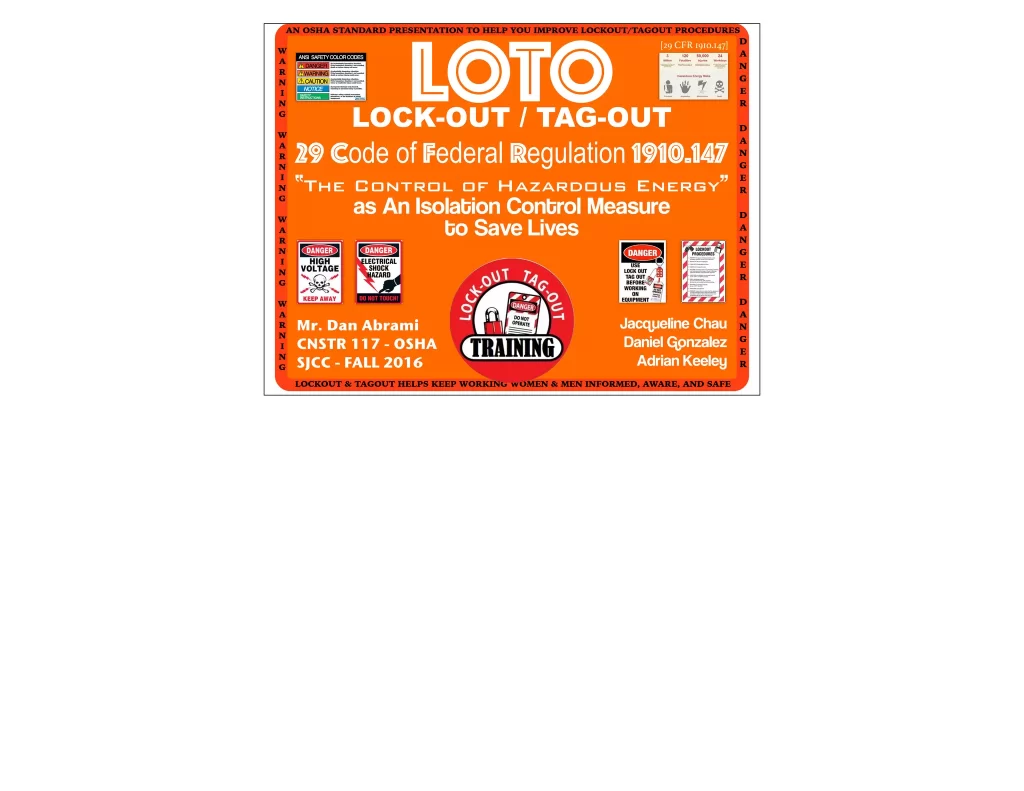
The OSHA Lockout/Tagout standard, 29 CFR 1910.147, is a critical workplace safety regulation designed to protect employees from the unexpected startup of machinery or the release of hazardous energy during service or maintenance activities. This standard outlines specific procedures for controlling energy sources, requiring the use of lockout and tagout devices to ensure machines remain de-energized.
It applies to a wide range of industries and covers various forms of energy, including electrical, mechanical, hydraulic, and thermal. Employers must develop energy control programs, provide employee training, and conduct periodic inspections to remain compliant.
Understanding the OSHA Lockout/Tagout (1910.147) Standard: A Comprehensive Summary
The OSHA Lockout/Tagout standard, officially known as 29 CFR 1910.147, is a critical regulation designed to protect workers from hazardous energy releases during service or maintenance activities on machinery and equipment.
 Osha lockout tagout standard 1910.147 overview
This standard mandates the adoption of specific procedures to ensure that machines are properly shut down and isolated from all potentially dangerous energy sources—such as electrical, mechanical, hydraulic, pneumatic, chemical, or thermal—before maintenance work begins.
The core principle of the LOTO standard is to prevent the unexpected startup or release of stored energy, which can lead to serious injuries or fatalities.
Employers are required to develop, document, and implement a comprehensive energy control program that includes written lockout/tagout procedures, employee training, and periodic inspections. The regulation applies to a wide range of industries and equipment, provided that they utilize devices to control hazardous energy during servicing or maintenance.
Scope and Application of the OSHA 1910.147 Standard
The OSHA 1910.147 standard applies to the servicing and maintenance of machines or equipment where the unexpected energization, startup, or release of stored energy could occur and cause injury to employees.
 Osha lockout tagout standard 1910.147 summary
It specifically covers control of hazardous energy sources and outlines the practices and procedures necessary to disable machinery or equipment, rendering it safe for servicing. However, the standard does not apply to normal production operations, construction, agriculture, or portable hand tools connected to a power source by a cord.
Additionally, minor tool changes or adjustments that are routine, repetitive, and integral to production may be exempt—provided they are performed under an established alternative protection program that provides effective protection. Employers must evaluate the applicability of the LOTO standard to each specific activity and ensure compliance where required.
Key Components of a Lockout/Tagout Program
A fully compliant Lockout/Tagout program under OSHA 1910.147 must include several core elements: written energy control procedures, employee training, and periodic inspections. The written procedures must detail the steps for shutting down, isolating, locking out, and verifying the isolation of energy sources.
Only authorized employees, who have received specific training on LOTO procedures, can implement lockout devices on equipment. Meanwhile, affected employees, such as machine operators, must be trained to recognize when LOTO is in effect and understand not to operate locked-out equipment.
 Asian racial discrimination
Periodic inspections, conducted at least annually, are essential to ensure that procedures are followed correctly and that employees remain knowledgeable. These inspections also verify that the energy control procedures continue to be effective and up to date.
Lockout vs. Tagout: Understanding the Difference
While often used together, lockout and tagout are distinct practices under the OSHA standard. Lockout refers to the use of a physical lock—such as a hasp or padlock—that ensures an energy-isolating device cannot be operated until the lock is removed.
This method provides a higher level of safety because it physically prevents re-energization. Tagout, on the other hand, involves placing a warning tag on an energy-isolating device to indicate that it must not be operated.
However, since tags do not provide physical restraint, they are considered less secure than lockout devices and require additional safety measures when used. OSHA allows tagout only if it provides full employee protection equivalent to lockout, which typically includes extra steps such as continuous monitoring, removal of key components, or verification of zero energy state.
 Attorneys for racial discrimination
| Element | Requirement | OSHA 1910.147 Reference |
|---|---|---|
| Energy Control Procedures | Must be documented, specific to equipment, and include shutdown, isolation, lockout application, and verification steps. | 1910.147(c)(4) |
| Employee Training | Authorized employees must be trained in LOTO procedures; affected employees in recognition and awareness. | 1910.147(c)(7) |
| Periodic Inspections | Annual inspections required to ensure procedure adherence and retraining if needed. | 1910.147(c)(6) |
| Lockout Device Use | Devices must be durable, standardized, and solely used for LOTO purposes. | 1910.147(c)(5) |
| Tagout as Alternative | Permitted only when it provides equivalent protection, often needing additional safety controls. | 1910.147(e)(3) |
Frequently Asked Questions
What is the OSHA Lockout/Tagout 1910.147 standard?
The OSHA Lockout/Tagout 1910.147 standard is a regulation requiring employers to implement procedures that protect workers from hazardous energy during equipment servicing or maintenance.
It mandates the isolation of energy sources—such as electrical, mechanical, or hydraulic—using lockout or tagout devices. This ensures machines are shut off and cannot be restarted unexpectedly, preventing injuries or fatalities caused by accidental energization or release of stored energy during maintenance.
Who is covered under the OSHA 1910.147 standard?
The OSHA 1910.147 standard applies to employees who service or maintain machines and equipment with potentially hazardous energy sources. It also protects other workers in the area who might be exposed to unexpected energization.
Employers must train affected and authorized employees on lockout/tagout procedures. Contractors working on site are also protected under this standard, ensuring uniform safety practices across all individuals potentially at risk during maintenance activities.
What is the difference between lockout and tagout?
Lockout involves using a physical lock to isolate energy sources and prevent equipment re-energization. Tagout uses a warning tag instead, indicating that equipment should not be operated.
While both aim to control hazardous energy, lockout is generally more secure. OSHA allows tagout only if it provides equivalent protection to lockout. In most cases, lockout is preferred, and additional safety measures must support tagout procedures when used.
What must an energy control program include under 1910.147?
An energy control program under OSHA 1910.147 must include written lockout/tagout procedures, employee training, and periodic inspections. Procedures must detail how to shut down, isolate, block, and secure energy sources.
Employers must train authorized employees to apply locks/tags and train affected employees on the purpose of the program. Inspections must be performed annually to ensure compliance and verify that procedures are being correctly implemented and understood by all involved workers.
Leave a Reply