
Osha hazard communication standards

Effective hazard communication is a cornerstone of workplace safety, particularly under the guidelines established by OSHA. The Hazard Communication Standard (HCS) ensures that employees are informed about the chemicals they work with, including associated risks and protective measures.
Employers are required to maintain comprehensive chemical inventory lists, provide accessible safety data sheets, and implement employee training programs. Proper labeling of hazardous substances is mandatory, enabling workers to quickly identify potential dangers.
These standards not only promote a safer working environment but also align with global practices through the adoption of the Globally Harmonized System (GHS). Compliance minimizes accidents, enhances awareness, and fosters a proactive safety culture across industries.
 What does the osha hazard communication standard require
Understanding OSHA Hazard Communication Standards: Ensuring Workplace Safety
The Occupational Safety and Health Administration (OSHA) Hazard Communication Standard (HCS), also known as HazCom, is a critical regulation designed to protect workers from chemical hazards in the workplace. Established under 29 CFR 1910.1200, the HCS requires employers to provide comprehensive information about hazardous chemicals through labeling, safety data sheets (SDSs), and employee training.
The goal is to ensure that all workers understand the risks associated with the chemicals they handle and know how to use, store, and dispose of them safely. The standard harmonizes with the Globally Harmonized System of Classification and Labelling of Chemicals (GHS), enabling consistency across international borders.
Employers must maintain a written hazard communication program, ensure proper container labeling, make SDSs readily accessible, and conduct effective training sessions. Compliance not only helps prevent workplace injuries and illnesses but also empowers employees to make informed safety decisions.
Key Components of the Hazard Communication Standard
The OSHA Hazard Communication Standard includes several core components necessary for full compliance. First, every workplace that uses hazardous chemicals must develop and implement a written hazard communication program tailored to its specific operations.
 What is the purpose of the osha hazard communication standard
This program must list all hazardous chemicals present, outline procedures for labeling containers, and describe how safety data sheets (SDSs) will be managed.
Second, chemical manufacturers and importers are responsible for properly classifying chemical hazards and preparing compliant labels and SDSs. Third, employers must ensure that all containers of hazardous chemicals are labeled with signal words, pictograms, hazard statements, and precautionary statements as per GHS guidelines.
Finally, employees must receive training on the hazards of chemicals they work with and how to interpret labels and SDSs. This comprehensive approach ensures that vital hazard information flows from chemical suppliers to end users.
The Role of Safety Data Sheets (SDSs) in Hazard Communication
Safety Data Sheets (SDSs) are a fundamental component of the OSHA Hazard Communication Standard, replacing the older Material Safety Data Sheets (MSDS) with a standardized 16-section format aligned with the GHS.
 Racial discrimination in egypt
Each SDS provides critical details about a chemical, including its identity, physical and chemical properties, health hazards, routes of exposure, first-aid measures, and handling and storage procedures.
Employers must ensure that SDSs are readily accessible to employees during each work shift in their work areas. These documents must be updated within three months of obtaining new significant information about the chemical’s hazards.
By providing a uniform format, SDSs allow workers, emergency responders, and medical personnel to quickly locate essential safety information. Correct maintenance and accessibility of SDSs are essential for compliance and on-the-job safety.
Employee Training Requirements Under HazCom
OSHA mandates that employers provide effective training to all employees exposed to hazardous chemicals in their workplaces. This training must occur at the time of initial assignment and whenever new chemicals or processes are introduced.
 Racial discrimination in health care
It should cover how to detect the presence of hazardous chemicals, the physical and health effects of exposure, methods to protect oneself through engineering controls, work practices, and personal protective equipment (PPE), and how to read and understand chemical labels and SDSs. Employees should also be taught the procedures for handling spills, leaks, and emergencies involving hazardous substances.
Training must be understandable, delivered in a language workers comprehend, and include practical examples relevant to their job tasks. Proper training not only ensures regulatory compliance but also fosters a safety-conscious work environment.
| Element | Requirement | Compliance Action |
|---|---|---|
| Written Program | Must list all hazardous chemicals and outline labeling and SDS procedures | Develop, implement, and regularly update a site-specific HazCom program |
| Labeling | Containers must have GHS-compliant labels with pictograms and hazard statements | Ensure all chemical containers are labeled; replace damaged or missing labels |
| Safety Data Sheets (SDSs) | Must be accessible and standardized in 16-section format | Maintain current SDSs and ensure immediate employee access during workshifts |
| Employee Training | Must cover hazard recognition, label/SDS use, and protective measures | Conduct training at initial assignment and when new hazards are introduced |
OSHA Hazard Communication Standards: A Comprehensive Guide to Compliance and Safety
What Are the Five Key Components of the OSHA Hazard Communication Standard?
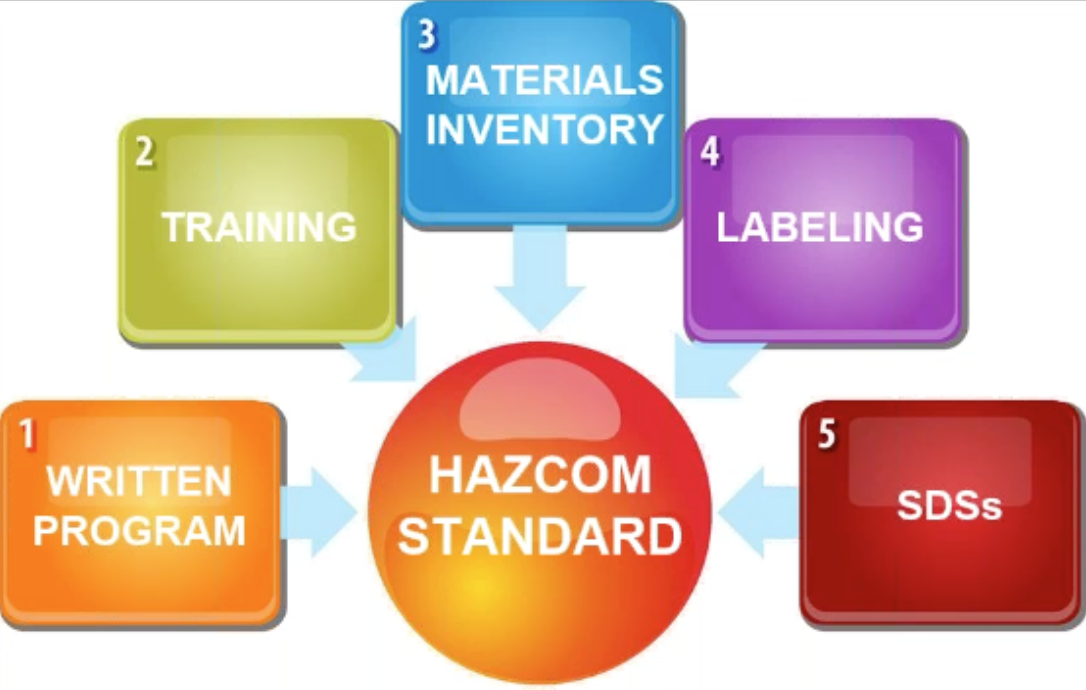
Written Hazard Communication Program
Every employer covered under the OSHA Hazard Communication Standard (HCS) must develop and implement a written hazard communication program that is specific to their workplace.
 Racial discrimination in housing
This program serves as the foundation for communicating chemical hazards to employees and must reflect how the requirements are fulfilled on-site. Key elements include procedures for labeling hazardous chemicals, maintaining safety data sheets (SDSs), and training employees effectively.
The plan must also list all hazardous chemicals present in the workplace, outline how labels and SDSs will be managed, and designate a responsible person to oversee the program. Additionally, the written program must be accessible to employees and updated regularly whenever new chemicals are introduced or new hazard information becomes available.
- Employers must create a site-specific hazard communication plan detailing how HCS requirements are implemented.
- The program must include a comprehensive inventory of all hazardous chemicals present in the workplace.
- It should assign responsibility to a coordinator or team to maintain and update hazard communication procedures.
Chemical Container Labeling
Proper labeling of all containers holding hazardous chemicals is a fundamental requirement of the OSHA Hazard Communication Standard. Labels must be affixed directly to containers and must provide immediate, clear information about the chemical’s identity and associated hazards.
Under the Globally Harmonized System (GHS), labels include specific elements such as a product identifier, signal word, hazard statements, precautionary statements, pictograms, and supplier information.
These components help ensure that employees understand the risks involved when handling or being exposed to hazardous substances. Employers must ensure that labels are not removed or defaced and that any secondary containers—those into which chemicals are transferred—are relabeled promptly if the original is missing.
- Labels must feature standardized elements including pictograms, signal words, and hazard and precautionary statements.
- All primary and secondary containers containing hazardous chemicals must be properly labeled.
- Employers are responsible for ensuring that labels remain intact and legible during normal use.
Safety Data Sheets (SDSs)
Safety Data Sheets (SDSs) are essential tools under the Hazard Communication Standard that provide comprehensive information about hazardous chemicals used in the workplace.
Each SDS must follow a standardized 16-section format established by OSHA, covering details such as chemical identification, hazard identification, composition, first aid measures, firefighting procedures, accidental release measures, handling and storage, exposure controls, physical and chemical properties, stability and reactivity, toxicological information, ecological information, disposal considerations, transport information, regulatory information, and other useful data.
Employers must ensure that an up-to-date SDS is readily accessible to employees for every hazardous chemical in the workplace, in the appropriate language and format, without barriers such as passwords or restricted locations.
- An SDS must be available for each hazardous chemical present and be accessible during each work shift.
- The document must follow the mandated 16-section format to ensure consistency and clarity.
- Employers must update SDSs whenever new hazard information is available and ensure accessibility in the work area.
What is the OSHA 30 Hazard Communication Standard and How Does It Relate to Workplace Safety?
The OSHA 30 Hazard Communication Standard (HCS) is a regulatory framework established by the Occupational Safety and Health Administration (OSHA) to ensure that information about hazardous chemicals in the workplace is properly communicated to employees.
It is a core component of the OSHA 30-hour outreach training program, which aims to provide workers in high-hazard industries with comprehensive safety knowledge.
The standard mandates that employers identify and evaluate chemical hazards, maintain Safety Data Sheets (SDSs), label containers properly, and train employees on how to handle and respond to exposure risks. By standardizing how chemical risks are communicated, the HCS plays a critical role in preventing chemical-related injuries, illnesses, and fatalities across various work environments.
Key Components of the Hazard Communication Standard
- One of the foundational elements of the Hazard Communication Standard is the requirement for chemical inventory. Employers must create and maintain a list of all hazardous chemicals present in the workplace, allowing for systematic tracking and management of potential risks.
- Proper labeling is another critical component. All containers of hazardous chemicals must have labels that include a product identifier, pictograms, a signal word, hazard statements, and precautionary statements. This uniform labeling system helps workers quickly identify the dangers associated with each chemical.
- The standard also mandates the use of Safety Data Sheets (SDSs), which must be readily accessible to employees. Each SDS provides detailed information about a chemical, including its properties, health effects, safe handling procedures, and emergency measures, enabling informed decision-making during use or accidents.
Employee Training and Right-to-Know
- Under the Hazard Communication Standard, employers are required to provide comprehensive training to all employees who may be exposed to hazardous chemicals. This training must occur at the time of initial assignment and whenever new chemicals or processes are introduced, ensuring that workers are continuously informed.
- The training covers how to read labels and SDSs, understand hazard pictograms, and follow protective measures such as using personal protective equipment (PPE). This empowers employees to take proactive steps in minimizing exposure and responding appropriately to spills or exposures.
- The concept of Right-to-Know is central to the standard, ensuring that workers have the legal right to access information about the chemicals they work with. This transparency fosters a culture of safety and accountability, where employees are active participants in maintaining a safe workplace.
Integration with the Global Harmonized System (GHS)
- The OSHA Hazard Communication Standard aligns with the United Nations' Global Harmonized System of Classification and Labelling of Chemicals (GHS). This harmonization ensures that chemical hazard classification and communication methods are consistent across international borders, facilitating global trade and safety.
- By adopting GHS criteria, OSHA standardized hazard definitions and categories, enabling more accurate and consistent communication of chemical risks. For example, specific pictograms and standardized phrases now convey the same meaning regardless of language or country.
- This integration enhances workplace safety by reducing confusion and misinterpretation of chemical hazards. Workers in multinational companies or those handling imported chemicals benefit from a uniform system that improves comprehension and response during emergencies.
Frequently Asked Questions
What is the purpose of OSHA's Hazard Communication Standard (HCS)?
The purpose of OSHA's Hazard Communication Standard is to ensure that employees are informed about the identities and hazards of chemicals they are exposed to at work. It requires employers to provide accessible information through labels, safety data sheets (SDSs), and training. This standard aims to reduce injuries and illnesses caused by hazardous chemicals by promoting awareness and proper handling in the workplace.
Who must comply with the OSHA Hazard Communication Standard?
All employers in the United States with employees exposed to hazardous chemicals must comply with the OSHA Hazard Communication Standard. This includes businesses in manufacturing, healthcare, construction, and agriculture. Compliance involves creating a written hazard communication program, labeling chemical containers, maintaining safety data sheets, and training employees on chemical hazards and protective measures relevant to their work environment.
What information must be included on a chemical label under the HCS?
Under the HCS, chemical labels must include a product identifier, signal word (e.g., Danger or Warning), hazard statement(s), precautionary statement(s), pictogram(s), and supplier information. These elements are aligned with the Globally Harmonized System (GHS) to ensure clear and consistent communication of chemical hazards. Labels must be in English and remain legible and prominently displayed on containers.
What are Safety Data Sheets (SDSs), and why are they important?
Safety Data Sheets (SDSs) provide detailed information about hazardous chemicals, including their properties, health effects, first aid procedures, safe handling, storage, and emergency control measures. They are important because they help employers and employees understand chemical risks and how to work safely. Employers must ensure SDSs are readily accessible to workers during each shift.
Leave a Reply