
Foreign workers immigration and employment eligibility
Foreign workers play a vital role in the global economy, filling labor shortages, contributing skills, and supporting industries ranging from technology to agriculture. Immigration and employment eligibility for these workers involve complex legal frameworks that vary significantly across countries.
Governments implement policies to balance economic needs with national security and labor protection. Obtaining work authorization typically requires visas, permits, or residency status that define the conditions under which foreigners may legally work.
Employers must verify eligibility, often through documentation and government verification systems. Understanding these requirements is essential for both workers and employers to ensure compliance and promote fair, legal labor practices in an increasingly interconnected workforce.
 Do undocumented workers have rights
Understanding Foreign Workers' Immigration and Employment Eligibility in the United States
Navigating the landscape of foreign workers immigration and employment eligibility in the United States requires a comprehensive understanding of federal laws, visa categories, and regulatory procedures managed primarily by U.S. Citizenship and Immigration Services (USCIS), the Department of Labor (DOL), and U.S. Customs and Border Protection (CBP).
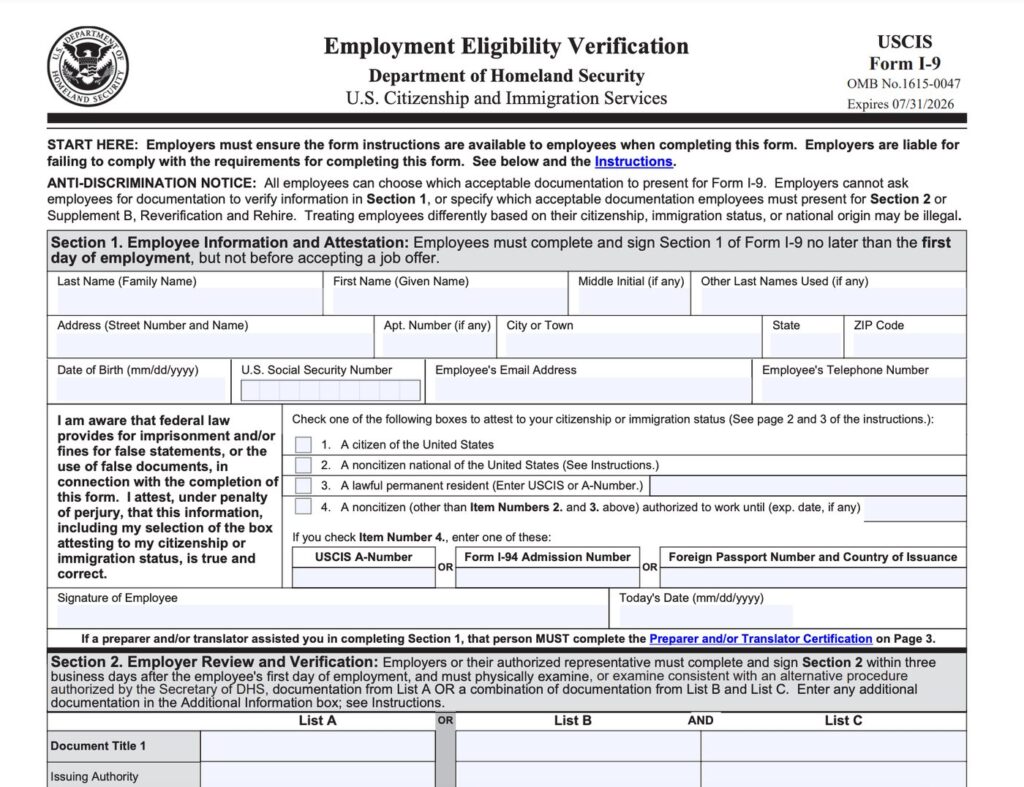
Employers seeking to hire non-citizens must comply with strict regulations to verify identity and work authorization through documentation such as the Form I-9, while foreign nationals must obtain proper visa status that permits employment, such as the H-1B for specialty occupations, L-1 for intracompany transferees, or O-1 for individuals with extraordinary abilities.
Each visa type carries specific eligibility requirements, duration limits, and conditions for employment, making it essential for both workers and employers to ensure accurate filings and adherence to legal parameters. Failure to comply can lead to penalties, deportation, or future ineligibility for immigration benefits, underlining the importance of legal diligence in the employment of foreign nationals.
Key Visa Categories for Foreign Workers
Several nonimmigrant visa categories allow foreign nationals to legally work in the United States on a temporary basis, each tailored to specific professional or employment circumstances. The H-1B visa is one of the most common, designed for individuals in specialty occupations requiring at least a bachelor’s degree, typically in fields like IT, engineering, or finance, and is subject to an annual cap.
 Do undocumented workers pay income tax
The L-1 visa enables multinational companies to transfer executives, managers, or employees with specialized knowledge from foreign offices to the U.S., promoting intra-company mobility. The O-1 visa is reserved for individuals with extraordinary ability or achievement in sciences, arts, education, business, or athletics, while the TN visa (under USMCA, formerly NAFTA) allows citizens of Canada and Mexico to work in certain professional occupations.
Additionally, H-2A and H-2B visas serve seasonal agricultural and non-agricultural labor needs, respectively. Each visa category has distinct application processes, documentation requirements, and employer sponsorship obligations, requiring careful planning and legal compliance.
All employers in the United States, regardless of size or industry, must verify the employment eligibility of every employee through the federal Form I-9, Employment Eligibility Verification.
This mandatory form requires individuals to present acceptable documents that establish both identity and authorization to work, such as a U.S. passport, Permanent Resident Card (Form I-551), or a combination of a driver’s license and Social Security card.
 Executive order to protect undocumented workers
For foreign workers, this often includes a valid Employment Authorization Document (EAD), visa status like H-1B or L-1, or other USCIS-approved documents. Employers must examine original documents, complete Section 2 of the I-9 form within three business days of hire, and retain the form for inspection by federal authorities.
The U.S. Immigration and Customs Enforcement (ICE) conducts audits and worksite enforcement actions to ensure compliance, and violations can result in civil fines or criminal penalties, particularly if knowingly employing unauthorized workers. Maintaining accurate I-9 records and conducting regular internal audits are essential practices for risk mitigation.
Role of the Department of Labor in Foreign Worker Programs
The U.S. Department of Labor (DOL) plays a critical role in protecting both American and foreign workers by ensuring that hiring foreign labor does not adversely affect the U.S. job market or wage standards. For several visa classifications, including H-1B, H-2A, and H-2B, employers must obtain a Labor Condition Application (LCA) or temporary labor certification as a prerequisite.
The LCA requires employers to attest that foreign hires will receive wages equal to or greater than the prevailing wage for the occupation in the area of employment and that working conditions will not undermine those of similarly employed U.S. workers.
In the case of H-2A agricultural workers, the DOL mandates a comprehensive certification process that includes advertising job opportunities to U.S. workers, ensuring access to housing and transportation, and guaranteeing return transportation for foreign employees. These safeguards are intended to balance labor needs with fair employment practices and prevent exploitation. Employers must remain compliant with DOL regulations throughout the employment period to avoid debarment or legal action.
| Visa Type | Purpose | Employer Sponsorship Required? | Duration and Renewability |
|---|---|---|---|
| H-1B | Specialty occupation workers (e.g., IT, engineering) | Yes | 3 years, extendable to 6 |
| L-1 | Intracompany transferees (executives or specialized knowledge) | Yes | Up to 7 years (executive), 5 years (specialized) |
| O-1 | Extraordinary ability in arts, sciences, business, or athletics | Yes | 3 years, renewable in 1-year increments |
| H-2A | Seasonal agricultural workers | Yes | Up to 3 years, extendable with re-certification |
| TN | Professionals from Canada or Mexico (USMCA) | Not always (individual application) | 3 years, renewable |
Guide to Foreign Workers Immigration and Employment Eligibility
What are the eligibility requirements for foreign workers under the Temporary Foreign Worker Program?
Job Offer and Employer Requirements
To be eligible under the Temporary Foreign Worker Program (TFWP), a foreign worker must have a valid job offer from a Canadian employer. The employer is required to obtain a positive Labour Market Impact Assessment (LMIA) before hiring a foreign national. This assessment confirms that hiring a temporary foreign worker will not negatively affect the Canadian labour market.
The employer must also demonstrate efforts to recruit Canadian citizens or permanent residents first and prove that no qualified local worker is available. Additionally, the job offer must meet prevailing wage standards and provide working conditions that comply with federal and provincial regulations.
- The employer must apply for and receive a positive LMIA from Employment and Social Development Canada (ESDC).
- The job offer must be for a full-time, non-seasonal position lasting a minimum of 12 months in most cases.
- The employer must comply with the conditions set out in the employer compliance agreement, including providing accurate information and treating the foreign worker fairly.
Worker Qualifications and Documentation
Foreign workers must meet specific qualifications related to the job they are offered, such as educational background, work experience, professional certifications, or language proficiency. Each job has unique requirements based on the National Occupational Classification (NOC) code.
Workers may need to provide proof of credentials, such as academic transcripts or licensing documents. Additionally, they must undergo a medical examination and provide a police certificate to ensure admissibility to Canada. Workers must also apply for a work permit from Immigration, Refugees and Citizenship Canada (IRCC) upon approval of the LMIA.
- Applicants must prove they possess the necessary skills, education, and experience aligned with the job’s NOC requirements.
- A valid passport and completed work permit application are required, along with biometrics in most cases.
- Workers must meet health and security requirements, including passing a medical exam and providing a clear criminal background check.
Program Streams and Job Matching
The TFWP is divided into two main streams: the High-Wage Workers stream and the Low-Wage Workers stream, each with specific eligibility criteria. The classification depends on whether the offered wage meets or exceeds the median wage for the occupation in that region.
In some cases, employers may hire under the Global Talent Stream, which allows faster processing for specialized roles in certain high-demand sectors. Job matching is critical—workers must be hired for the specific occupation outlined in the LMIA, and any change in job duties or employer typically requires a new LMIA and work permit amendment.
- Workers in high-wage positions generally have more flexibility in job mobility and may transition to permanent residency more easily.
- Low-wage stream positions are subject to caps on the percentage of foreign workers an employer can hire within their workforce.
- The Global Talent Stream allows eligible workers in tech and innovative sectors to obtain work permits within two weeks, provided the job offer aligns with designated categories.
Frequently Asked Questions
What documents do foreign workers need to prove employment eligibility in the U.S.?
Foreign workers must provide valid documents proving identity and work authorization, such as a U.S. passport, Permanent Resident Card, or employment authorization document (EAD). Acceptable alternatives include a foreign passport with an approved visa and Form I-94. Employers verify eligibility using Form I-9. It’s essential that documents are unexpired and match the employee’s current immigration status to comply with U.S. Citizenship and Immigration Services (USCIS) regulations.
Yes, foreign workers authorized to work in the U.S. can apply for a Social Security Number (SSN) through the Social Security Administration (SSA). They must provide proof of work-authorized immigration status, such as an EAD or visa with Form I-94. The SSN is necessary for employment, tax reporting, and accessing certain benefits. Applications can be submitted at a local SSA office with proper documentation and within allowable processing times.
What is Form I-9, and why is it important for foreign workers?
Form I-9 verifies the identity and employment authorization of individuals hired for work in the U.S., including foreign workers. Both employees and employers must complete it within three days of the start date. Foreign workers must present acceptable documents from the USCIS list. Employers retain Form I-9 for compliance audits. Failure to complete or maintain accurate forms can result in penalties, making it a critical step in legal employment verification.
How does a foreign worker maintain lawful employment eligibility over time?
A foreign worker maintains lawful employment eligibility by keeping their immigration status and work authorization current. This includes renewing visas or EADs before expiration and promptly reporting status changes to employers. Unauthorized gaps in status can lead to loss of eligibility. Workers should also monitor policy updates from USCIS and consult immigration attorneys when needed. Continuous compliance ensures uninterrupted, lawful employment in the United States.
Leave a Reply