
Can i sue for wrongful termination

Wrongful termination occurs when an employee is fired in violation of employment laws, contractual agreements, or public policy. While employers often have the right to terminate employees for various reasons, certain dismissals cross legal boundaries.
If you believe you were fired due to discrimination, retaliation, breach of contract, or refusal to engage in illegal activities, you may have grounds for a lawsuit. Understanding your rights under federal and state laws is crucial, as protections vary by location. This article explores the legal basis for wrongful termination claims, common evidence used in such cases, and the steps to take if you suspect your firing was unjust.
Can I Sue for Wrongful Termination?
Yes, you may be able to sue for wrongful termination if your firing violated federal, state, or local employment laws, breached an employment contract, or went against established company policies. Wrongful termination occurs when an employee is dismissed for illegal reasons, such as discrimination, retaliation for reporting illegal activity, or exercising a legal right like taking medical leave.
 Can you sue for wrongful termination
Not every unjust or seemingly unfair firing qualifies as wrongful under the law—employment in most U.S. states is considered at-will, which means employers can terminate employees for any reason or no reason at all, as long as it's not illegal.
To pursue a claim, you must show that your termination violated specific legal protections. Evidence such as written policies, emails, or witness statements can strengthen your case. It’s highly recommended to consult with an employment attorney to assess the validity of your claim and determine the best legal course of action.
What Constitutes Wrongful Termination?
Wrongful termination occurs when an employee is fired in violation of statutory laws, public policy, or an employment contract. Common examples include being let go due to discrimination based on race, gender, age, religion, disability, or national origin, which is prohibited under federal laws like Title VII of the Civil Rights Act, the Americans with Disabilities Act (ADA), and the Age Discrimination in Employment Act (ADEA).
Retaliation is another major basis for claims—such as being fired after filing a wage complaint, reporting safety violations, or taking legally protected leave under the Family and Medical Leave Act (FMLA).
 Can you sue for wrongful termination in virginia
Additionally, if you have an employment contract that specifies the circumstances under which you can be terminated and your employer fires you without cause as defined in that agreement, this could also be considered wrongful. Importantly, even in at-will employment states, these exceptions protect workers from unjust dismissal.
How Do I Prove a Wrongful Termination Claim?
To successfully prove a wrongful termination claim, you must present credible evidence that your firing violated the law or a contractual agreement.
This often begins with documenting the circumstances surrounding your termination, including dates, communications, performance reviews, and any discriminatory or retaliatory statements made by your employer.
You’ll typically need to show a direct or circumstantial link between a protected activity (such as reporting harassment or requesting accommodations) and your dismissal. In discrimination cases, evidence such as disparate treatment compared to similarly situated employees, derogatory comments, or sudden negative evaluations after asserting your rights can support your claim.
 Can you sue for wrongful termination in louisiana
Filing a complaint with government agencies like the Equal Employment Opportunity Commission (EEOC) or a state labor board is often a necessary first step before pursuing a lawsuit, as these agencies investigate and may issue a right to sue letter that allows you to move forward in court.
What Remedies Are Available in Wrongful Termination Cases?
If you win a wrongful termination lawsuit, you may be entitled to several forms of relief designed to compensate you for losses and, in some cases, punish the employer for illegal conduct. Common remedies include back pay, which covers the wages and benefits you lost from the time of termination to the trial, and front pay, which compensates for future lost earnings if reinstatement isn’t feasible. Courts may also order your employer to reinstate you to your former position, although this is less common due to damaged working relationships. In cases involving egregious conduct, you might receive compensatory damages for emotional distress or punitive damages to deter similar behavior by employers. Attorney’s fees and court costs are sometimes recoverable as well. The exact remedies depend on the nature of your claim, jurisdiction, and whether the case is settled or decided at trial.
| Element | Description | Relevance to Claim |
|---|---|---|
| Discrimination | Firing based on race, gender, age, religion, disability, or other protected characteristics. | Prohibited by federal and state anti-discrimination laws; key ground for wrongful termination. |
| Retaliation | Dismissal after reporting illegal activity, harassment, or exercising legal rights. | Violates public policy and protections under laws like the Fair Labor Standards Act (FLSA). |
| Breach of Contract | Termination that contradicts the terms of an employment agreement. | Allows legal action even in at-will employment states if contractual obligations were broken. |
| Whistleblower Protection | Firing for reporting violations of law to authorities. | Protected activity under many federal and state whistleblower laws. |
| Public Policy Violation | Termination for reasons that violate societal norms, such as jury duty or military leave. | Recognized as wrongful termination in most jurisdictions even without a contract. |
Can I Sue for Wrongful Termination? A Comprehensive Legal Guide
Can I file a wrongful termination lawsuit in Gilbert, AZ?
Yes, you can file a wrongful termination lawsuit in Gilbert, AZ, provided your circumstances meet certain legal criteria recognized under Arizona state law. Arizona is an at-will employment state, meaning employers can generally terminate employees at any time and for any reason, as long as that reason does not violate federal or state laws.
If your termination involved discrimination, retaliation for reporting illegal activity, refusal to perform an illegal act, or violated an employment contract, you may have grounds for a wrongful termination lawsuit.
 Is nj an at will state for employment
Legal action typically begins with filing a complaint with the appropriate agency—such as the Equal Employment Opportunity Commission (EEOC) or the Arizona Civil Rights Division—before pursuing a lawsuit in court. Consulting with an experienced employment attorney in Gilbert or the surrounding Maricopa County area is advisable to evaluate the strength of your case.
Grounds for a Wrongful Termination Claim in Arizona
- One of the most common bases for a wrongful termination claim is unlawful discrimination. Employers cannot fire employees due to race, color, religion, sex (including pregnancy), national origin, age (40 and older), disability, or genetic information. These protections are enforced under federal laws like Title VII of the Civil Rights Act and the Americans with Disabilities Act, which also apply in Gilbert, AZ.
- Retaliation is another valid ground. If you were terminated for engaging in legally protected activities such as filing a workers' compensation claim, reporting harassment, whistleblowing on illegal practices, or participating in an investigation, your firing may qualify as wrongful. Arizona law protects employees from such retaliatory termination.
- A breach of an implied or written employment contract can also support a wrongful termination lawsuit. Even in at-will employment states like Arizona, if there is a contract specifying the terms of employment or disciplinary procedures before termination, and it was violated, you may have legal recourse. This includes handbooks or verbal promises that established job security under certain conditions.
Steps to Take Before Filing a Wrongful Termination Lawsuit in Gilbert
- Document everything related to your employment and termination. Gather emails, performance reviews, pay stubs, the employee handbook, and any records of complaints or disciplinary actions. This documentation can help establish a timeline and support your claim that the termination was unjustified or unlawful.
- File a complaint with a government agency such as the EEOC or the Arizona Civil Rights Division. These agencies investigate claims of discrimination and retaliation and must typically be contacted within 180 days of the termination (extended to 300 days in some cases). You’ll need to obtain a Right to Sue letter before proceeding to court.
- Consult with an employment attorney licensed in Arizona. An experienced lawyer can assess your situation, explain applicable deadlines (statutes of limitations), help file the necessary paperwork, and represent you in negotiations or court. Legal advice is crucial since filing procedures and jurisdictional rules vary between state and federal courts.
Jurisdiction and Court Options for Wrongful Termination Cases in Gilbert, AZ
- Wrongful termination cases from Gilbert typically fall under the jurisdiction of either the Maricopa County Superior Court or the appropriate federal district court, depending on the nature of the claim. State court is often used for claims based on Arizona employment laws, while federal court handles violations of federal statutes like Title VII or the Age Discrimination in Employment Act.
- The location of your former workplace and the number of employees at the company influence which court has jurisdiction. For example, Title VII only applies to employers with 15 or more employees, so smaller companies may be subject to state-level claims instead. Gilbert-based employees should verify these details when determining where to file.
- Filing deadlines are critical. In Arizona, the statute of limitations is generally two years for breach of contract claims and one year for civil rights violations under state law. Federal claims may have different time limits once the Right to Sue letter is issued. Missing these deadlines can result in losing the right to pursue legal action entirely.
Can you sue for wrongful termination in an at-will employment state?
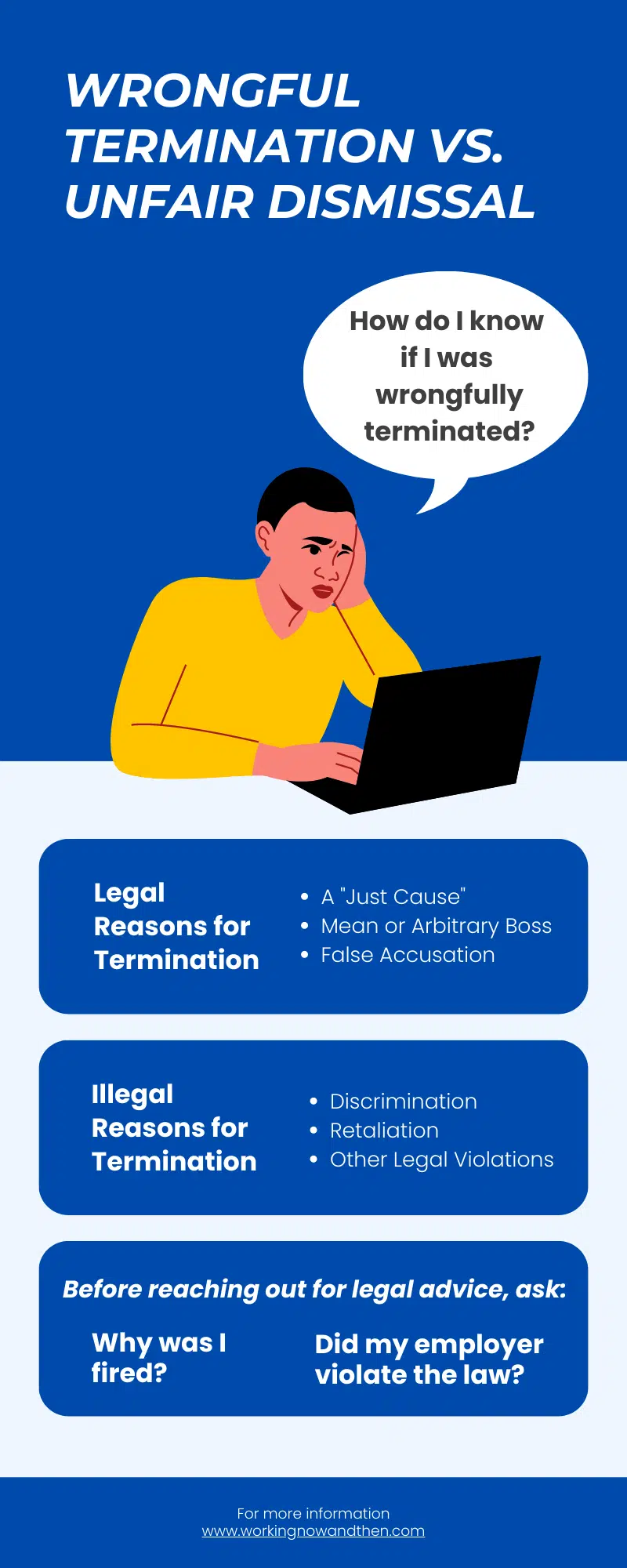
Yes, you can sue for wrongful termination in an at-will employment state. While at-will employment means that an employer can generally terminate an employee at any time, for any reason—or no reason at all—there are important exceptions to this rule. Federal, state, and local laws protect employees from being fired for illegal reasons, even in at-will states.
If an employee can demonstrate that their termination violated a specific law, breached an employment contract, or went against public policy, they may have grounds for a wrongful termination lawsuit. The key is proving that the dismissal was based on discrimination, retaliation, or another unlawful motive.
Common Exceptions to At-Will Employment That Allow for Wrongful Termination Claims
- One major exception involves federal anti-discrimination laws. Employees cannot be fired due to their race, color, religion, sex (including pregnancy, sexual orientation, and gender identity), national origin, age (40 or older), disability, or genetic information. Such terminations violate Title VII of the Civil Rights Act, the Age Discrimination in Employment Act (ADEA), or the Americans with Disabilities Act (ADA), and provide a basis for legal action.
- Another exception arises when an employee is terminated in retaliation for engaging in legally protected activities. For example, if an employee files a workers’ compensation claim, reports safety violations to OSHA, complains about unpaid wages, or participates in an Equal Employment Opportunity (EEO) investigation, firing them for these actions is illegal and may lead to a wrongful termination claim.
- A third exception includes instances where termination violates public policy. Most states recognize that firing an employee for refusing to commit an illegal act, for performing a legal duty (such as jury duty), or for exercising a statutory right (such as taking FMLA leave) constitutes wrongful discharge, even in at-will employment settings.
How Employment Contracts and Company Policies Can Override At-Will Status
- If an employee has an express or implied employment contract that guarantees job security or specifies that termination will only occur for cause, the at-will doctrine may not apply. Written contracts, offer letters, or even consistent verbal assurances can form the basis of a binding agreement limiting an employer's ability to fire someone at will.
- Employers’ employee handbooks or internal policies may also create implied contracts. If a handbook outlines disciplinary procedures or progressive performance warnings before termination, and an employee is fired abruptly without following these steps, a court might consider this a breach of the implied contract and allow a wrongful termination suit.
- Additionally, the covenant of good faith and fair dealing, recognized in some states, may prevent employers from terminating employees in bad faith—such as firing someone just before they vest in retirement benefits or to avoid paying earned commissions. In these states, such conduct might not be protected under at-will employment principles.
Steps to Take When Pursuing a Wrongful Termination Lawsuit in an At-Will State
- Document everything related to the termination. This includes emails, performance reviews, disciplinary notices, personnel records, and any communication from supervisors or HR. Detailed records strengthen your ability to prove that the firing was unjust or based on illegal grounds.
- File a complaint with the appropriate government agency. Before suing, most claims based on discrimination or retaliation must first be filed with the Equal Employment Opportunity Commission (EEOC) or a state equivalent, such as a state fair employment practices agency. These agencies investigate and issue a “right to sue” letter, which is necessary to proceed in court.
- Consult an experienced employment attorney. An attorney can evaluate whether your situation falls under any exceptions to at-will employment, help you navigate the legal process, ensure deadlines are met, and represent you in negotiations or litigation. Legal representation significantly increases the chances of a favorable outcome.
What are common examples of wrongful termination that may warrant legal action?
Discrimination-Based Termination
Termination based on discrimination is one of the most common types of wrongful discharge. Federal and state laws protect employees from being fired due to characteristics such as race, color, religion, sex (including pregnancy, gender identity, and sexual orientation), national origin, age (40 or older), disability, or genetic information. When an employer makes adverse employment decisions based on any of these protected traits, it violates laws like Title VII of the Civil Rights Act, the Americans with Disabilities Act (ADA), and the Age Discrimination in Employment Act (ADEA).
- An employee is fired shortly after disclosing a disability or requesting a reasonable accommodation, which could signal disability-based discrimination.
- A female employee is terminated after returning from maternity leave while male colleagues with similar performance issues are retained, suggesting gender bias.
- An older worker is laid off during a restructuring, but younger, less experienced employees with comparable roles are kept on, raising concerns about age discrimination.
Retaliation for Protected Activities
Employees have the right to engage in certain legally protected activities without fear of reprisal. When an employer fires a worker in retaliation for exercising these rights, it constitutes wrongful termination. Protected activities include filing a complaint about workplace harassment or unsafe conditions, reporting illegal conduct (whistleblowing), participating in an investigation, requesting legally mandated leave, or asserting wage rights such as overtime or minimum wage.
- An employee is let go shortly after reporting safety violations to OSHA, indicating possible whistleblower retaliation under occupational safety laws.
- A staff member files a sexual harassment complaint with human resources and is terminated within weeks, which may constitute unlawful retaliation under anti-discrimination statutes.
- A worker requests medical leave under the Family and Medical Leave Act (FMLA) and is dismissed while on leave, suggesting unlawful retaliation for asserting protected leave rights.
Breach of Employment Contract or Public Policy
Even in at-will employment states, certain terminations are considered wrongful if they violate the terms of an explicit or implied employment contract or go against fundamental public policy. This includes firing an employee for refusing to carry out an illegal act, for exercising a legal right, or in a manner that contradicts documented company policies or verbal assurances that formed the basis of an employment agreement.
- An employee is fired for refusing to falsify financial records or lie to a regulatory body, which violates public policy protecting employees who uphold the law.
- A worker is dismissed in contradiction to a written contract that specifies a notice period or requires just cause for termination, constituting a breach of contract.
- An employer terminates an employee after they report illegal activity by a supervisor, which goes against public policy encouraging transparency and accountability in the workplace.
Frequently Asked Questions
Can I sue for wrongful termination if I was fired without cause?
Yes, you can potentially sue for wrongful termination even if you were fired without cause, depending on the circumstances. At-will employment allows employers to terminate employees for any reason, but exceptions exist. If the firing violated an employment contract, company policy, or anti-discrimination laws, it may constitute wrongful termination. Always consult an employment attorney to assess whether your situation qualifies for legal action based on these exceptions.
What are common examples of wrongful termination?
Common examples include being fired due to discrimination based on race, gender, age, religion, or disability; retaliation for reporting illegal activities or filing a complaint; violation of an employment contract; or termination for taking legally protected leave, such as under FMLA. Whistleblowing, refusing to perform illegal acts, or asserting workplace rights like filing a workers’ compensation claim can also constitute wrongful termination. These actions breach employment laws and may support a lawsuit.
How do I prove my termination was wrongful?
To prove wrongful termination, you need evidence showing your firing violated employment laws, public policy, or a contract. Documentation such as emails, performance reviews, company policies, or witness statements can help. You must demonstrate a link between your termination and a protected activity, such as reporting harassment or requesting medical leave. Filing a complaint with the EEOC or state agency is often a required step before pursuing a lawsuit.
Is there a time limit to file a wrongful termination lawsuit?
Yes, there are strict time limits, known as statutes of limitations, for filing a wrongful termination claim. These vary by state and the basis of the claim but typically range from 180 days to 3 years. You may first need to file a complaint with a government agency like the EEOC, which often requires action within 180 to 300 days. Consulting an attorney promptly ensures you meet all deadlines and preserve your legal rights.
Leave a Reply