
Trump's immigration policies impact workforce as workers lose legal status
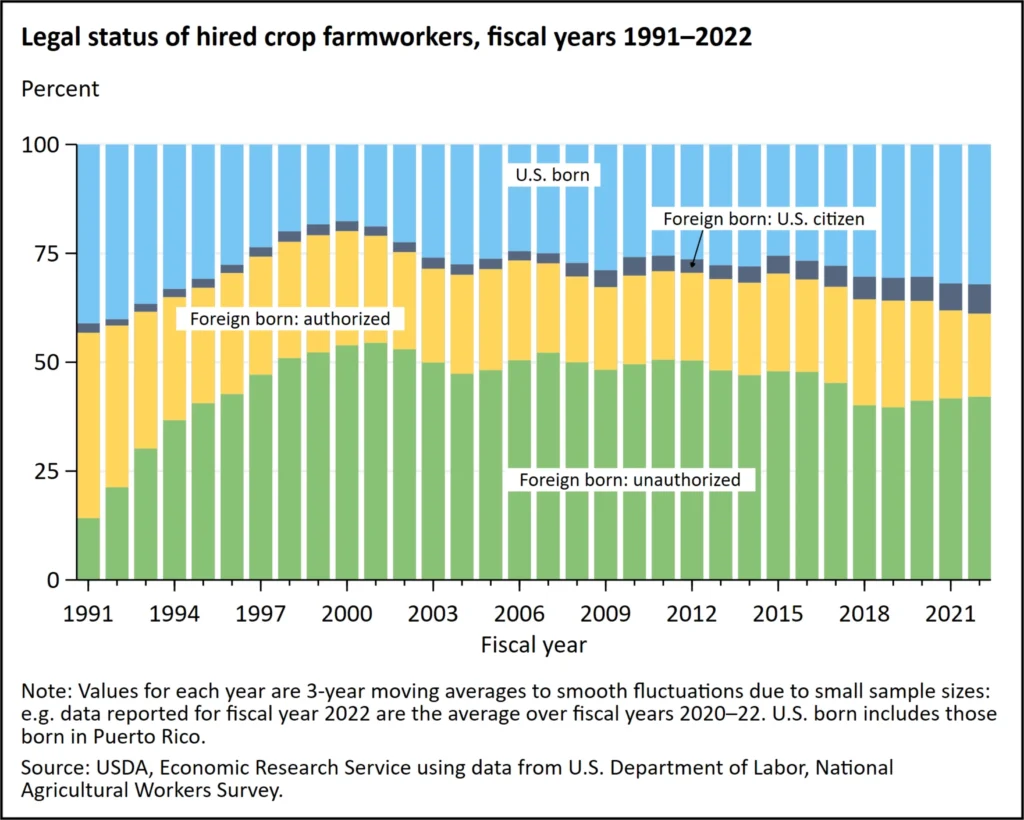
The impact of Trump's immigration policies on the U.S. workforce has become increasingly evident as thousands of workers lose their legal status.
Measures implemented during his administration, including restrictions on visas and temporary protected status, have disrupted labor markets across key industries. From agriculture to technology, businesses face growing challenges in retaining skilled and essential workers.
Many individuals who once contributed legally now confront uncertainty, affecting productivity and economic stability. These policy shifts have not only altered the lives of immigrants but also reshaped employment dynamics nationwide, prompting debate over long-term consequences for both workers and the broader economy.
 What happened when florida cracked down on undocumented workers
Trump's Immigration Policies Reshape U.S. Workforce as Legal Status Loss Hits Key Industries
The immigration policies implemented during Donald Trump’s presidency significantly altered the composition and stability of the U.S. workforce, particularly through measures that restricted legal immigration pathways and tightened enforcement on undocumented and temporarily protected status holders.
Policies such as the termination of the Deferred Action for Childhood Arrivals (DACA) renewals, the end of Temporary Protected Status (TPS) for several countries, and increased vetting for work visas contributed to a climate of uncertainty among immigrant workers. As a result, thousands of individuals who had been contributing legally to sectors like agriculture, construction, healthcare, and hospitality suddenly faced the risk or reality of losing their legal status.
This instability has led to labor shortages in industries heavily reliant on immigrant labor, disrupted supply chains, and increased operational costs for employers who must now retrain or replace experienced workers. Moreover, the chilling effect of these policies discouraged many eligible immigrants from participating fully in the labor market, ultimately weakening workforce productivity and economic growth.
Termination of DACA and TPS Left Thousands of Workers Vulnerable
The Trump administration’s decision to rescind DACA renewals in 2017 and terminate TPS designations for nations including El Salvador, Haiti, Honduras, and Nicaragua left hundreds of thousands of individuals at risk of deportation and job loss.
 What percent of agricultural workers are undocumented
These workers, many of whom had lived and worked in the U.S. for over a decade, were suddenly stripped of their legal authorization to work, directly impacting industries such as food services, landscaping, and cleaning services.
Employers who had relied on these workers found it difficult to replace them, as native-born labor participation in many of these sectors remained low. Additionally, the legal battles surrounding these reversals created prolonged uncertainty, making long-term workforce planning nearly impossible.
As a result, many Dreamers and TPS holders were forced to go underground, reducing tax contributions and excluding them from formal employment protections, further destabilizing sectors dependent on their labor.
| Policy | Target Population | Workforce Impact |
|---|---|---|
| End of DACA renewals | Undocumented youth brought to the U.S. as children | Loss of legal work authorization for ~650,000 eligible individuals |
| Termination of TPS for 6 countries | Approx. 300,000 nationals from El Salvador, Haiti, Honduras, etc. | Abolished legal status and work permits; disrupted labor in agriculture and service sectors |
| H-1B visa restrictions and increased scrutiny | High-skilled foreign professionals | Reduced talent inflow in tech, engineering, and medical research fields |
Work Visa Restrictions Reduced Access to Skilled and Seasonal Labor
The Trump administration introduced stricter regulations and heightened scrutiny on H-1B, H-2A, and H-2B visa programs, significantly limiting the ability of U.S. employers to hire both high-skilled and seasonal workers.
 What percentage of migrant farm workers are undocumented
For instance, changes to H-1B adjudication procedures and the Buy American, Hire American executive order led to a rise in denials and requests for evidence, discouraging companies—especially in the technology and engineering sectors—from sponsoring foreign talent. Meanwhile, seasonal industries such as agriculture and tourism struggled to fill positions due to difficulty in securing H-2A and H-2B visas.
This lack of reliable access to legal labor contributed to crops going unharvested, reduced operational capacity in resorts and seafood processing plants, and increased labor costs as businesses competed for a smaller pool of legal workers. The administration’s focus on extreme vetting further slowed processing times, exacerbating workforce gaps during peak hiring seasons.
The erosion of legal status among immigrant workers under Trump-era policies had broad economic and social ramifications, including declines in consumer spending, reduced tax revenues, and increased employer compliance costs.
When workers lose legal status, they are often driven into the informal economy, where wages are lower and labor protections are scarce, ultimately undermining wage standards for all workers.
 1099 undocumented workers
Industries with high immigrant participation experienced increased turnover and training expenses, while productivity suffered due to fear-based self-deportation and absenteeism. Moreover, communities with large immigrant populations saw adverse effects on local economies, as displaced workers cut back on housing, transportation, and other services.
The pullback from legal immigration pathways not only disrupted businesses but also signaled a shift away from America’s historical role as a destination for global talent and labor, with long-term consequences for competitiveness and economic resilience.
How Trump's Immigration Policies Affected the Workforce as Workers Lost Legal Status
How do changes in immigration policies affect workforce stability when workers lose legal status?
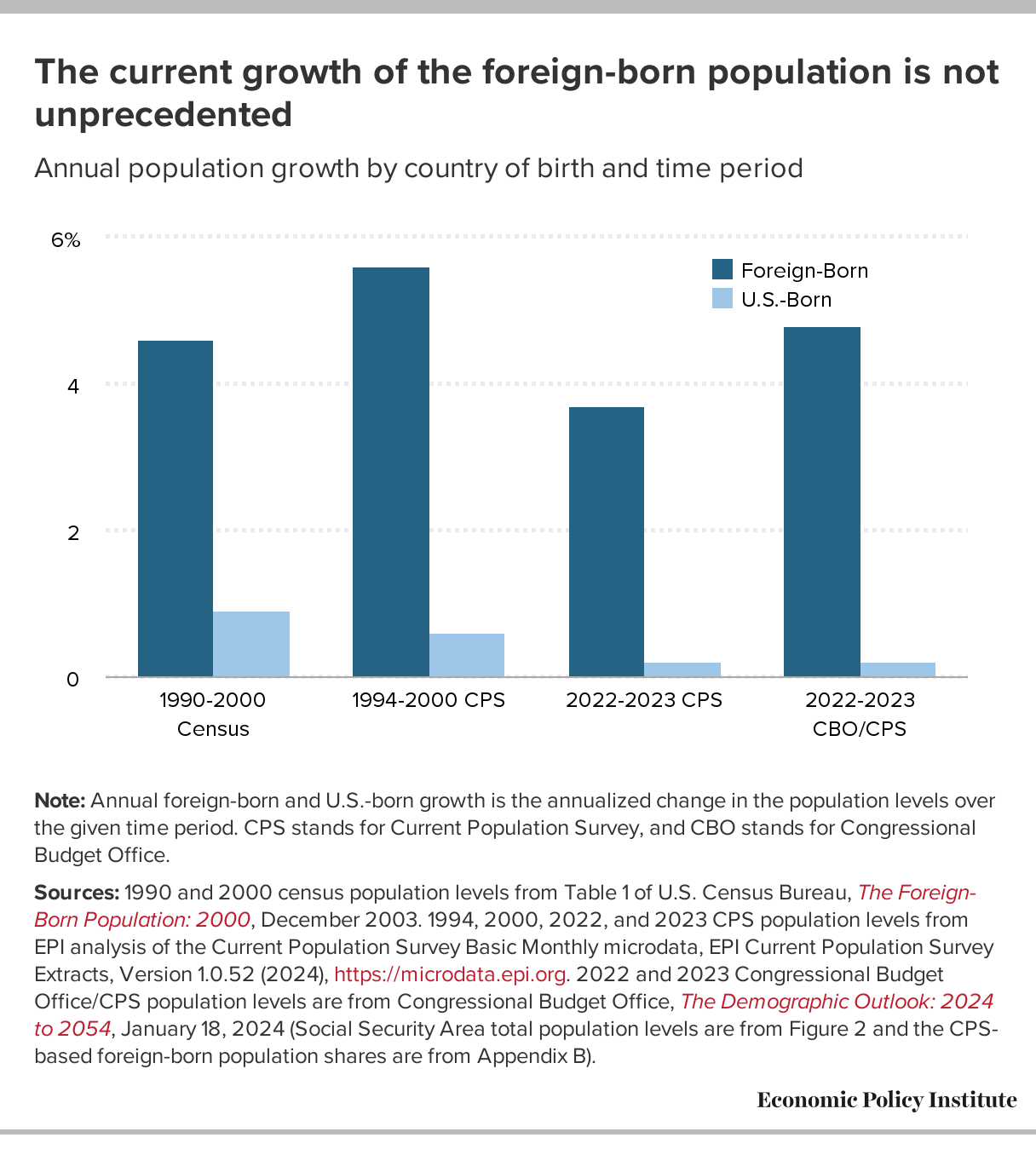
Economic Disruptions Due to Sudden Labor Shortages
- When immigration policies are tightened and workers lose their legal status, industries reliant on immigrant labor—such as agriculture, construction, and hospitality—often face immediate labor shortages. These sectors typically employ a high proportion of foreign-born workers, and sudden removal or self-departure of these individuals can disrupt operations significantly.
- Employers may struggle to find domestic workers willing or able to fill the vacated roles, especially in physically demanding or lower-wage positions. This mismatch in labor supply and demand can lead to reduced productivity, delayed projects, and increased operational costs as companies scramble to retain staffing levels.
- Small and medium-sized businesses are particularly vulnerable to these disruptions, as they often lack the resources to rapidly recruit, train, or temporarily hire replacement workers. In some cases, businesses may reduce hours, close seasonal operations earlier than planned, or even shut down entirely due to insufficient workforce availability.
Diminished Worker Rights and Increased Exploitation
- Workers who lose legal status due to changes in immigration policy often become more vulnerable to exploitation because they fear deportation and are less likely to report workplace abuses. Employers may take advantage of this vulnerability by offering lower wages, withholding pay, or imposing unsafe working conditions without fear of legal consequences.
- Without access to legal protections, undocumented workers are less likely to pursue grievances through official channels, which weakens overall labor standards. This not only affects undocumented individuals but can also depress wages and working conditions for native-born workers in the same industries.
- Reduced unionization and collective bargaining efforts may follow, as employers exert greater control over a fearful workforce. This undermines labor mobility and compromises the overall integrity of workplace regulation and compliance systems.
Long-Term Workforce Planning and Skill Gaps
- Uncertainty created by unpredictable changes in immigration policy makes long-term workforce planning difficult for employers. Companies hesitate to invest in training or career development for immigrant workers if there is a risk they will lose legal status and be forced to leave their jobs.
- This instability can lead to skill gaps, particularly in industries requiring specialized knowledge or certifications. Workers who might otherwise contribute to workforce growth are unable to access further education or professional development opportunities due to their immigration status.
- Moreover, the loss of experienced workers disrupts knowledge transfer and continuity within organizations. Employers may face recurring cycles of hiring and training, which increases costs and reduces the overall efficiency and innovation capacity of affected sectors.
How will Trump's immigration policies affect the economy as workers lose legal status?
Labor Market Shortages and Economic Output
- Restrictive immigration policies under a Trump administration could result in the loss of legal status for hundreds of thousands of immigrant workers, particularly those currently protected under programs like Deferred Action for Childhood Arrivals (DACA) or Temporary Protected Status (TPS). This loss would immediately reduce the size of the available workforce, especially in industries heavily reliant on immigrant labor such as agriculture, construction, hospitality, and food services.
- A diminished labor force can lead to widespread labor shortages, forcing businesses to scale back operations, delay projects, or even close locations due to an inability to hire enough workers. These shortages can directly impact productivity and reduce overall economic output, potentially slowing GDP growth in sectors that depend on consistent labor supply.
- With fewer workers available, employers may face increased pressure to raise wages to attract domestic workers, accelerating inflationary trends. While higher wages can benefit some workers, they may also lead to increased operational costs for businesses, resulting in higher consumer prices and reduced profit margins, particularly for small and medium-sized enterprises.
Impact on Tax Revenue and Public Programs
- Immigrants, including those with uncertain legal status, contribute significantly to tax revenues through payroll taxes, sales taxes, and property taxes—often without being eligible for most public benefits. If large numbers of workers lose legal status and are pushed into the informal economy or forced to leave the country, federal and state governments could see a decline in tax collections.
- Reduced tax revenue affects funding for critical public services such as infrastructure, education, and healthcare. States with high concentrations of immigrant workers, like California and Texas, would be especially vulnerable to budget shortfalls. Over time, shrinking tax bases could prompt cuts in public spending or necessitate tax increases on remaining taxpayers.
- Furthermore, Social Security and Medicare trust funds benefit from contributions made by undocumented and temporarily protected workers who are unlikely to ever claim benefits. A significant reduction in this population could weaken the financial sustainability of these programs, exacerbating long-term solvency concerns.
Business Investment and Economic Confidence
- Uncertainty surrounding immigration status and broader enforcement policies can deter business investment, particularly in labor-intensive industries. Companies may hesitate to expand or modernize operations if they anticipate instability in their workforce or future difficulty in hiring.
- Investors and corporate planners rely on predictable demographic and labor trends. Sudden disruptions caused by rapid changes in immigration policy can undermine economic forecasts and reduce investor confidence, leading to delayed capital expenditures or a shift in investment toward automation—even if such transitions are costly and time-consuming.
- Regions with aging populations and declining birth rates depend on immigration to maintain workforce growth and consumer demand. Aggressive immigration enforcement that removes active workers from the economy risks accelerating regional economic stagnation, reducing housing demand, lowering consumer spending, and weakening local economies over time.
How did Trump’s 2016 immigration policies affect workers losing legal status?
Restrictions on Visa Programs and Work Authorization
- The Trump administration targeted several key visa programs that allowed foreign workers to remain in the U.S. legally, particularly the H-1B visa used by skilled professionals. New enforcement measures required stricter scrutiny of applications, leading to increased denial rates and delays that often caused workers to lose their authorized status before appeals or new petitions could be processed.
- Changes were implemented to Optional Practical Training (OPT) for international students, creating uncertainty about extensions and eligibility. As a result, many graduates were unable to secure long-term employment and abruptly lost work authorization when their grace periods expired.
- The administration expanded the definition of unlawful presence, which meant that individuals who previously might have been allowed discretionary stays were suddenly considered out of status. This led to an increase in automatic bars to reentry and made it harder for workers to regain legal standing even after minor violations.
Increased Immigration Enforcement in the Workplace
- U.S. Immigration and Customs Enforcement (ICE) significantly increased audits of employer records, focusing on Form I-9 compliance. Companies identified as employing workers with irregular status faced penalties, which often resulted in sudden job termination for employees, even if errors were administrative in nature.
- Workplace raids became more frequent, directly removing workers from their jobs and placing many into deportation proceedings. These operations disrupted families and communities and caused others with potentially valid claims to legal presence to avoid workplaces altogether, fearing similar fates.
- The emphasis on worksite enforcement created a climate of fear, particularly among mixed-status workplaces. Even workers with valid documentation sometimes stopped renewing visas or reporting changes due to mistrust in the immigration system, accelerating their transition into undocumented status.
Reduction and Elimination of Temporary Protections
- The administration terminated or scheduled the end of Temporary Protected Status (TPS) for several countries including Haiti, El Salvador, Nicaragua, and Sudan. As a consequence, thousands of individuals who had lived and worked legally in the U.S. for years faced imminent loss of legal status and employment authorization.
- Deferred Enforced Departure (DED) and other humanitarian programs faced review or non-renewal, cutting off legal work permits for populations reliant on these protections. Workers had little time to adjust plans, resulting in many losing jobs and community stability.
- Legal challenges delayed some terminations, but ongoing uncertainty prevented affected workers from securing long-term employment or investment in their careers. Even those with U.S.-born children or deep community ties were often forced into the shadows as their lawful status expired without alternatives.
Frequently Asked Questions
How do Trump's immigration policies affect workers with legal status?
Trump's immigration policies tightened regulations on visas and legal status renewals, causing many workers to lose lawful authorization to work.
Stricter enforcement and reduced pathways to legal residency made it harder for immigrants to maintain status. This led to increased deportations and fear in immigrant communities, shrinking the available workforce, particularly in agriculture, construction, and service industries reliant on immigrant labor.
Which industries are most impacted by workers losing legal status under these policies?
Agriculture, construction, hospitality, and food services are among the hardest-hit industries. These sectors depend heavily on immigrant labor, especially from undocumented or visa-holding workers.
When legal status is revoked or not renewed under strict enforcement, employers face labor shortages. This disrupts operations, increases labor costs, and can lead to decreased productivity, affecting supply chains and economic output in these key areas.
What happens to the U.S. economy when immigrant workers lose legal status?
When immigrant workers lose legal status, the U.S. economy risks labor shortages, reduced consumer spending, and lower tax revenues. Many of these workers contribute significantly to key industries and local economies. Their removal can create job vacancies that are difficult to fill, drive up wages artificially, and harm business profitability. This also affects economic growth and competitiveness in labor-intensive sectors.
Can changes in immigration policy lead to long-term workforce challenges?
Yes, restrictive immigration policies like those under Trump can create long-term workforce challenges. Reducing the number of legal workers limits labor supply, especially in aging industries needing younger workers. It discourages future immigration, creates instability for businesses, and may push companies overseas. Over time, this could lead to chronic labor shortages and hinder economic adaptation in a rapidly changing job market.
Leave a Reply