
File claim for unpaid wages
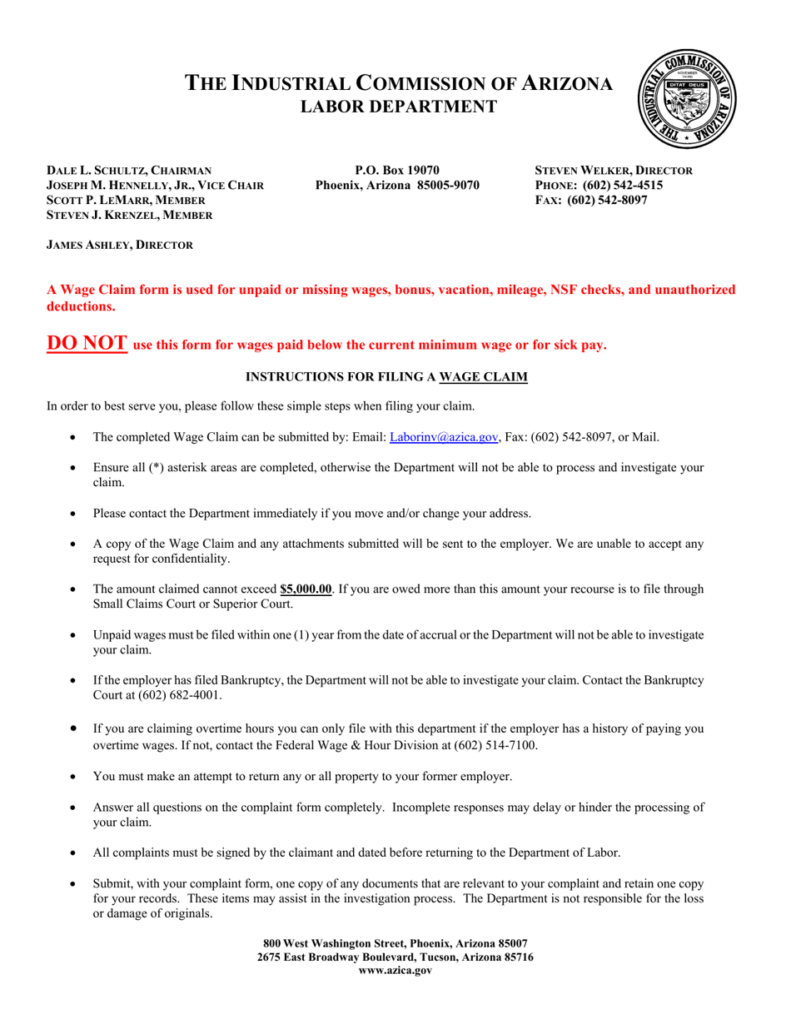
Workers who have not received their rightful wages face financial strain and uncertainty. Filing a claim for unpaid wages is a critical step in holding employers accountable and recovering lost income.
Whether wages were withheld entirely, paid late, or not commensurate with hours worked, employees have legal protections under federal and state labor laws.
The process involves gathering documentation, understanding applicable wage laws, and submitting a formal complaint to the appropriate labor authority. Timely action is essential, as statutes of limitation apply. This guide outlines the steps to file a claim efficiently and assert your rights with confidence.
How to File a Claim for Unpaid Wages in the United States
Filing a claim for unpaid wages is a critical step employees can take when employers fail to pay legally owed compensation, whether in the form of minimum wage, overtime, or regular paychecks. In the United States, workers are protected under both federal and state laws, such as the Fair Labor Standards Act (FLSA), which establishes wage requirements and provides mechanisms for enforcement.
Employees who believe they have not been paid correctly can file a wage claim with either the U.S. Department of Labor’s Wage and Hour Division (DOL-WHD) or their state labor department, depending on jurisdiction. The process typically involves gathering documentation—such as pay stubs, time records, employment contracts, and communications with the employer—to support the claim.
It's important to act quickly, as there are strict deadlines—known as statutes of limitations—for filing unpaid wage claims, which generally range from 2 to 3 years depending on whether the violation is considered willful. Retaliation for filing a wage claim is illegal, and employees are protected from being fired or disciplined for asserting their rights.
Understanding Your Legal Rights to Fair Pay
Under U.S. labor law, most employees are entitled to receive at least the federal minimum wage and overtime pay at a rate of one and one-half times their regular rate for hours worked beyond 40 in a workweek, as mandated by the Fair Labor Standards Act (FLSA).
Certain exemptions apply to salaried professionals, executives, and administrative workers, but employers must meet specific criteria to classify workers as exempt. If an employee is misclassified or denied rightful pay, they may have grounds for a wage claim.
Additionally, many states have their own wage and hour laws that may offer greater protections than federal regulations, such as higher minimum wages or daily overtime requirements. Understanding whether you are classified correctly and what you are owed is the first step in determining if you should file a claim for unpaid wages.
Steps to File a Wage Claim with the Department of Labor
To file a wage claim, workers should first contact either the U.S. Department of Labor’s Wage and Hour Division or their state labor agency—both provide free assistance and investigation services.
The employee will be required to complete a formal complaint form, providing detailed information about their employment, including dates worked, hours logged, pay received, and the nature of the wage violation.
Supporting documents such as pay stubs, timecards, work schedules, and emails should be submitted to strengthen the case. Once filed, the agency will review the claim, possibly conduct an investigation, and may contact the employer for a response.
If the investigation validates the claim, the employer may be ordered to pay back wages, and in some cases, additional penalties. Resolutions can be reached through settlement or formal hearings, depending on the complexity of the case.
Deadlines and Protections When Filing a Claim
It is crucial to be aware of the statute of limitations when filing a claim for unpaid wages. Under the FLSA, claims for non-willful violations must be filed within two years of the violation, while willful violations extend the deadline to three years.
Some states have shorter or longer timeframes, so it’s essential to check local regulations. Importantly, federal and state laws protect employees from retaliation—such as termination, demotion, or reduction in hours—for filing a wage claim or participating in an investigation.
If retaliation occurs, the employee may be entitled to additional remedies, including reinstatement, back pay, and damages. Prompt action not only increases the likelihood of recovering unpaid wages but also ensures that legal protections remain fully enforceable.
| Claim Type | Governing Authority | Deadline to File (Statute of Limitations) | Recovery Options |
|---|---|---|---|
| Federal Unpaid Wages (Non-Willful) | U.S. Department of Labor – Wage and Hour Division | 2 years | Back wages, liquidated damages (equal to back pay) |
| Federal Unpaid Wages (Willful) | U.S. Department of Labor – Wage and Hour Division | 3 years | Back wages, liquidated damages, possible civil penalties |
| State-Level Wage Claims | State Labor Department (e.g., California DLSE, NY DOL) | Varies by state (1–6 years) | Back wages, waiting time penalties, interest, attorney fees |
| Retaliation Claims | Federal or State Labor Agencies / Courts | 180 days to 3 years (depending on law) | Reinstatement, back pay, compensatory damages |
Frequently Asked Questions
How do I file a claim for unpaid wages?
To file a claim for unpaid wages, contact your state’s labor department or the U.S. Department of Labor’s Wage and Hour Division. Gather documents like pay stubs, work schedules, and employer communications. Complete the required form, providing details about your employer, the unpaid wages, and the time period. Submit the claim online, by mail, or in person, depending on your state’s process.
What types of unpaid wages can I claim?
You can claim various unpaid wages, including minimum wage, overtime pay, earned bonuses, commissions, and unused vacation time, if required by state law. Late or missed paycheck payments also qualify. Ensure you have evidence showing the work was performed and wages were promised or legally owed. State and federal laws protect these claims, but time limits apply, so act promptly.
Is there a deadline to file an unpaid wage claim?
Yes, there are deadlines, known as statutes of limitations. Under federal law, you typically have two years to file a claim, or three years for willful violations. Many states have similar or shorter timeframes. It’s best to file as soon as possible after wages go unpaid. Delaying could limit your ability to recover the money you’re owed, so take action quickly.
Can I be fired for filing a wage claim?
No, it is illegal for an employer to fire or retaliate against you for filing a wage claim. Federal and state labor laws protect employees who assert their right to fair pay. If you face termination, demotion, or harassment after filing, you may have grounds for a retaliation complaint. Report such actions immediately to the labor department to protect your rights and seek remedies.
Leave a Reply